


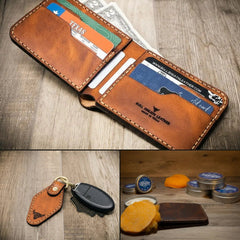


A veg tan leather wallet is made from leather tanned with plant-based tannins instead of chromium salts. The result starts firmer and plainer, then darkens and softens with carry, hand oils and light. This guide explains what the term means, how it differs from chrome-tanned leather, how patina develops and how to look after it.
What does vegetable-tanned leather mean?
Vegetable-tanned (veg tan) leather is rawhide that has been preserved and converted into leather using tannins from plant sources such as bark. The process is slow, and it leaves the leather with a natural, earthy color and a firm feel. It is not dyed to hide the surface unless the maker chooses to, so the leather shows its own character.
"Veg tan" describes how the hide was tanned. It does not describe the grade of the leather. A wallet can be veg tan and full-grain at the same time, which means the natural top surface of the hide is left intact. Our guide to what full-grain means in a wallet explains that second term in detail, and our explainer on what vegetable-tanned leather is covers the tanning process itself.

How is veg tan different from chrome-tanned leather?
Chrome tanning uses chromium salts and is much faster. Chrome-tanned leather is usually softer from the start and more uniform in color, while veg tan leather is firmer at first and changes more visibly as you use it. Neither is wrong. They suit different expectations.
Vegetable-tanned
Plant-based tannins. Slower process. Firmer feel at the start. Natural color that deepens with use and exposure to light. Shows marks, scratches and water spots more readily.
Chrome-tanned
Chromium salts. Faster process. Softer feel from day one. More even color and usually more resistance to water. Tends to age less dramatically.
If you want a wallet that looks the same in year five as on day one, chrome-tanned leather points that way. If you want one that records how you carry it, veg tan does.
How does a veg tan leather wallet age?
It develops patina: a gradual darkening and richening of the surface color, along with a smoother, more polished feel where your hands and pockets touch it most. Patina comes from handling, natural oils, light and time. It will not look the same on two wallets, because no two people carry them the same way.
- Early weeks: the leather is firm and the color is at its lightest.
- Months of carry: edges and corners soften and darken first, and the fold begins to take shape.
- Years of carry: the color deepens unevenly, and small scuffs blend into the surface.
Patina is a change in appearance, not a defect. Our guide to breaking in a leather wallet covers the firm early stage in more detail. Belts go through their own settling period under the pull of a buckle, which our guide on whether leather belts stretch explains.

How do you care for a veg tan leather wallet?
Keep care simple. Veg tan leather responds to what you do to it, so gentle habits matter more than products.
- Wipe it with a dry or barely damp soft cloth when it picks up dust.
- If it gets wet, blot it and let it dry in open air away from heat. Direct heat can dry and stiffen leather.
- Condition it lightly and only when it feels dry. Too much conditioner can over-soften the leather and darken it unevenly.
- Rotate where it sits. A back pocket in constant sun and sweat ages differently from a jacket pocket.
- Do not soak it or scrub it. Water spots and rough cleaning leave marks that are hard to reverse.
For step-by-step conditioning, read how to condition and care for a leather wallet. For storage and cleaning in more depth, see our deeper guide to cleaning and storing leather.

What should you ask before buying a veg tan leather wallet?
"Leather" on a tag tells you very little. Ask three plain questions before you buy any wallet:
- How was it tanned? Look for the tannage named on the product page, not just the word leather.
- What grade is it? Full-grain means the natural top surface of the hide is intact. See how full-grain compares with other leather grades.
- Who made it, and where? A maker should be able to name the tannery and the workshop.
Our wallets are made from full-grain Horween Dublin leather, vegetable-tanned in Chicago, and are cut, sewn and finished by our team in Mansfield, Texas. You can compare them in our men's leather wallet collection. If you carry a full stack, the Big Bend bifold wallet holds eight cards and a full-width cash pocket in a standard bifold.

Frequently asked questions
Is veg tan leather the same as full-grain leather?
No. Veg tan describes the tanning method. Full-grain describes the grade, meaning the natural top surface is left intact. A wallet can be both.
Does veg tan leather get darker over time?
Usually, yes. Light, handling and natural oils darken the surface and build patina. The change differs from wallet to wallet.
Is veg tan leather waterproof?
No. It can water-spot and stiffen if soaked. Blot it and dry it in open air if it gets wet.
Is chrome-tanned leather worse than veg tan?
Not necessarily. Chrome-tanned leather is softer from the start and more even in color. It simply ages less visibly.
Will patina count as a defect?
No. Patina is normal aging. The No Bull Guarantee covers defects and problems with how a wallet was made, and does not promise that the leather will never change in appearance.
Final thoughts
Veg tan leather rewards patience. It starts plain and firm, then takes on the marks and color of daily carry. Know how it was tanned, how it is graded, and how to care for it, and you will know what you are buying.
See how our handmade leather wallets are made, and take the 60-Day Bull Ride: 60 days to make sure yours is the right fit.
For news from the Mansfield workshop, use the email sign-up form below.

