


Full-grain leather wallets start stiff — that's correct. Here's the right way to break one in without cracking the grain, over-softening, or forcing damage.
A new full-grain leather wallet is stiff. That's not a defect — that's the leather. Vegetable-tanned full-grain leather starts firm and breaks in over weeks of daily carry to conform to your exact pocket, your card loadout, and the way you open and close it. After a few months, it feels like it was made specifically for you — because effectively, it was.
But there's a difference between breaking in leather and forcing it. Rush the process the wrong way and you can crack the grain, over-soften the structure, or leave permanent creases in the wrong places. Here's how to do it right.
This guide applies to any full-grain leather wallet — whether you picked up a minimalist leather wallet, a bifold, or even a badge wallet you carry every shift.

How Long Does It Take to Break In a Leather Wallet?
For a full-grain vegetable-tanned wallet, expect 2–6 weeks of regular daily carry before it feels fully broken in. The timeline depends on how often you open and close it, how many cards you carry, and how much the wallet flexes throughout the day. Thicker leather takes longer. A bifold will break in faster than a trifold because it flexes more with every open-close cycle.
If your wallet still feels stiff after six weeks of daily carry, that's normal — it means the leather is dense. Give it more time. Don't try to speed it up aggressively.
The break-in period is how the wallet becomes yours. Every crease at the fold and every darkened card slot is the leather recording how you use it. There's no shortcut that doesn't cost you something.
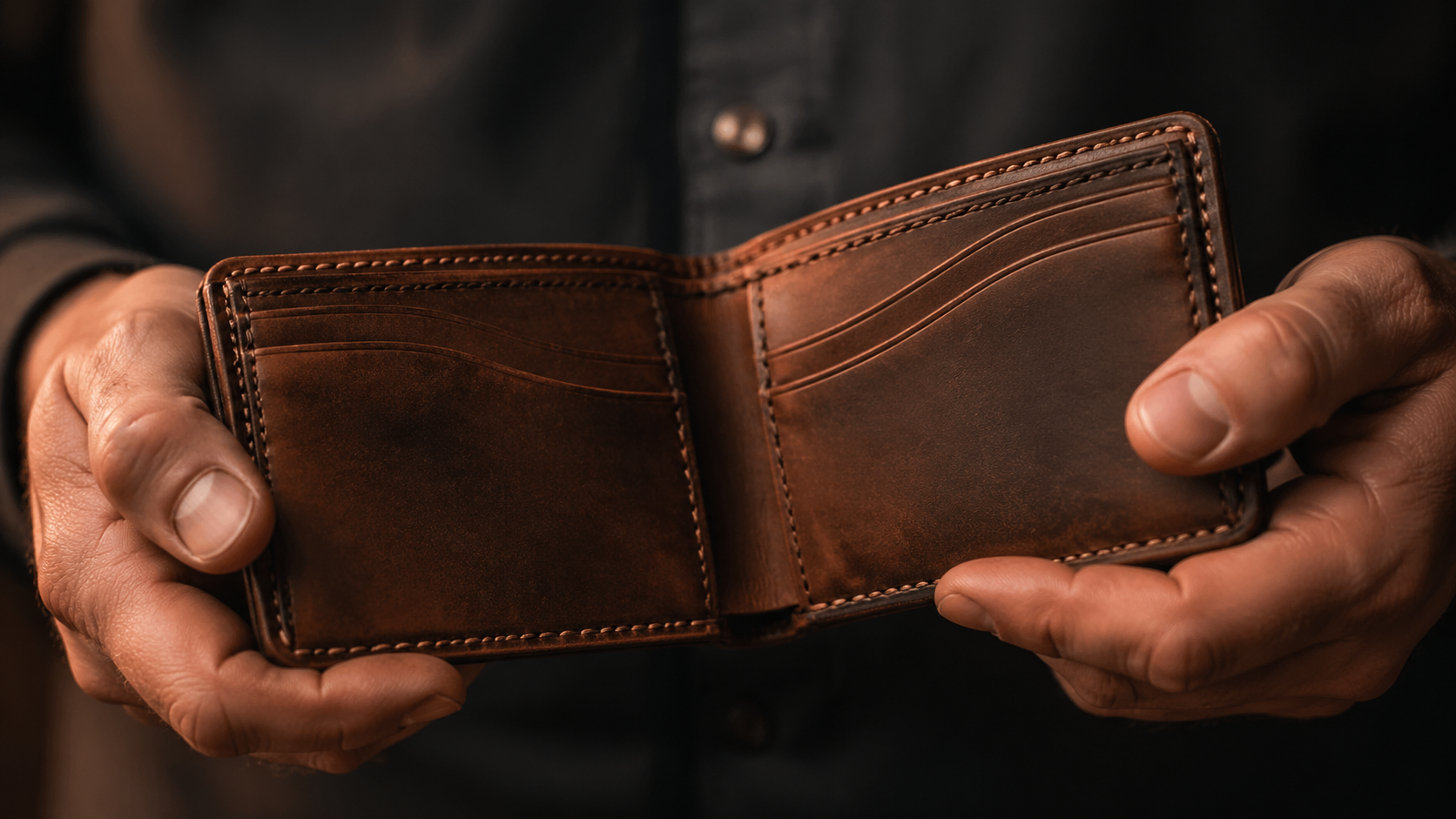
Step-by-Step: How to Break In a Leather Wallet
Don't leave a new wallet empty. Load it with exactly the cards you intend to carry long-term — not more, not fewer — and leave them in. The leather will form around the cards and create a natural fit. If the card slots feel very tight at first: that's by design. Slide cards in and out a few times a day. They open up within a week.
Where you carry the wallet matters. A front-pocket wallet needs to flex differently than a back-pocket or chest-pocket wallet. Carry it in the position you intend to use long-term from day one. Body heat and natural flex from that carry position shape the leather correctly. Don't condition it in a drawer and then move it to daily carry — the break-in happens through use.
The fold is where wallets break in the most. Over hundreds of open-close cycles, it loosens up and the wallet starts falling naturally to the open position. Don't try to force the fold by bending the wallet backward — you can crack the grain at the fold line if the leather is still cold and stiff. In cold weather, let the wallet warm up in your hands before opening it aggressively.
If the leather feels very stiff and dry after two or three weeks of carry, a small amount of conditioner can help. Apply a pea-sized amount of Leather Honey, Bick 4, or pure neatsfoot oil to a clean cloth and rub it evenly across the exterior. Let sit overnight, wipe off excess. Do not over-condition — once or twice a year is plenty. Too much softens the structure and causes uneven stretching.
The most common way people ruin a good wallet is carrying too many cards. Beyond the built capacity, you're stressing the stitching, deforming the card slots, and forcing the leather into shapes it wasn't designed to hold. If your wallet sits unevenly on a flat surface, you're carrying too much. Go through your cards — you probably don't need half of them in daily carry.
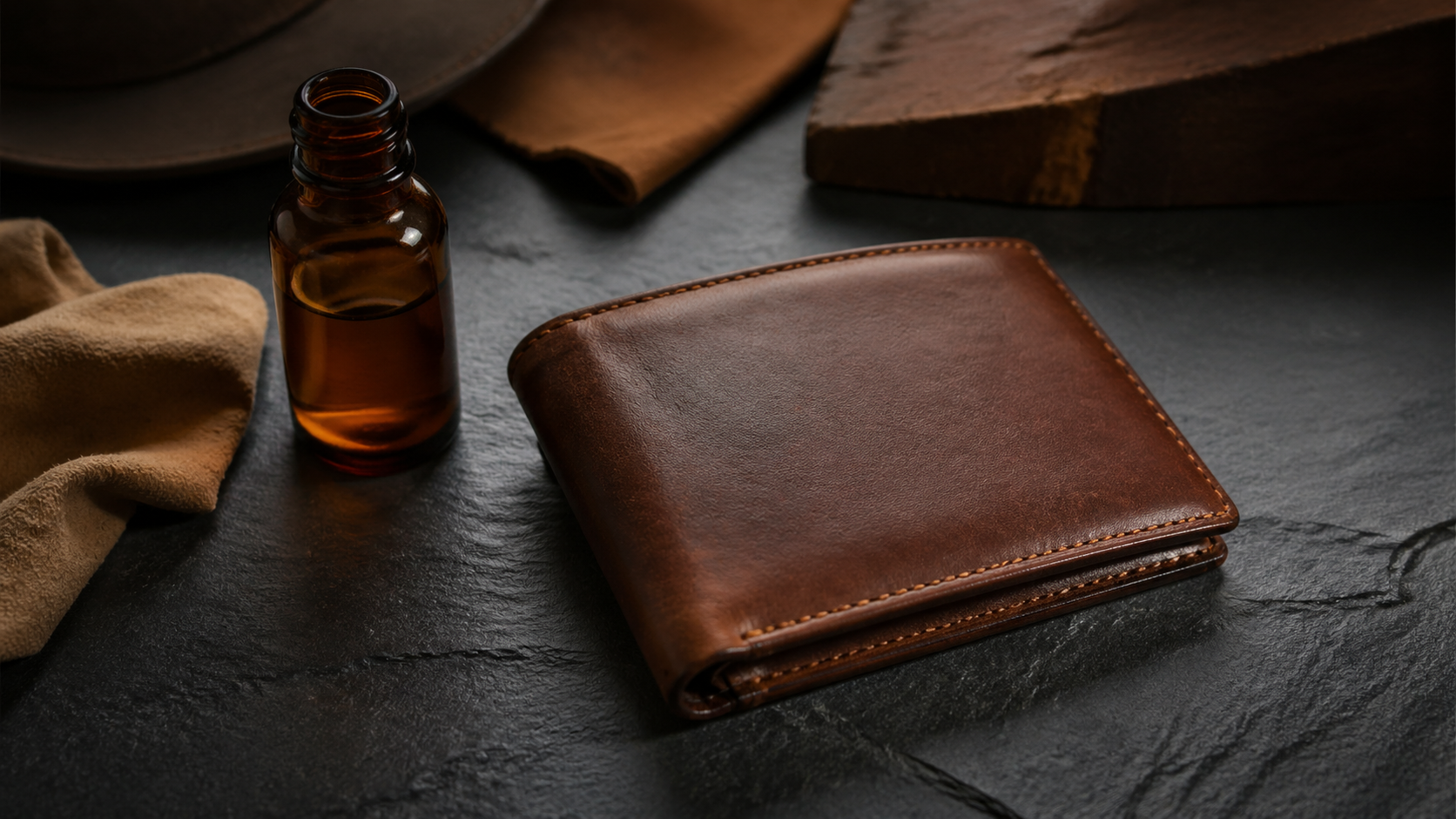
What Not to Do
Don't soak it in water. The "wet and dry" method involves soaking the wallet and letting it dry while shaped. It's too aggressive for a wallet — expect uneven shrinkage, water staining, and loss of finish.
Don't use heat to soften it. Hair dryers, heat guns, leaving it in a hot car — heat dries out leather fast and causes cracking. The break-in doesn't need heat assist. It needs time and use.
Don't use petroleum-based products. WD-40, petroleum jelly, shoe polish — these darken the leather unpredictably and can damage the finish. Use a purpose-made leather conditioner only.
Don't force the fold backward. Bending the wallet backward against its natural fold to "loosen it up" permanently creases the leather in the wrong place and stresses the stitching at the spine. Let the fold develop naturally.
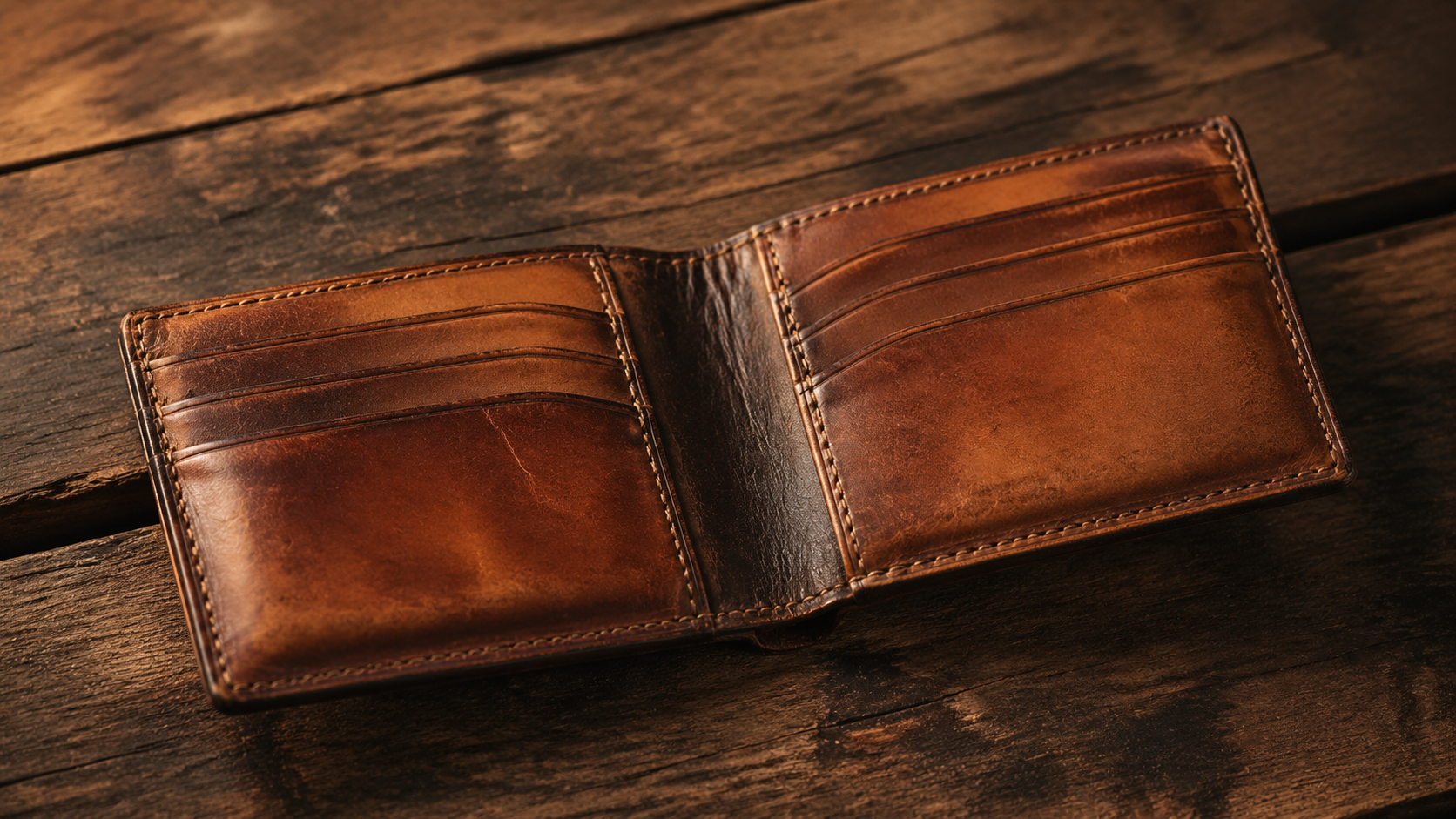
What to Expect as It Ages
Once broken in, a full-grain leather wallet develops a patina — a darkening and deepening of the surface color that comes from the oils in your hands, light UV exposure, and daily contact. This is not wear. This is the leather reaching its final form. A well-used full-grain wallet looks richer and more interesting after five years than it did when new.
The color darkens most at the fold, the card slots, and the corners. The areas you handle less stay closer to the original color. Over time the whole wallet evens out into a piece that's uniquely yours. Keep it clean with a dry or damp cloth. Condition once or twice a year if it starts to feel dry. That's the full maintenance requirement for a well-made full-grain wallet.
Every BSL wallet is made from full-grain American vegetable-tanned leather — the kind that gets better with every year of carry. The break-in period is real, and worth it. Questions about caring for your BSL wallet: reach out directly.
Final Thoughts
Breaking in a full-grain leather wallet is simple: load it right, carry it consistently, and leave it alone. The leather does the rest. What you end up with after a few months of daily carry is something no mass-produced wallet can replicate — a piece that fits your life exactly because it was shaped by it. Browse BSL's full collection of leather wallets for men and pick the style that fits how you carry.


