


How to clean, condition, and store full-grain leather goods — wallets, sheaths, belts. What works, what doesn't, and how often based on years with the material.
Full-grain leather is one of the most durable materials available for daily-carry goods. It's also one of the most misunderstood in terms of maintenance. Most people either over-condition it (which weakens the structure) or ignore it entirely until it's too late. Neither approach gets the best out of the leather.
This guide covers everything you need to keep full-grain leather goods — leather wallets, leather knife sheaths, bags, belts — in good condition over years and decades of real use. No selling, no upselling. Just what works, based on years of working with the material.
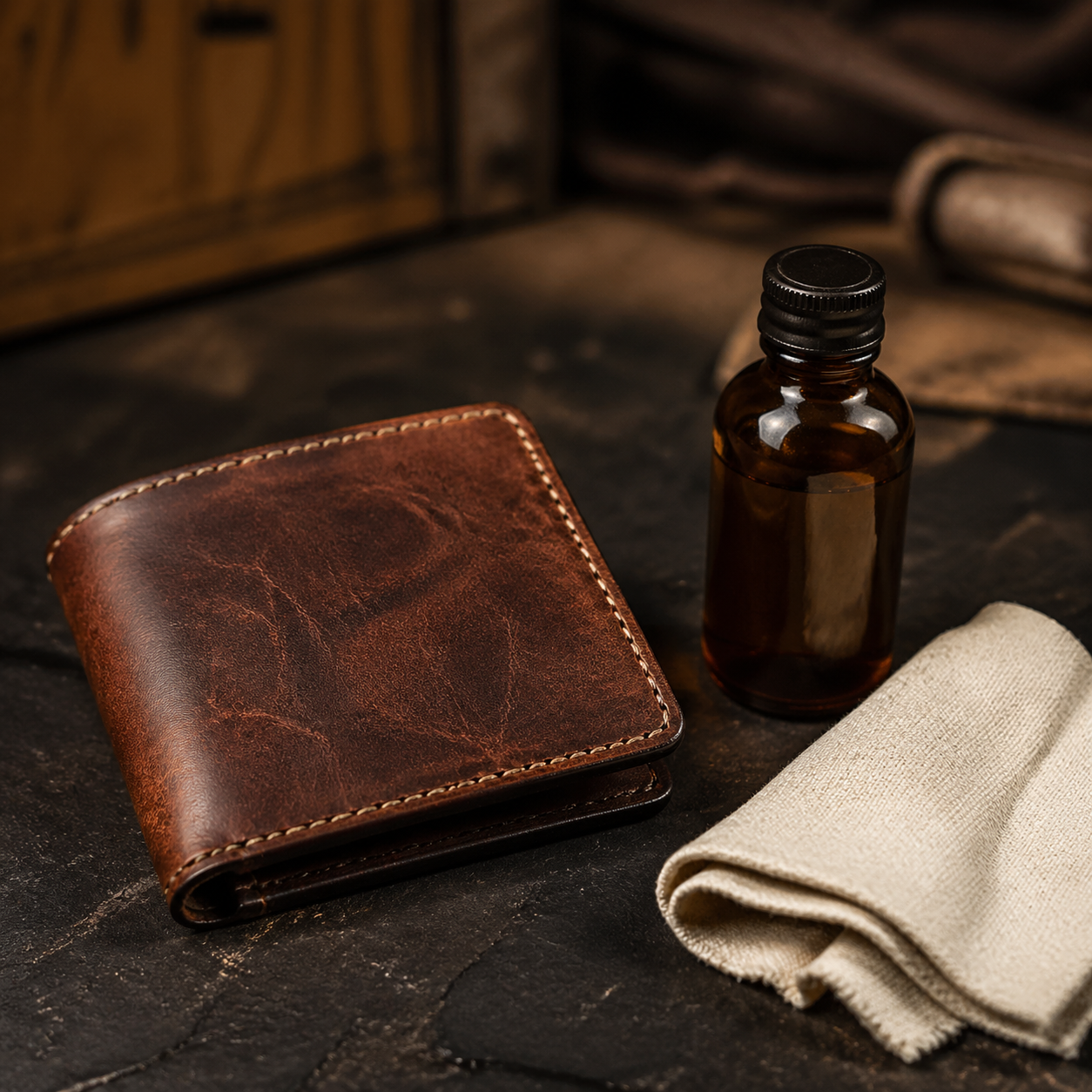
Understanding Full-Grain Leather Before You Care for It
Full-grain leather is the top layer of the hide with the entire grain intact — no sanding, no splitting, no coating applied to mask the surface. This matters for care because the leather is porous, breathes, and responds to the environment around it. It's not sealed like a shoe with a thick factory coating. It absorbs oils, repels minor moisture after conditioning, and develops patina from contact with your hands, light, and environment.
Vegetable-tanned full-grain leather — the type BSL uses — is tanned using plant-based tannins rather than chrome salts. This produces a denser, firmer leather that takes longer to break in but lasts significantly longer. It's more responsive to conditioning and develops deeper, richer patina over time than chrome-tanned leather.
Clean when dirty. Condition when dry. Dry away from heat when wet. Store in breathable conditions. That's the complete care protocol — everything else is detail.
Patina: What It Is and Why You Want It
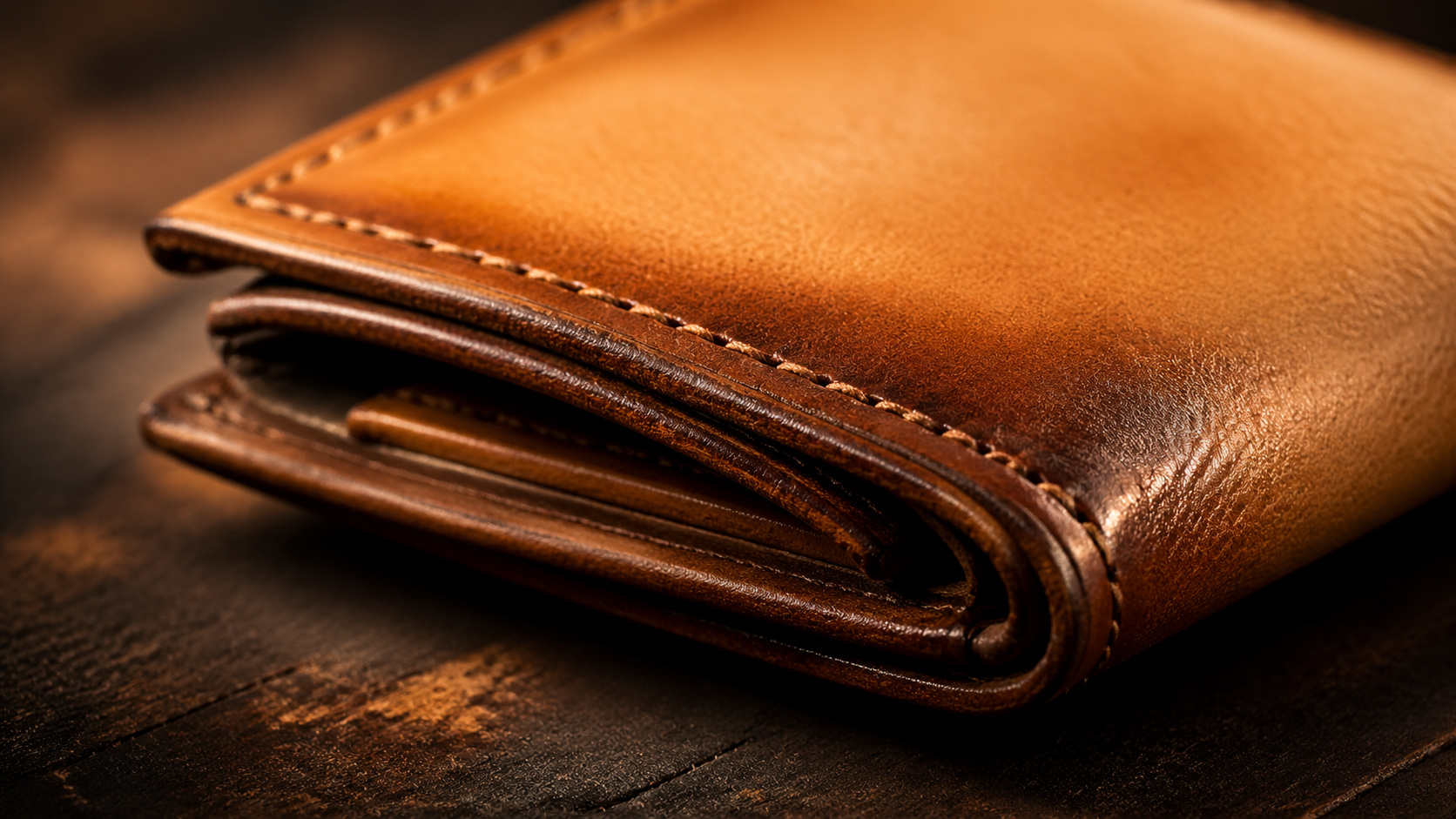
Patina is the change in surface color and character that develops on full-grain leather over time. The natural oils from your hands, UV exposure, and the minor abrasion of daily use all darken and enrich the leather surface. Areas you handle most — the fold of a wallet, the grip area of a sheath — darken first and most deeply. Over months and years, the whole piece deepens toward a richer, more complex color.
This is not damage. Patina is evidence that the leather is real, healthy, and aging correctly. A patina'd piece looks like it belongs to someone — because it does. Factory leather coatings prevent patina, which is why cheap "leather" goods look the same in year one and year three, then fall apart in year four.
To encourage patina: carry it, use it, handle it. The natural oils in your hands are the primary driver. You don't need to apply anything — just use the leather.
Cleaning Full-Grain Leather
Routine cleaning (monthly or as needed): For surface dust and light dirt, a clean dry cloth or slightly dampened cloth is all you need. Wipe gently, let air dry completely before conditioning or storing. For leather goods in rough outdoor conditions, a soft-bristle brush removes embedded grit from stitching and seams before wiping down.
Spot cleaning: For mud, let it dry completely before brushing off — wiping wet mud spreads it. For food stains, a slightly damp cloth with gentle pressure, then dry immediately. Don't scrub; it abrades the grain. For fresh oil or grease stains, apply cornstarch or talcum powder, let sit a few hours to absorb the oil, then brush off gently.
Conditioning Full-Grain Leather
How Often
For most full-grain leather wallets, belts, and small goods: once or twice a year is sufficient. If the leather feels stiff or dry, or if it's lost its suppleness noticeably, condition it. In dry climates condition more frequently; in humid climates, less. If it flexes without cracking, it doesn't need conditioning yet.
Over-conditioning is a real problem — too much softens the leather structure, causes uneven stretching, and attracts dust. The leather doesn't need to be soft and shiny all the time.
Which Conditioner to Use
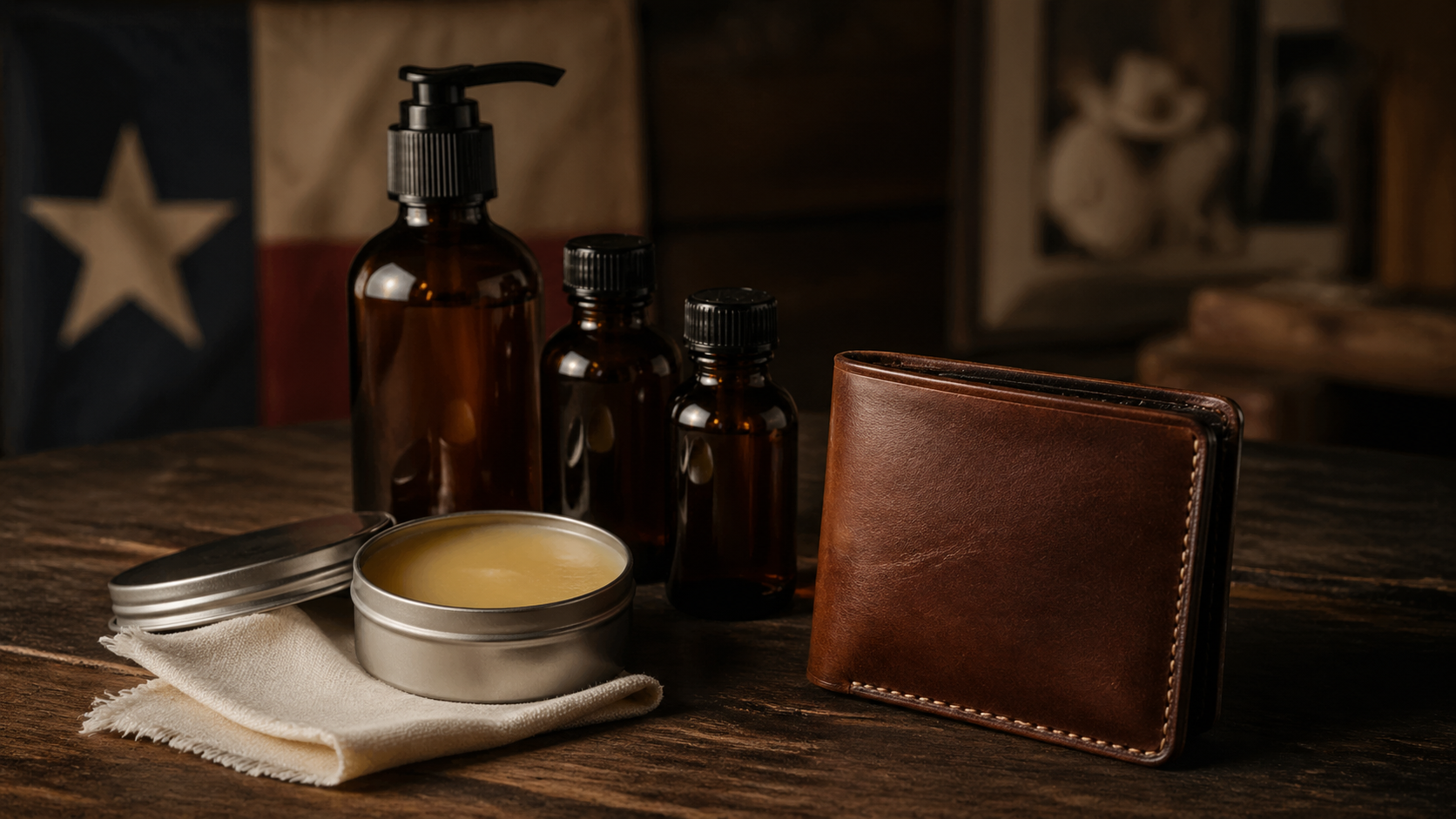
| Conditioner | Darkens? | Best For | Notes |
|---|---|---|---|
| Bick 4 | Minimally | Light-colored leather, routine maintenance | Water-based, dries quickly, no petroleum |
| Leather Honey | Slightly | Stiff or long-neglected leather | Deep penetration, excellent for restoration |
| Pure neatsfoot oil | Noticeably | Darker leathers, heavy conditioning | Avoid compound neatsfoot (petroleum) |
| Beeswax / Otter Wax | Slightly | Outdoor use, sheaths, wet-condition carry | Water-resistant surface, slight sheen |
| Mink oil | Yes | Avoid for long-term use | Over-softens leather, degrades stitching over time |
How to Apply
- Start with clean, dry leather.
- Apply a pea-sized amount of conditioner to a clean soft cloth — not directly to the leather.
- Rub into the leather surface in circular motions, working into creases and fold points.
- Let sit 15–30 minutes or overnight depending on the conditioner.
- Wipe off any excess with a clean dry cloth.
- Allow to air dry completely before use.
Water and Full-Grain Leather
Full-grain leather is not waterproof, but it's water-resistant — especially after conditioning. If your wallet or sheath gets wet, let it air dry naturally at room temperature away from direct heat. Heat causes leather to stiffen, crack, and shrink. While still damp, stuff a wallet with a folded cloth to maintain shape as it dries. Once dry, apply a light conditioning if the leather feels stiff.
For leather goods that regularly see water — knife sheaths used in rain, bags in wet climates — apply a beeswax or wax-based conditioner. The wax sheds water rather than absorbing it.
Storage
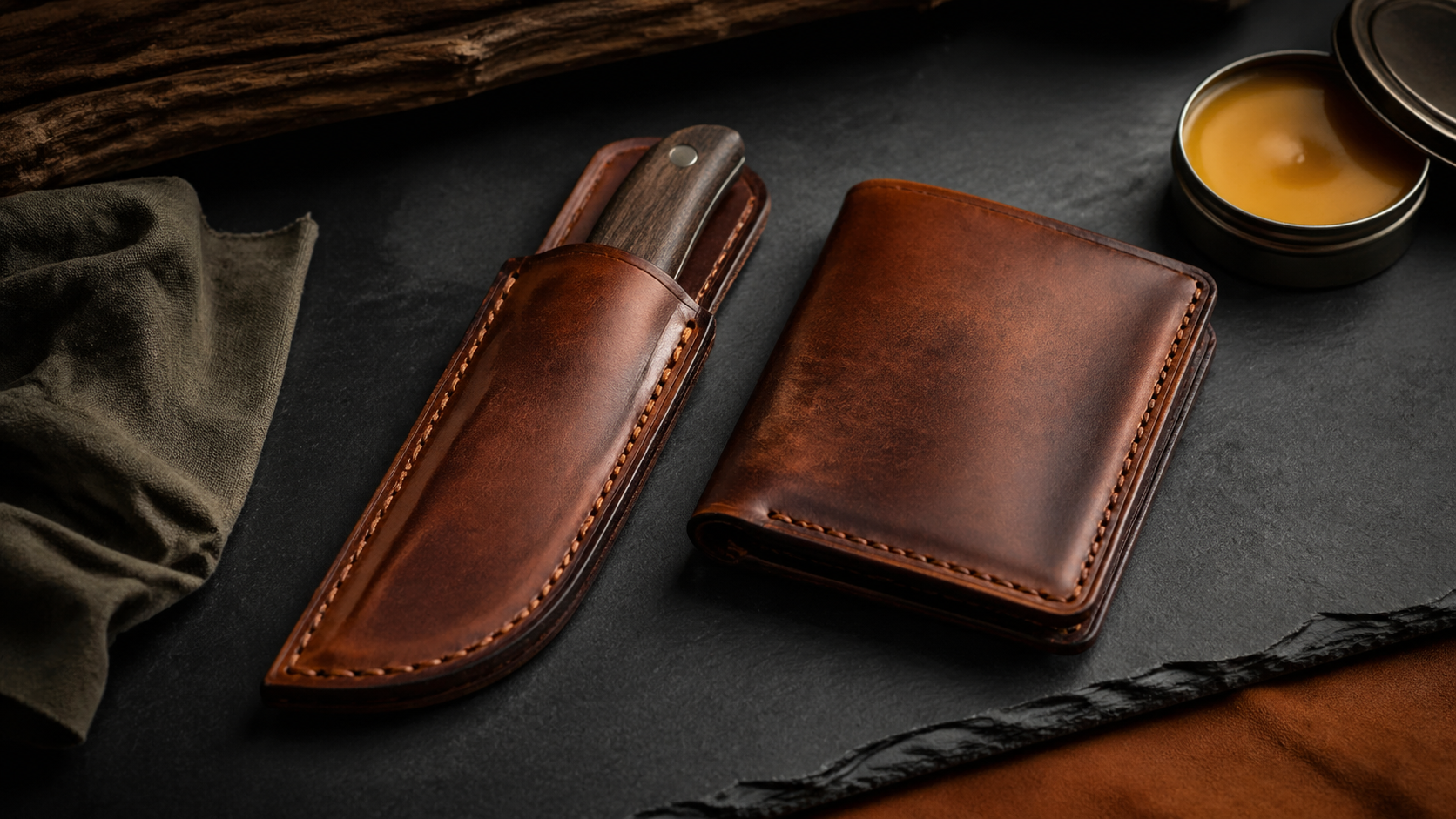
Store leather goods in a cool, dry place away from direct sunlight — UV exposure causes fading and dries leather over time. Don't store in plastic bags; leather needs to breathe. A cotton bag or pillowcase is appropriate. If storing a wallet long-term, don't leave it stuffed — stretched card slots stay stretched. Avoid storage near heating vents or in hot attics.
Caring for Leather Knife Sheaths
Sheaths see harder conditions than wallets — sweat, rain, UV, impact. Same principles, more frequency. Clean after heavy outdoor use. Condition at least once per season (four times per year) if in regular outdoor use. For leather knife sheaths worn in wet conditions: apply a wax conditioner the night before and let it absorb overnight. This significantly increases water resistance for the day's carry.
Caring for Badge Wallets
Badge wallets carried daily in law enforcement or security work see more open-close cycles and more environmental exposure than a standard wallet. Clean the badge window area with a dry cloth regularly — dust and debris between the window and badge can obscure credentials. Condition the leather body the same as any other wallet: once or twice a year, or whenever the leather feels dry.
Every BSL leather good is made from full-grain American vegetable-tanned leather, left uncoated so it breathes, conditions, and develops patina the way it's supposed to. Properly maintained, it doesn't have an expiration date.
Final Thoughts
A full-grain leather wallet or sheath properly maintained doesn't have an expiration date. We've seen BSL pieces come back after 15 years of daily carry — leather still solid, patina extraordinary, needing nothing more than a reinforced seam at a stress point. That's the expected lifespan of well-made full-grain leather goods cared for correctly. Questions about a specific BSL product: contact us directly.


