


Most western belts look the part and fail within a year. Full-grain leather, solid brass hardware, single-piece construction, and correct width are the full checklist.
Walk into any western wear store and you'll see racks of belts that look the part. Brown leather, silver buckles, maybe some tooling pressed into the surface. Most of them are top-grain at best, genuine leather at worst, with zinc hardware that'll start pitting within a year. They photograph well. They don't hold up.
A real western belt is a different object. It's wider, heavier, built from a thicker cut of full-grain hide, and designed to handle the actual stress that a wide belt takes — constant flex through wide loops, the weight of a large buckle, years of outdoor carry. Here's what separates a western belt worth buying from one that just looks western at the store.

What Makes a Belt Actually Western
Western belts run wider than standard belts — typically 1.75" to 2" (44–50mm). That width is the defining characteristic, and it's also where the engineering requirements change. A wider belt needs thicker leather to maintain rigidity without flopping or curling. The ideal thickness for a 2" western belt is 8–9 oz leather (roughly 3.2–3.6mm) — heavy enough to hold its shape, supple enough to break in without cracking at the fold.
Width and your loops. Before buying, measure your belt loop width. Western jeans and work pants are typically built for 1.75"–2" loops, but not everything in your wardrobe will be. If you're wearing the belt with regular-fit denim, check first. A 2" belt in a 1.5" loop looks wrong and creates friction wear that shortens the belt's life.
The buckle attachment matters. Western belts use a snap-off buckle system — the belt end has a snapped or screwed loop, and the buckle detaches so you can swap it. This is intentional: western culture involves buckle collection and display. If you're buying a western belt and it has a sewn-in buckle, that's a dress belt dressed up in western styling, not a real western belt.
A wide belt takes more punishment than a narrow one — more flex, more leverage, more material to fail. The quality requirements go up with the width, not down.
Leather Grade on a Wide Belt
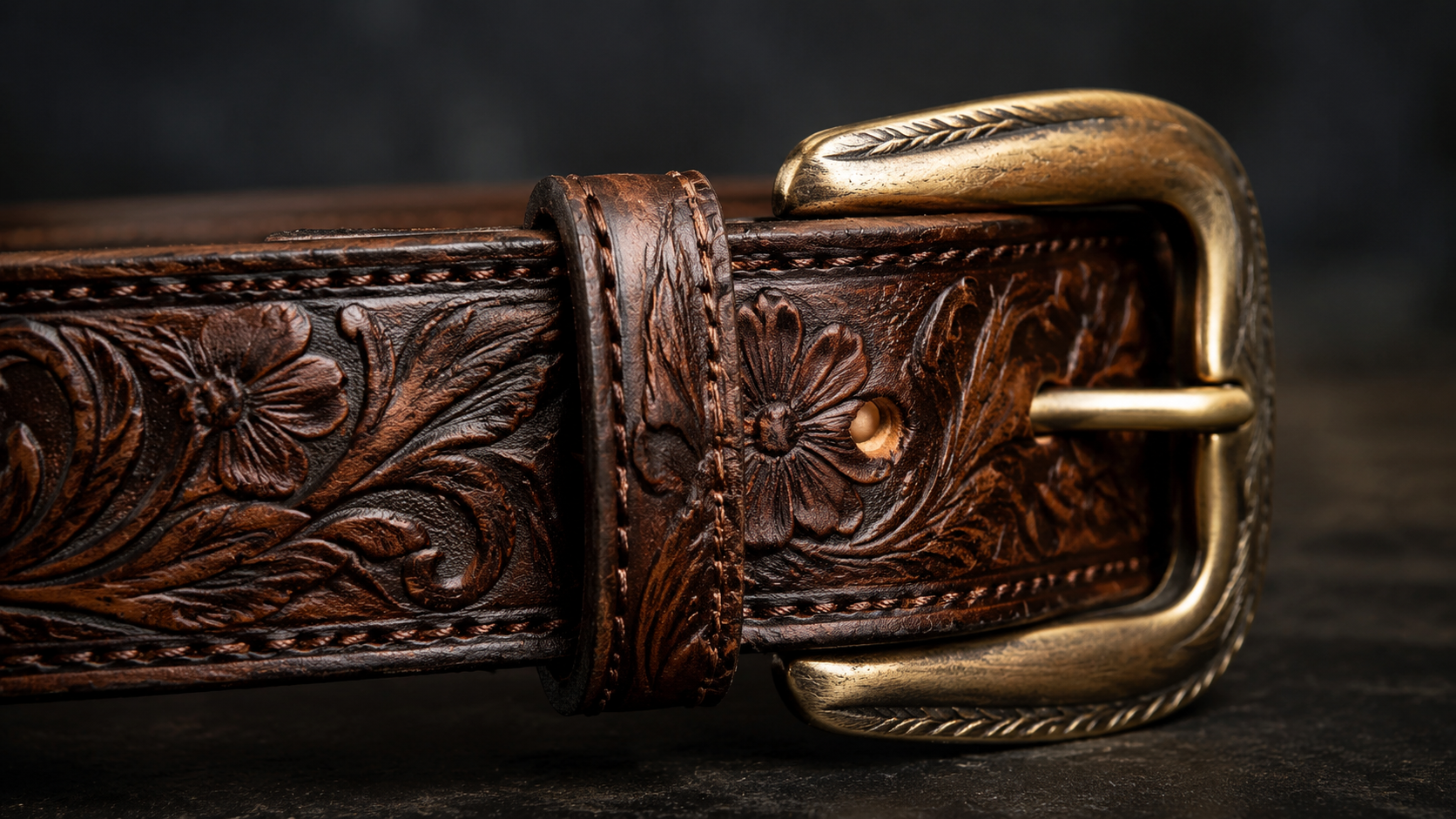
A full-grain western belt has more surface area than a dress belt — which means more leather to show off and more leather that can fail. Cheap western belts use split leather or layered bonded leather to hit a price point, and the wide format makes these failures more visible: the edge delamination shows across a longer surface, the tooling pressed into a top-grain belt cracks at the edges of the stamp impressions, and the color fades unevenly as the surface finish wears through.
Full-grain leather on a western belt develops differently. The natural grain accepts tooling cleanly and holds the impression permanently. The burnished edges stay tight because the fiber structure is dense all the way through. And the belt develops a genuine patina — the kind of dark, worn character that gets better with the ranch, not worse.
Vegetable-tanned, drum-dyed full-grain leather from a reputable American or English tannery is the standard for serious leatherwork. A western belt cut from that grade of hide will outlast the buckle on it.
Single-piece construction is non-negotiable. Some lower-cost western belts laminate a decorative top layer onto a split leather or fabric core. Wide format makes this failure mode worse: the laminated edge separates faster under loop friction, and the visual discontinuity at the peel line is impossible to miss on a 2" belt.

Hardware: Where Western Belts Live or Die
A western belt buckle carries visual weight. Oversized buckles are a western tradition — trophy buckles, rodeo awards, family heirlooms. The hardware on the belt itself needs to match the ambition of the buckle it supports.
Solid brass vs. zinc alloy. The keeper loop (the loop that slides to hold the belt end) and the snap loop are where cheap hardware shows first. Zinc alloy keepers corrode under sweat and outdoor exposure, leaving pitting and white corrosion residue on the leather surface. Solid brass develops a patina that actually looks intentional — the oxidation gives it character rather than damage.
Roller buckles for work carry. If the belt is going through daily work wear — horseback riding, physical outdoor labor, heavy use — a roller buckle reduces friction at the tongue slot and extends both the buckle and the belt's wear life at the punch hole area. For dress western wear, a standard frame buckle is fine.
Concho options. Conchos (decorative metal rivets set into the belt body) are traditional western belt hardware. Quality conchos are solid brass or sterling silver, set through the leather with Chicago screws so they can be replaced. Cheap conchos are glued or press-fit and detach within a year of regular carry.
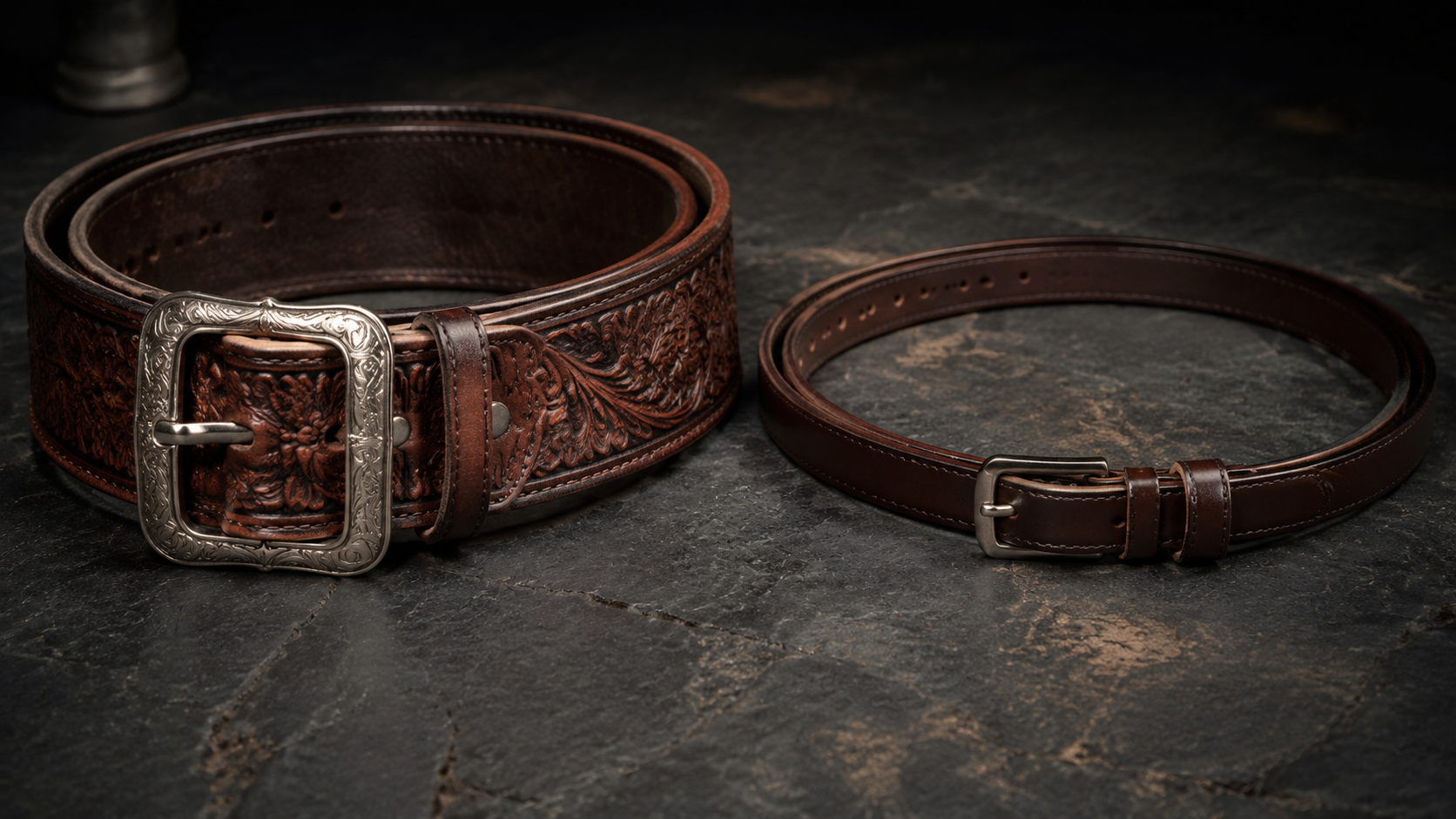
BSL belts are single-piece full-grain, oak-bark tanned leather, solid brass hardware, burnished edges. Hand-sewn on a leather sewing machine, with hand-burnished edges. Made in Mansfield, Texas. Built for real western carry, not the rack at the western wear store.
Shop BSL Leather Belts →Final Thoughts
A western belt gets judged twice: first impression at a distance, and close-up over time. The cheap version wins the first pass and fails the second. Full-grain leather, single-piece construction, solid brass hardware, and sizing to fit your actual waist — that's the whole checklist. If you're wearing the belt through serious use, that list is non-negotiable. If you're wearing it to look the part, you'll find out within two years whether you bought the right one.


