


Trifolds aren't outdated — they're built for high-card-count carry. Here's who needs one, what separates a good trifold from a bad one, and what to look for before you buy.
The trifold has a reputation problem. Slim-wallet guys call it outdated. Minimalists say it's too thick. But here's what those opinions miss: if you carry a lot of cards, regularly deal with receipts, or just want everything organized without hunting through a billfold, the trifold solves problems a bifold genuinely can't. The question isn't whether trifolds are good — it's whether they're good for you.
This is the honest breakdown: who should be using a trifold, what makes a good one, and what to avoid if you're buying one built to last more than a year.

What a Trifold Actually Is (and What It's Built For)
A trifold wallet folds into thirds, creating three panels when open. Compared to a bifold's single fold and two panels, you get significantly more organized real estate: typically 6–9 card slots, two full-length bill compartments, an ID window, and sometimes a coin snap. When closed, it's a tighter rectangle than a bifold — roughly 3.5" x 4.5" depending on construction.
That's the key word: construction. A poorly built trifold becomes a thick, stiff brick in your pocket. A well-built one stays slim enough to carry daily and stays flat enough to sit on without noticing it.
Who the trifold is actually built for:
High-card-count carriers who need more than 6 slots without the bulk spreading across a long wallet. People who want separate bill sections — work expenses in one, personal cash in another. Guys who deal with receipts regularly and need a dedicated place to stuff them. Business guys who carry a business card section they want accessible without digging.
The trifold isn't outdated. It's specialized. If your carry matches what it's built for, nothing else organizes as well.
Trifold vs. Bifold: The Real Tradeoffs
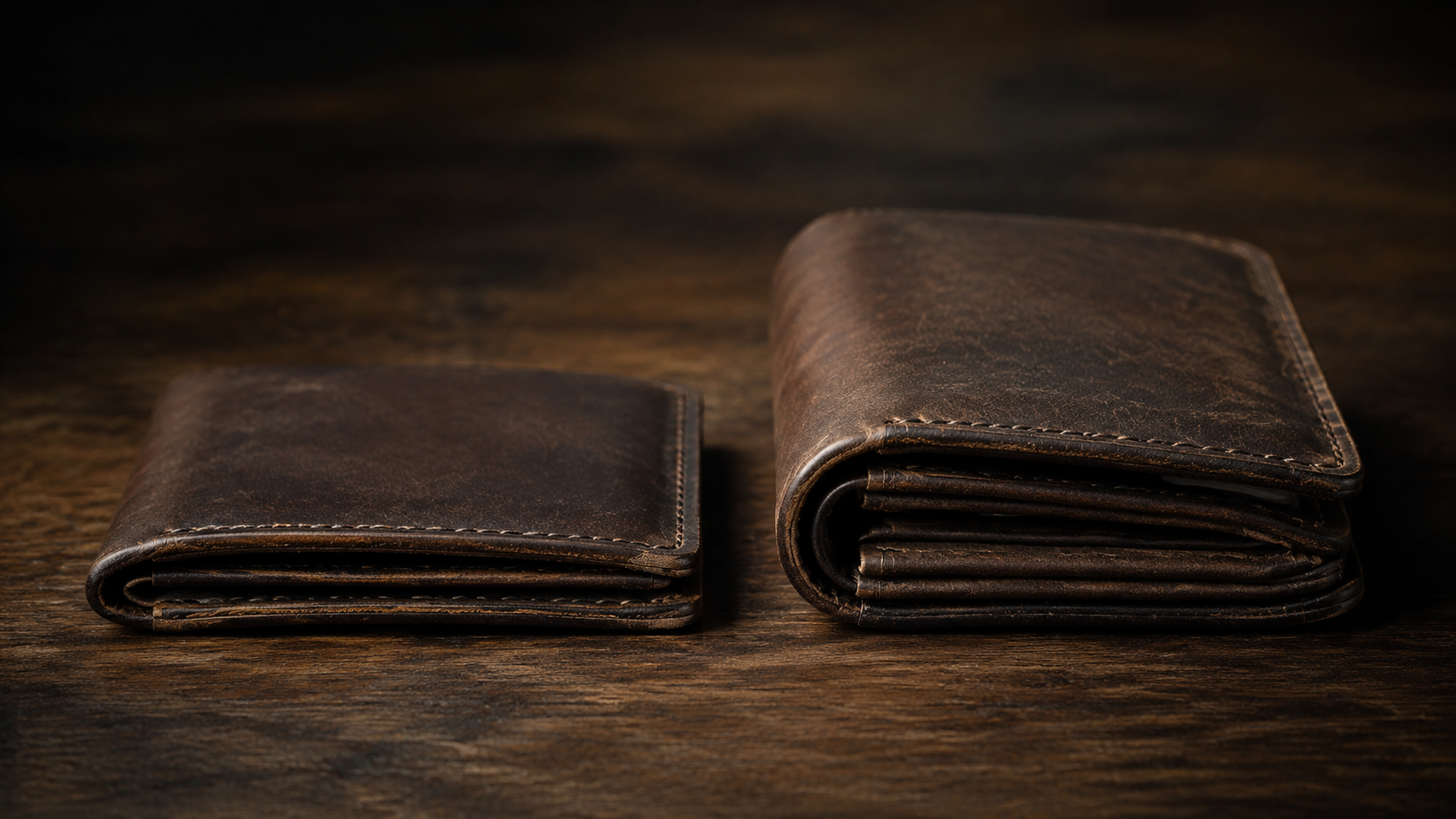
Size when loaded. A bifold with 4 cards stays thinner than a trifold with 4 cards — the extra fold adds depth at the spine. But a bifold maxes out around 6–8 cards before it balloons. A trifold handles 8–10 cards while staying organized and reasonably flat. If you're carrying 6 or fewer cards, a bifold is the better choice. If you're carrying 8 or more, a trifold keeps things manageable.
Bill access. Bifolds typically have one full-length bill compartment. Trifolds have two — which can be a feature (separate cash pools) or unnecessary (if you only carry one denomination). Know your actual carry habits before deciding this matters.
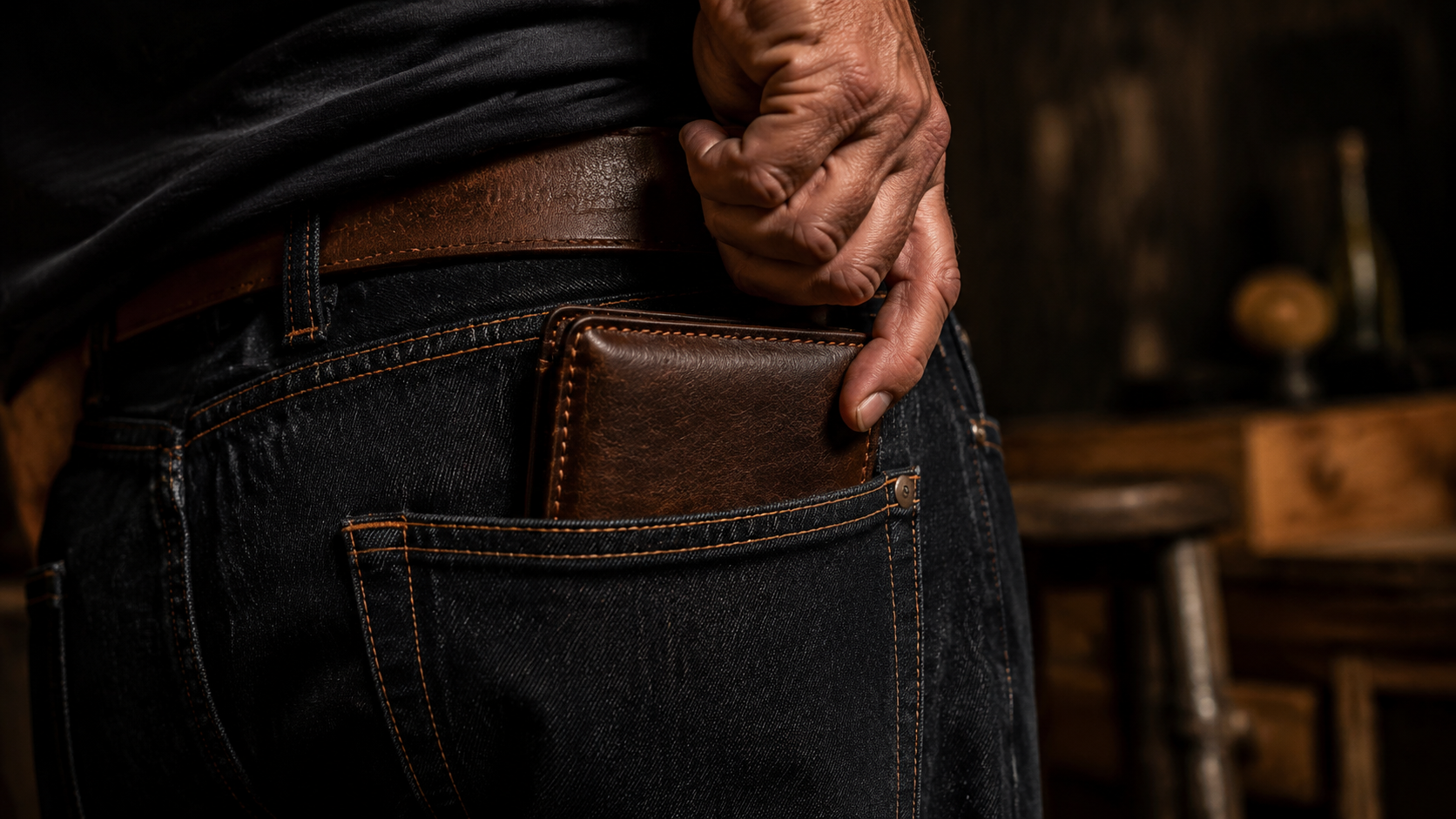
Pocket carry. A trifold's closed footprint is compact — shorter than a long wallet, smaller than an oversized bifold fully loaded. It sits well in a front or back pocket without riding out. The depth can be noticeable when fully loaded, but a quality build keeps this under control.
Bill fold count. In a bifold, bills fold once. In a trifold, bills typically fold twice (into thirds) to fit the shorter compartment. If unfolded bills matter to you, the bifold wins here. If you don't care, it's not a real issue.
What Makes a Trifold Worth Buying
Leather grade at the triple fold. A trifold has three fold lines, all of which flex every time you open and close it. Full-grain leather is resilient enough to handle this over years of carry. Top-grain or genuine leather cracks at the fold lines within 12–18 months — and when one fold goes, the whole wallet loses structure. Don't compromise on the hide for a trifold.
Card pocket leather thickness. Thin is better in the pockets. If each card pocket is cut from thick leather, the wallet turns into a block when loaded. Good construction uses 1.5–2 oz leather for interior pockets so the cards slide easily and the wallet stays manageable. Exterior panels can run thicker (2–3 oz) for structure.
Stitching at the corner folds. The corners where the three panels fold together take the most stress. Check that the stitching runs through all layers cleanly and that the corner radius is finished — raw cut corners on a trifold separate faster than anywhere else.
Bill compartment depth. Bills folded in thirds are shorter than bills folded in half. Make sure the compartment is deep enough that folded bills don't peek out when the wallet is closed. This sounds like a minor thing; it looks sloppy in practice.
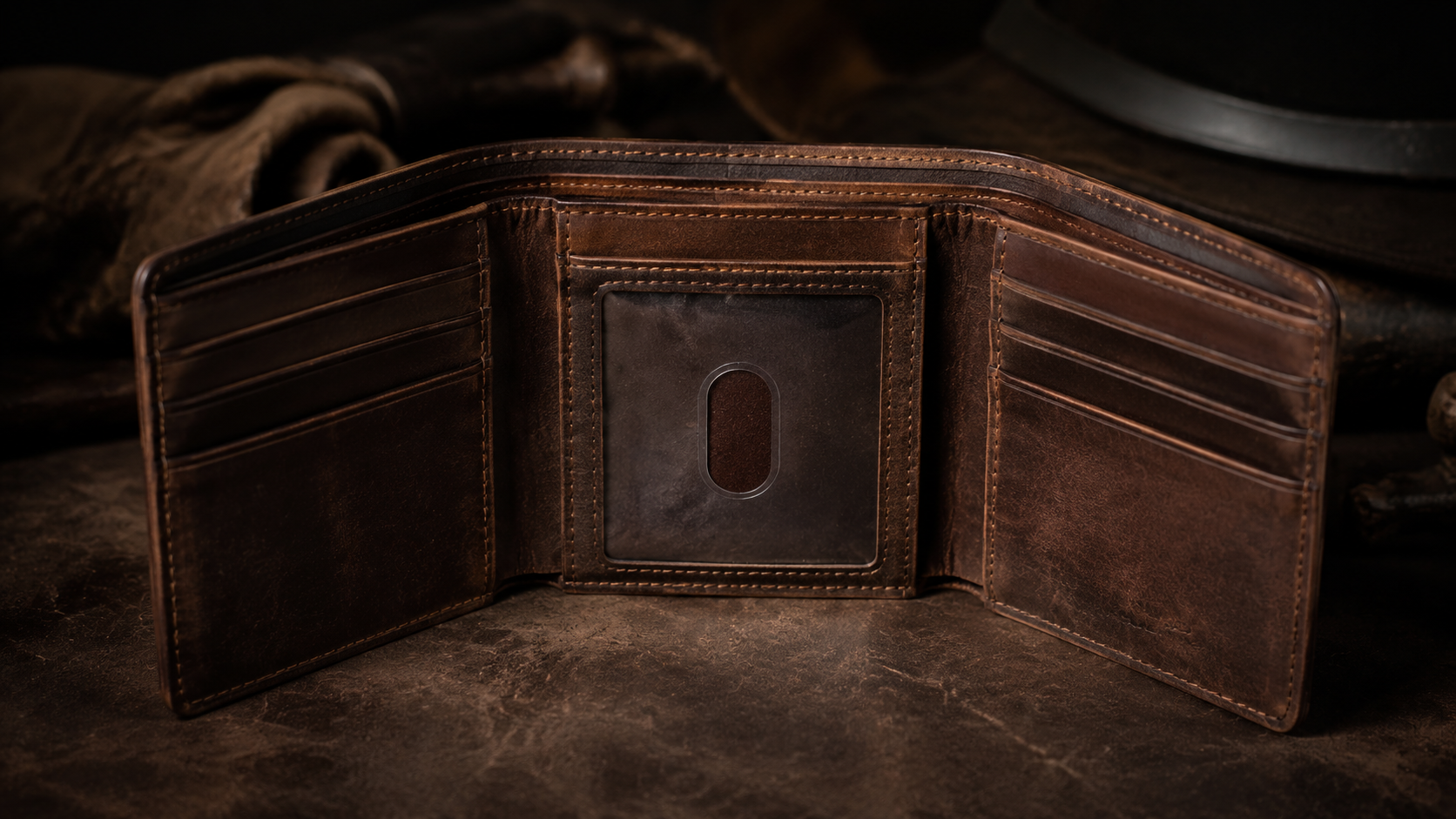
BSL's trifold is cut from full-grain American leather, hand-sewn on a leather sewing machine, with hand-burnished edges, and built to stay flat loaded. Made in Mansfield, Texas.
Shop BSL Wallets →Final Thoughts
The trifold earns its place for anyone carrying 8+ cards who wants organized access without switching to a long wallet. The key is buying one built from full-grain leather with properly skived interior pockets — anything less turns into a brick inside six months. Get the construction right and you've got a wallet that outlasts the minimalism trend by a decade.


