


Laser engraving on full-grain leather is permanent and sharp. Here's how it works, what separates good results from bad ones, and what to ask before ordering.
A personalized leather wallet is one of the few gifts that actually gets used every single day. Not put on a shelf, not returned, not regifted. But the difference between an engraving that looks sharp at year five and one that fades out at month six comes down to the method, the leather, and whether whoever made it actually knows what they're doing. Before you order, here's what you need to understand.
This guide covers how leather wallet engraving works, what questions to ask before you commit, and what separates a clean permanent result from one that looks like it was done with a stencil kit from a craft store.
How Leather Engraving Actually Works
There are two main methods used for personalizing leather wallets: laser engraving and hand tooling. They produce different results, suit different aesthetics, and have different durability profiles.
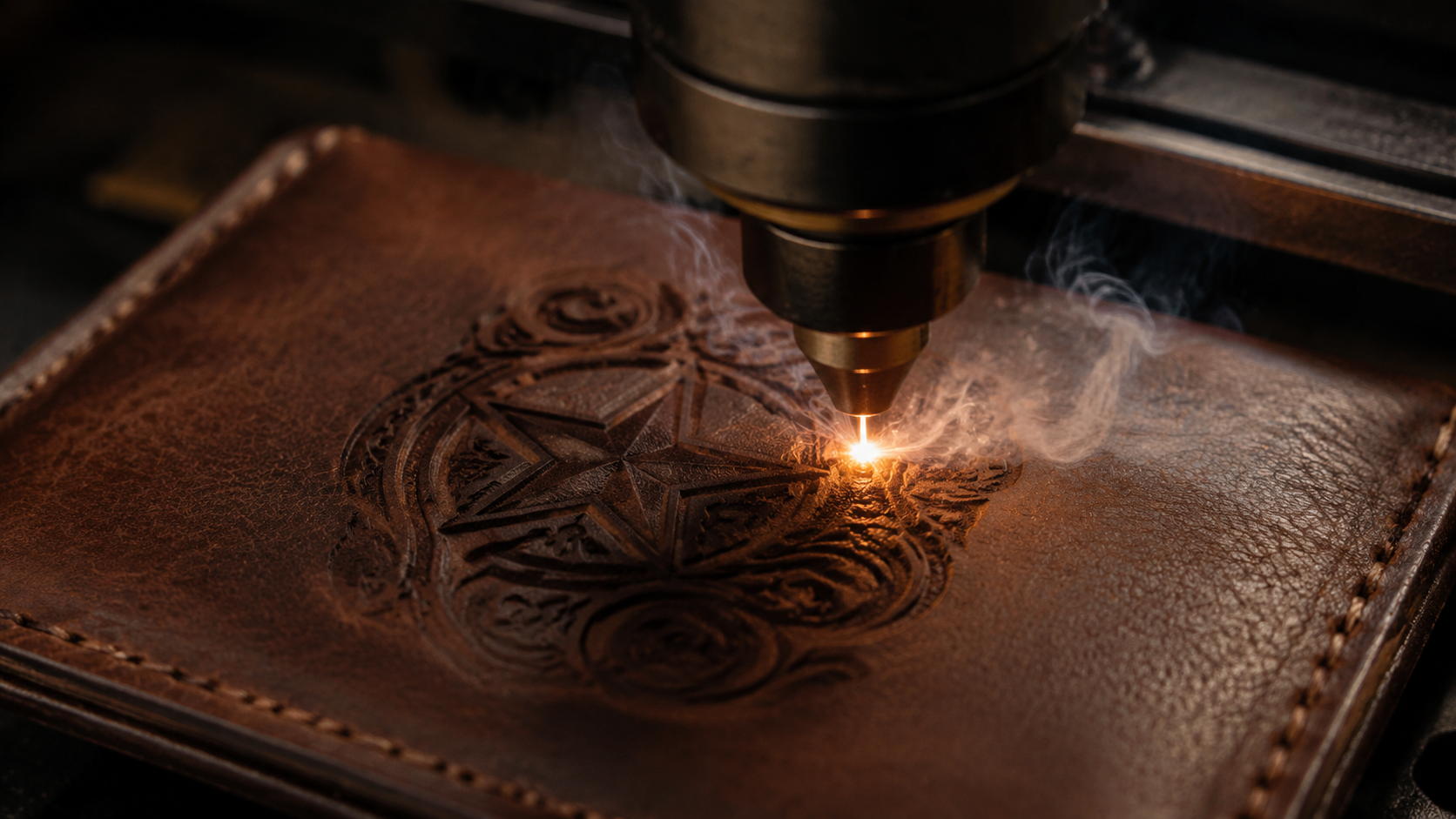
Laser engraving uses a focused beam to remove the surface layer of the leather, burning a precise design into the grain. On full-grain vegetable-tanned leather, laser engraving produces a clean, dark contrast against the natural hide color — the result is sharp-edged, highly detailed, and permanent. The engraving doesn't fade because the leather itself is altered, not surface-coated. On chrome-tanned or top-grain leather, results vary — the sanded surface doesn't hold the same contrast.
Hand tooling is the traditional method: a craftsman uses stamps, swivel knives, and bevelers to carve designs directly into dampened leather. Hand tooling produces a three-dimensional, raised and recessed result that you can feel with your fingers. It's slower, more expensive, and suits western and traditional aesthetic work better than modern minimalist text.
For most personalized wallet requests — initials, names, badge numbers, dates — laser engraving is the right method. It's fast, precise, and produces consistently clean results that last the life of the leather.
Laser engraving on full-grain veg-tan leather is as permanent as it gets. The design is part of the leather now — not on top of it.
What Makes a Good Engraving vs. a Bad One
Leather grade determines contrast. Full-grain vegetable-tanned leather produces the best laser engraving results. The natural surface burns clean and dark, and the lighter surrounding leather creates sharp contrast. Top-grain leather — which has been sanded and embossed — often burns inconsistently because the surface coating reacts differently than the hide. If the wallet description says "genuine leather" or doesn't specify full-grain, the engraving quality will be unpredictable.
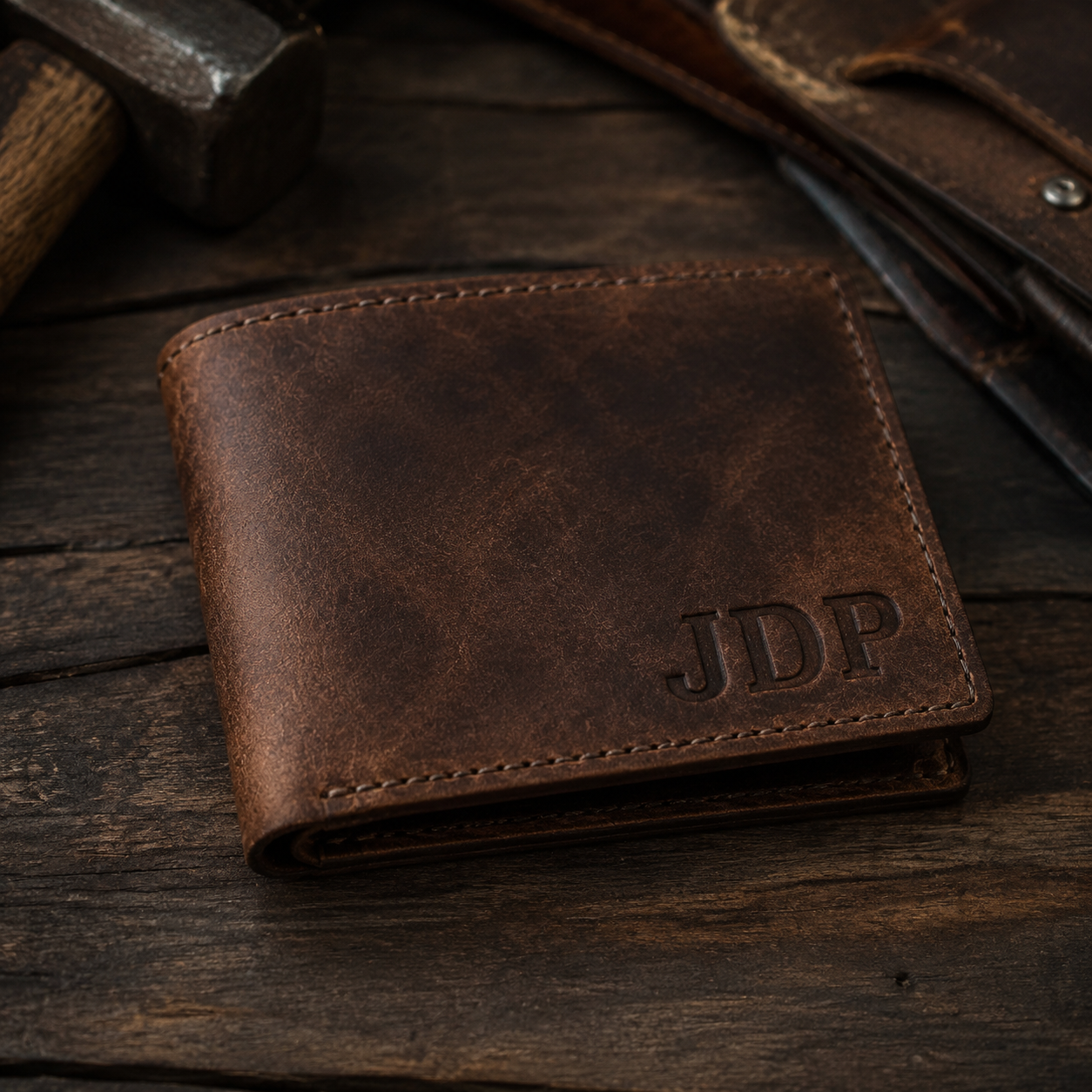
Font and design scale matter. A wallet exterior is small real estate — roughly 3.5" x 4.5" on a standard bifold. Thin serif fonts look great at large sizes and muddy at small ones. Initials can be done at a range of sizes. If you're asking for a full name or a phrase, make sure the text will be legible at wallet scale before approving the layout. Any professional shop should send you a digital proof before burning.
Placement affects aging. The fold line on a bifold flexes thousands of times over the life of the wallet. Engravings placed directly on the fold line will show stress marks as the leather ages. Smart placement puts designs on the front exterior panel, away from the fold — where the leather is stable and the design stays sharp.
Depth and power settings. Laser engraving depth is adjustable. Too shallow and the engraving fades as the leather develops a patina. Too deep and it weakens the grain at the engraved area. The right depth leaves a clearly defined result without cutting through the surface fiber. This is a skill issue — inexperienced operators often go too shallow trying to avoid mistakes, which produces engraving that looks faded within the first year.
What to Ask For When Ordering a Personalized Leather Wallet
Initials or full name? Initials in a classic monogram format (First / Last / Middle arranged as a three-letter block) is the traditional choice — timeless and legible at wallet scale. A full first and last name works for longer wallets with more panel space. A single initial as a large statement piece is a modern approach that works well with clean, minimal wallet designs.
Exterior front or interior? Exterior front panel is the most visible placement. Interior personalization (inside the bill compartment or card section) is more subtle — some people prefer the surprise when they open it, especially for gifts.
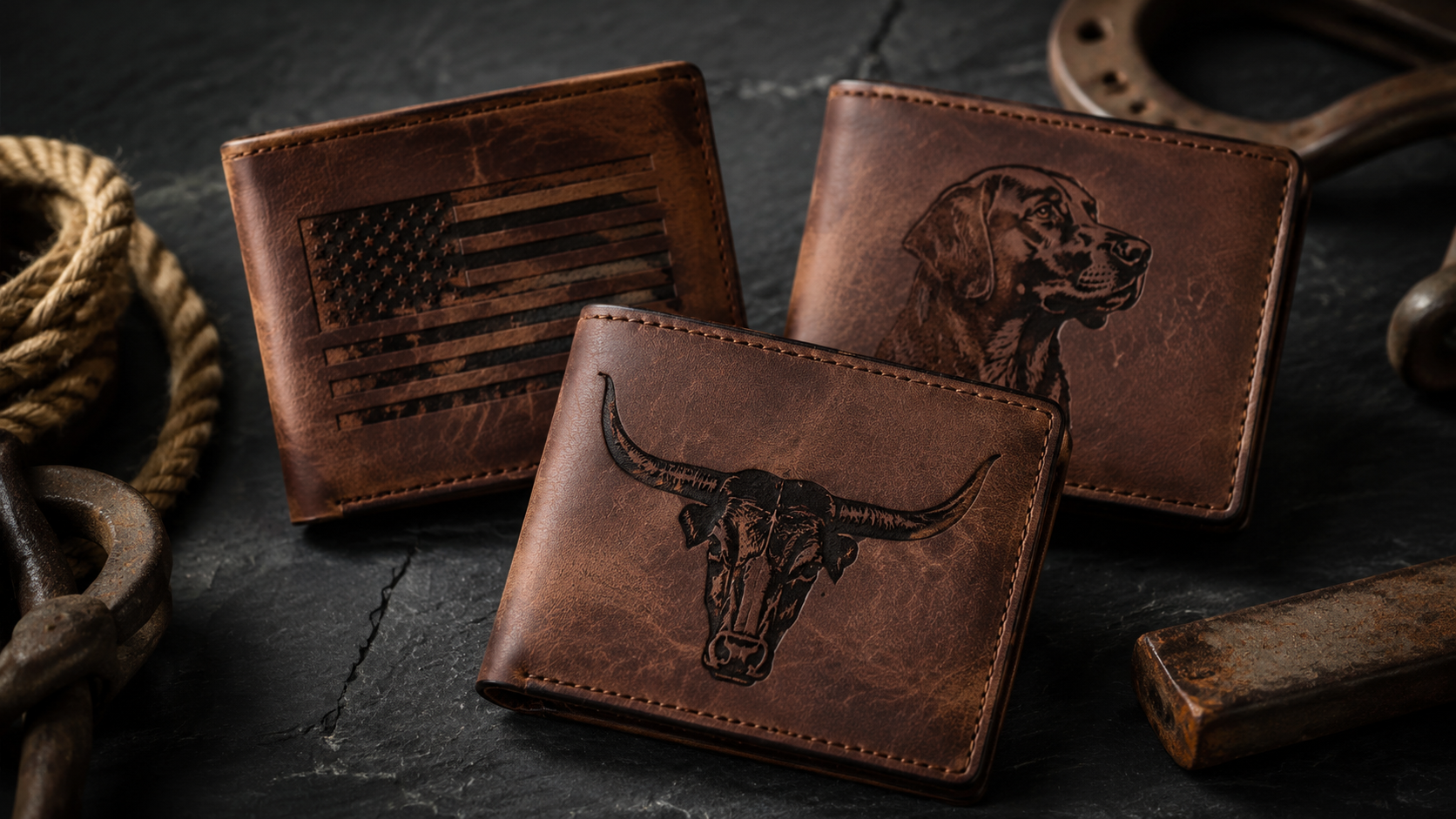
Text only or logo/crest? BSL can laser engrave custom text, agency seals, badge outlines, family crests, or custom artwork. For artwork, supply a high-contrast black and white vector file (SVG or AI) for the cleanest result. Bitmap images work but require cleanup — the cleaner the source, the sharper the burn.
Retirement or promotion wallets. Engraved wallets are standard retirement and promotion gifts in law enforcement — badge number, rank, agency, years of service. BSL does these regularly. A good format: rank + name on the exterior, badge number + years + agency on the interior panel.
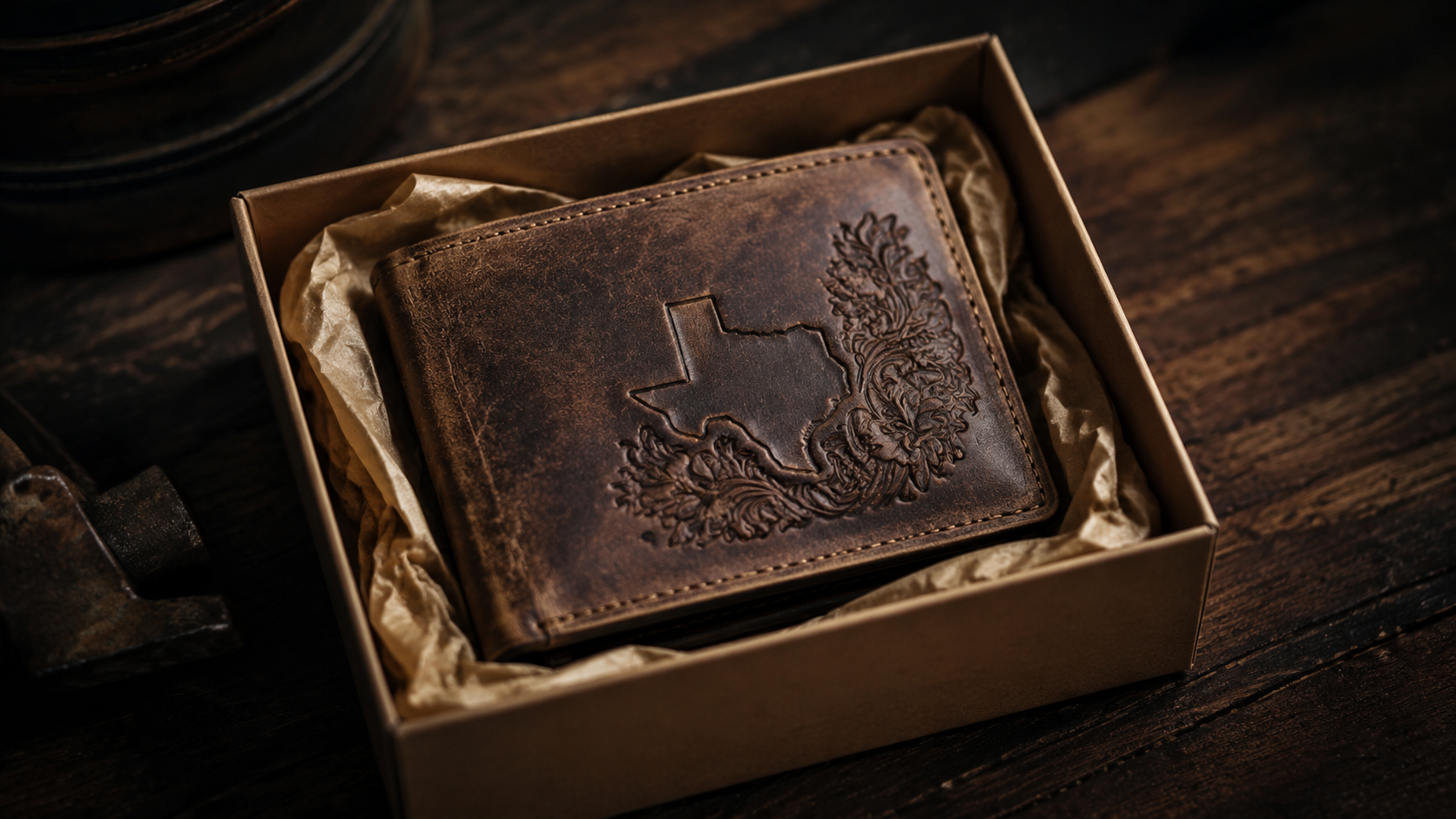
BSL personalizes wallets with laser engraving on full-grain Horween leather. Initials, names, badge numbers, agency seals, custom artwork — send us what you want and we'll proof it before we burn it.
Shop Personalized Wallets →Final Thoughts
A laser-engraved full-grain leather wallet is one of the most personal everyday objects someone can carry. The key is making sure the leather, the method, and the craftsman are all matched to produce a result that's still sharp at year ten — not something that looks faded by the time the recipient has broken the wallet in. Ask the right questions upfront, get a proof, and buy from someone who does this on real leather, not just any hide they can stamp a name onto.
Browse engravable styles: leather wallets for men and badge wallets — both available with laser engraving in Mansfield, Texas.


