


Full-grain leather, the right width for your pants, burnished edges, solid hardware. Here's the complete belt buying breakdown so you buy it right once.
Leather Belt Buying Guide for Men — What Separates a Good Belt from a Bad One
A leather belt is one of those purchases most guys make wrong twice before they figure out what they actually want. The first belt is cheap and falls apart at the buckle holes within a year. The second is better but still not quite right — too stiff, too soft, wrong width for the pants. The third purchase, if you research it, is the last one you make for ten years.
Here's what actually separates a good leather belt from a bad one, so you can skip the first two iterations and buy the right one the first time.
Leather Grade: The Only Thing That Really Matters
Everything else about belt quality is secondary to the leather grade. A belt is a single long strip of leather that flexes hundreds of times a day through loops. The grade determines whether it holds up or cracks, stretches out, and peels.
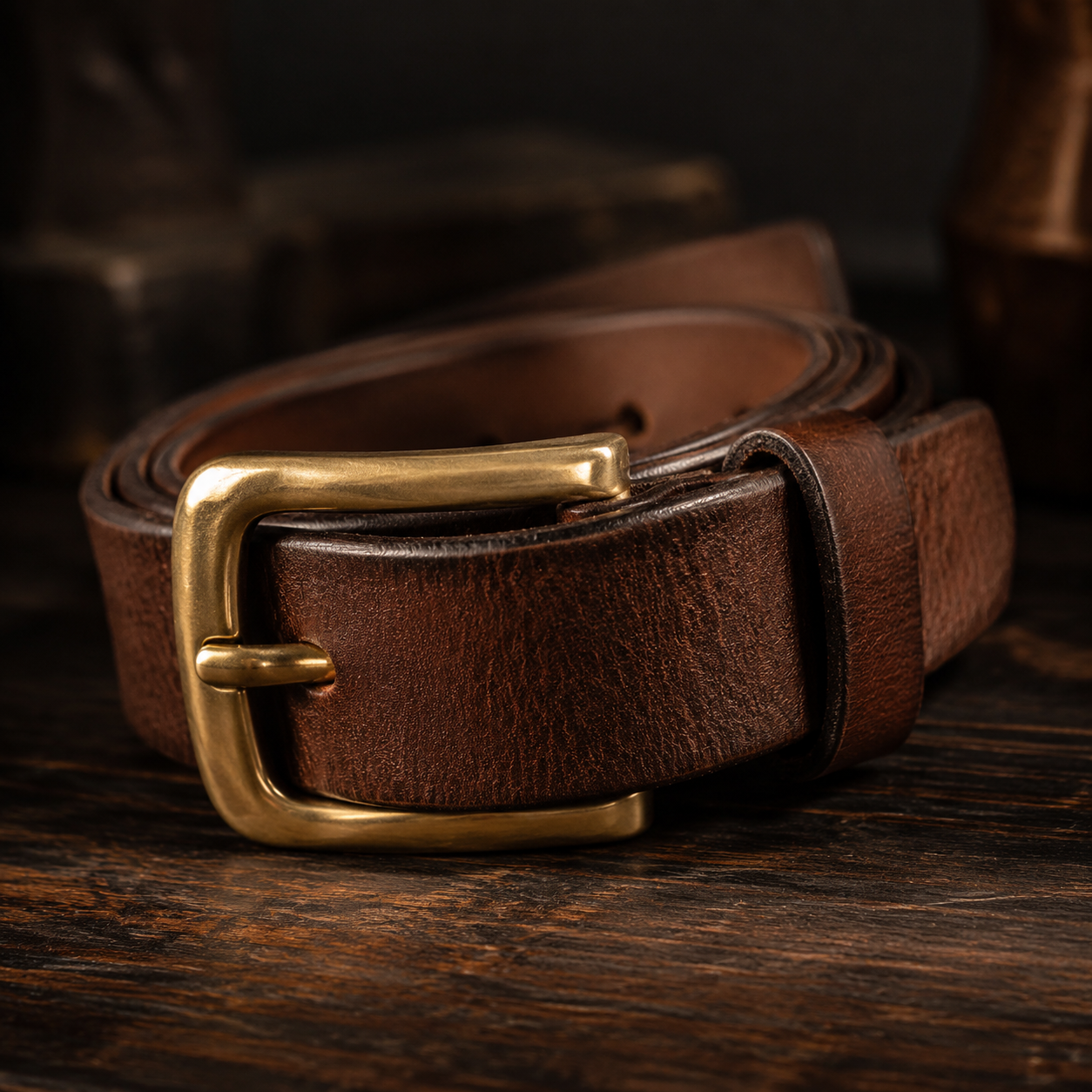
Full-grain leather is the top layer of the hide with the natural surface intact. It's the strongest, densest part of the hide — the fiber structure is tight and resilient. A full-grain belt bends without cracking, holds its shape under a buckle without deforming, and develops a patina over years of wear. A quality full-grain belt at 1.5" width will outlast five cheap alternatives.
Top-grain leather has been sanded to remove surface imperfections and embossed with a uniform grain. It looks clean but loses durability at the sanded surface. Belts made from top-grain tend to crack at the fold lines — the loop holes and the buckle crease — within two to three years of daily wear.
Genuine leather and bonded leather are the bottom of the stack. Genuine leather belts look fine at the store and start separating at the holes within months. Bonded leather belts peel. Both are false economy.
The hole area takes more stress than any other part of a belt. Full-grain holds. Everything else eventually tears.
Width: Match Your Belt to Your Pants
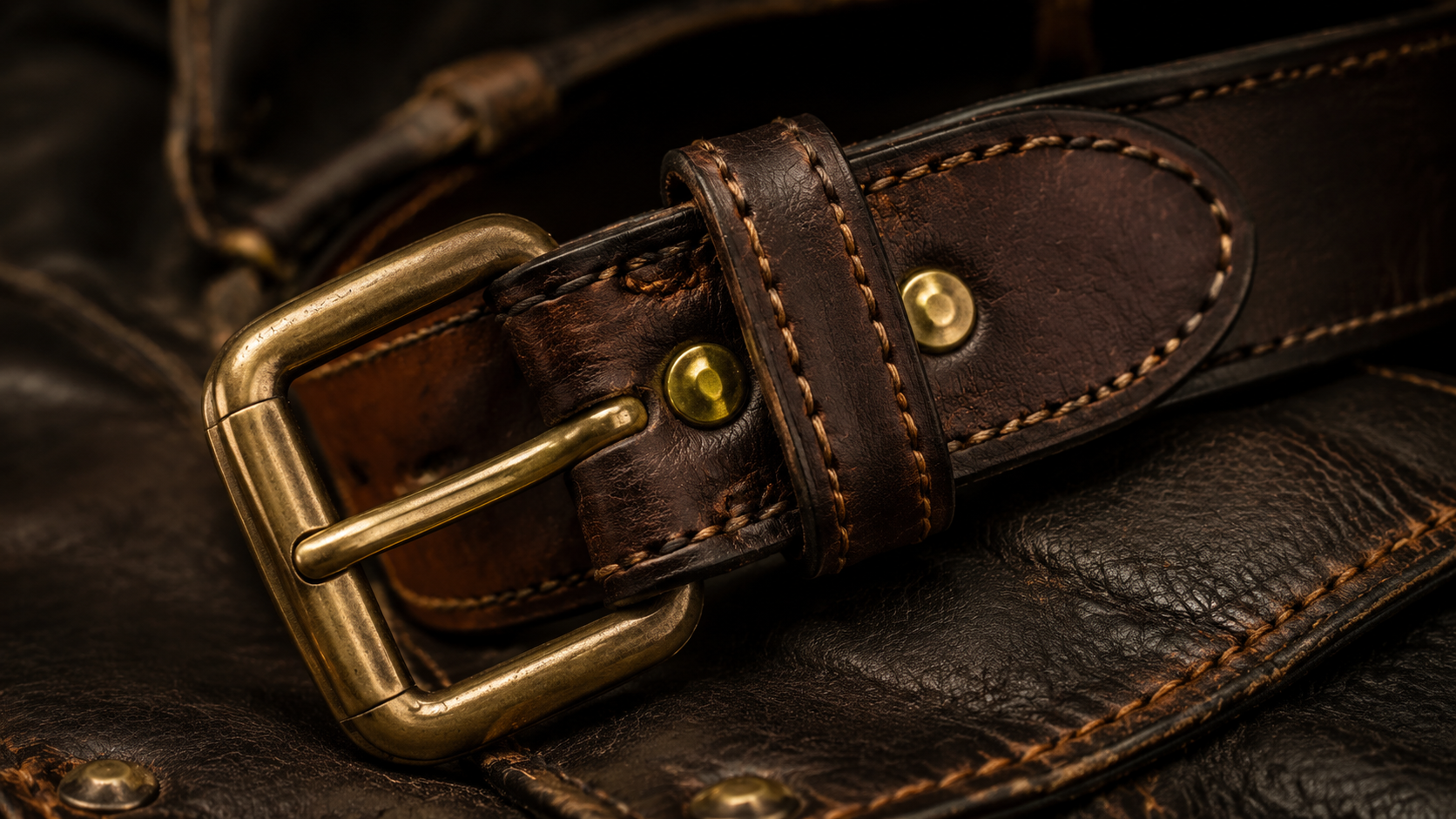
Belt width should match the loop width on your pants. Buying the wrong width is one of the most common mistakes — it looks off and creates extra wear at the loops.
| Belt Width | Best For | Notes |
|---|---|---|
| 1" (25mm) | Dress pants, slacks | Formal/business carry; most dress pants have 1" loops |
| 1.25" (32mm) | Chinos, business casual | Versatile size that works with most pants; good all-around choice |
| 1.5" (38mm) | Jeans, casual pants | Standard jeans width; the workhorse choice for most guys |
| 1.75"–2" (44–50mm) | Western, tactical, work pants | Wide belt for wide loops; the western and workwear standard |
If you're buying one belt to cover everything, 1.5" in a medium brown is the most versatile choice — it works with jeans, most casual pants, and looks right with boots.
Construction Details Worth Checking
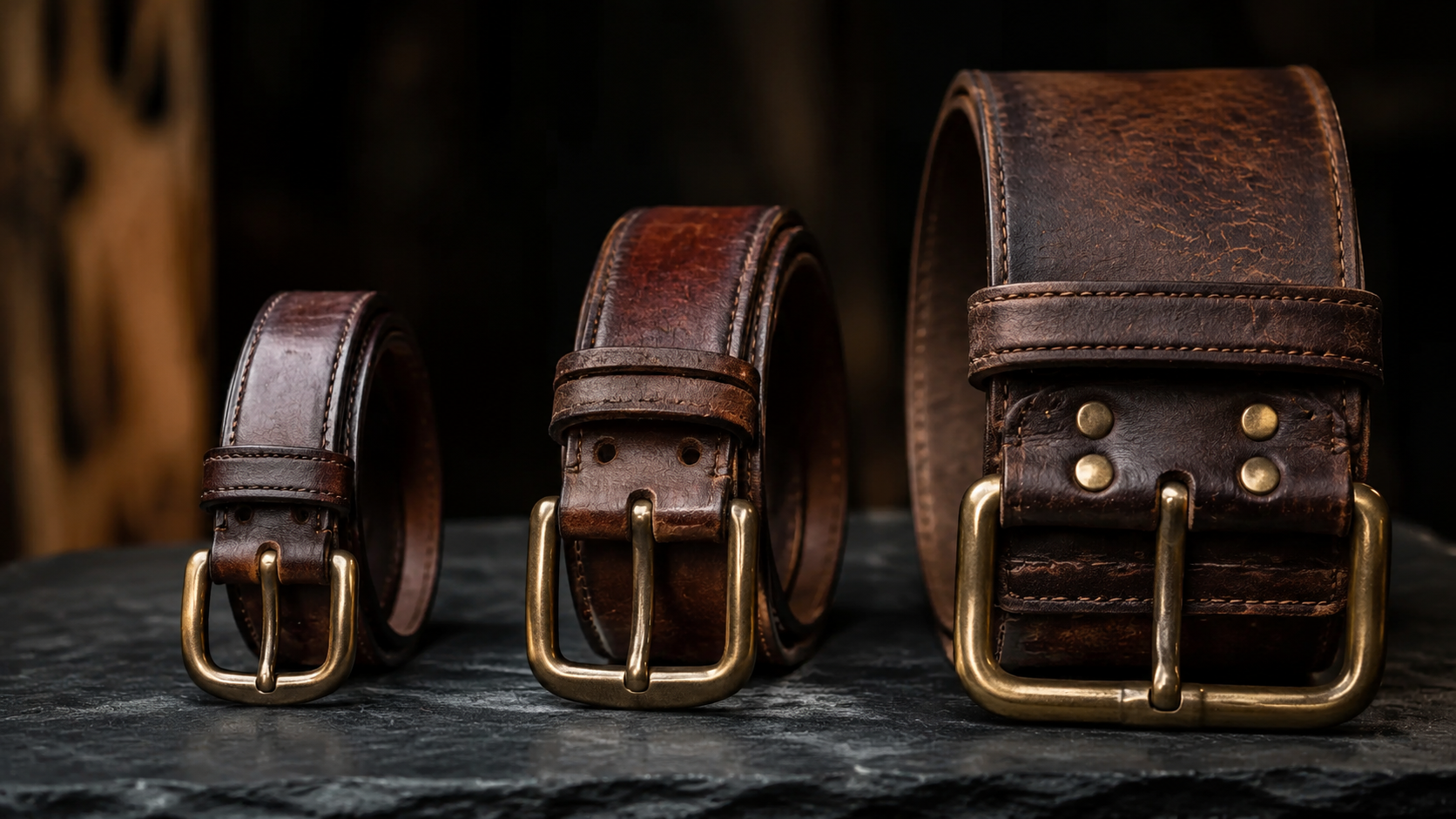
Edge finishing. The long edges of a leather belt take constant friction against loops. Poorly finished edges — raw cut or painted with a thin coat — dry out and crack within the first year. Burnished edges (rubbed smooth and sealed with edge finish) are rounded, durable, and look clean indefinitely. This is one of the clearest visible differences between a quality belt and a cheap one.
Buckle hardware. Solid brass or solid steel buckles are the right choice. Chrome-plated zinc buckles are common in cheap belts and eventually chip, revealing base metal underneath. Solid hardware also just feels heavier and more substantial in hand. If the buckle rattles when you shake the belt, the prong fit is loose — it will strip the holes faster.
Single-piece vs. layered construction. The best belts are cut from a single strip of full-grain leather — no lamination, no backing, no secondary layer glued on. Some lower-cost belts use a thin top layer bonded to a fabric or split leather core. These delaminate over time, especially at the hole area. Single-piece construction means you're wearing the same quality all the way through.
Hole placement and count. A properly made belt has 5 holes spaced 1" apart, centered so the middle hole is your ideal wear position. Cheap belts often punch holes inconsistently or space them too close together. Well-made belts punch clean, smooth holes that don't tear out at the edges — the leather is compressed around the hole, not just punctured.
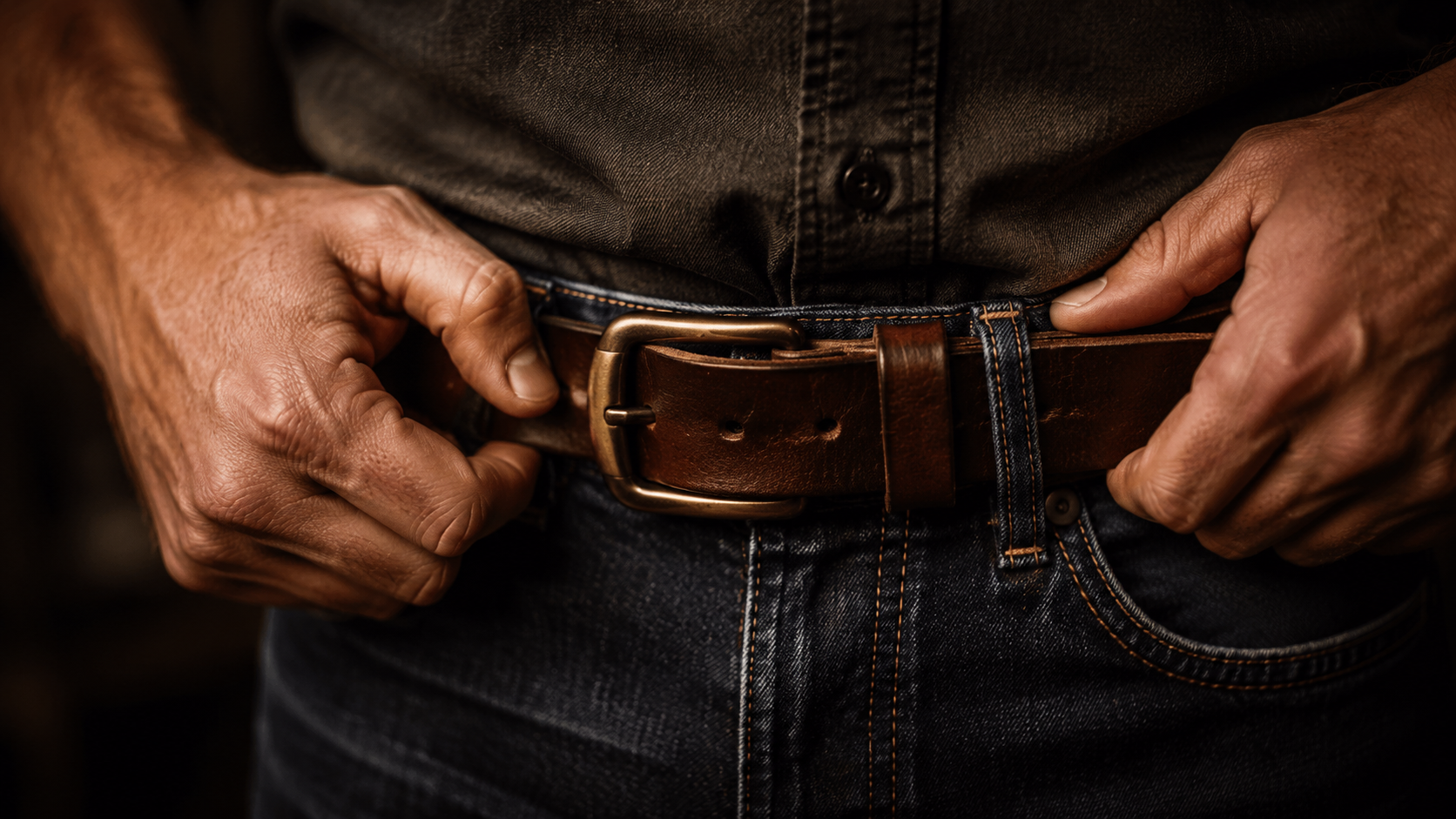
BSL belts are single-piece full-grain American leather with burnished edges and solid hardware. Made in Mansfield, Texas. Built to outlast the pants you wear it with.
Shop BSL Leather Belts →Final Thoughts
A full-grain leather belt in the right width for your pants, built with burnished edges and solid hardware, is a ten-year purchase. The cheap version is a two-year purchase you make five times. The math doesn't favor cheap — it just defers the cost while degrading the experience. Buy it right once and stop thinking about it.

