


Two cleanings a year keeps leather supple and developing patina instead of accumulating grime. Here's the correct process — and what never to use on leather.
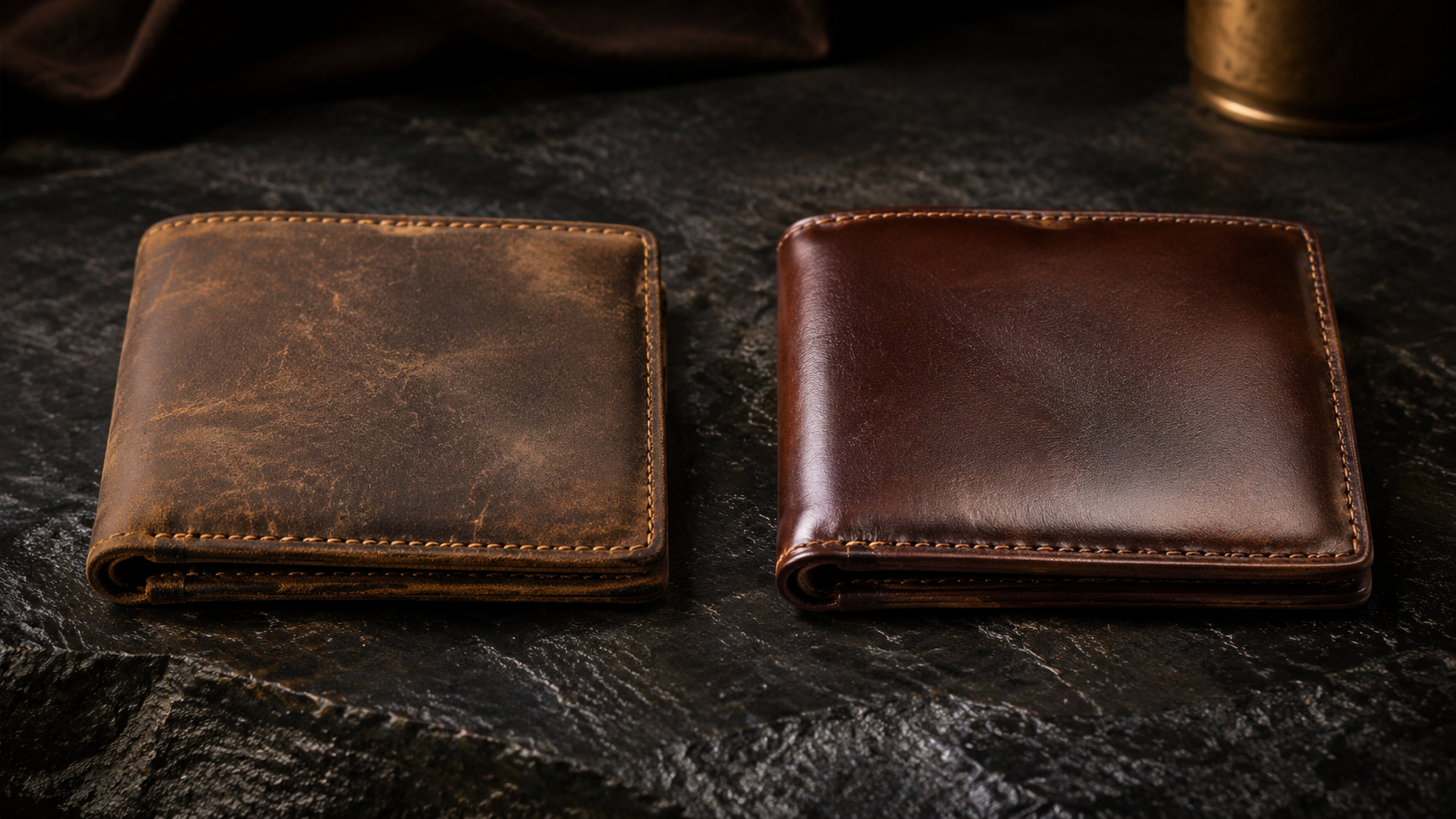
Leather wallets pick up pocket lint, skin oils, sweat, and the general grime of daily life. After a year of carry, even a good wallet can look tired — not because the leather is failing, but because it's never been cleaned. The fix is simple. The mistake most people make is grabbing the wrong product and doing more damage than the dirt ever did.
Here's how to clean a leather wallet correctly — whether it's a $30 bifold or a $150 handmade full-grain piece that you actually want to keep for a decade.
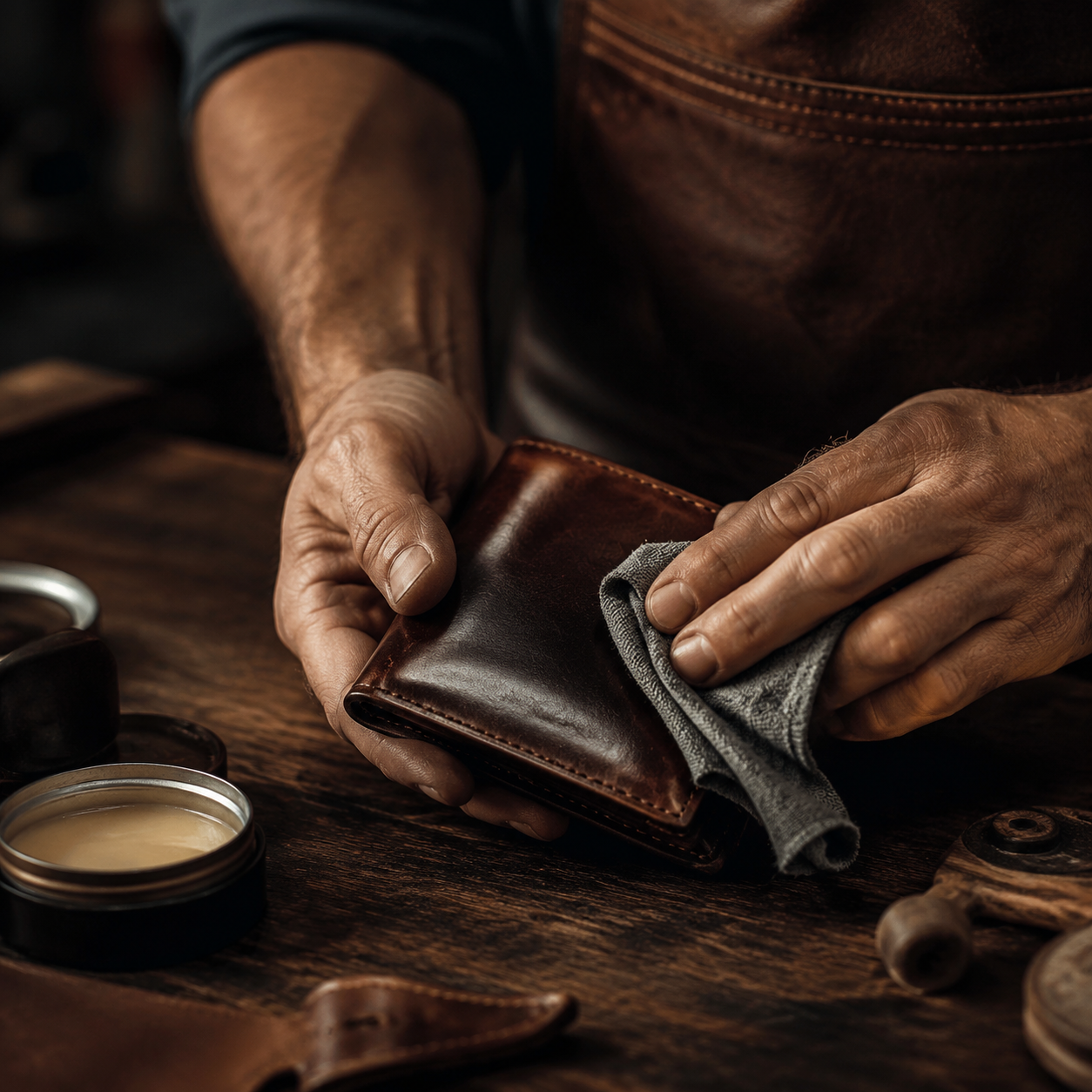
What You're Actually Cleaning Off
A leather wallet accumulates three types of buildup over time:
Surface dust and lint. The benign stuff. Picks up from pockets, lint from fabric, environmental dust. Easiest to remove and the least harmful.
Skin oils and sweat. The insidious stuff. Your hands transfer oils to the leather every time you handle the wallet. Over time this builds a tacky layer that attracts more dirt, dulls the grain, and can break down the leather's surface if not periodically cleaned out.
Stains — ink, food, grease. The problem stuff. These penetrate the leather grain and need to be addressed quickly before they set. The longer a stain sits, the deeper it goes and the harder it is to lift without affecting the surrounding leather.
The cleaning process addresses all three, in the right order: dry clean first, then damp clean, then condition to restore what the cleaning removed.
Leather isn't self-maintaining. Clean it twice a year minimum, condition every time you clean, and it will last longer than you will.
What to Use — and What to Never Use
Use:
Dry soft brush or microfiber cloth — For initial dry cleaning. A horsehair shoe brush or a soft toothbrush works for getting lint and dust out of stitching and edges. A dry microfiber cloth wipes the panels clean without scratching the grain.
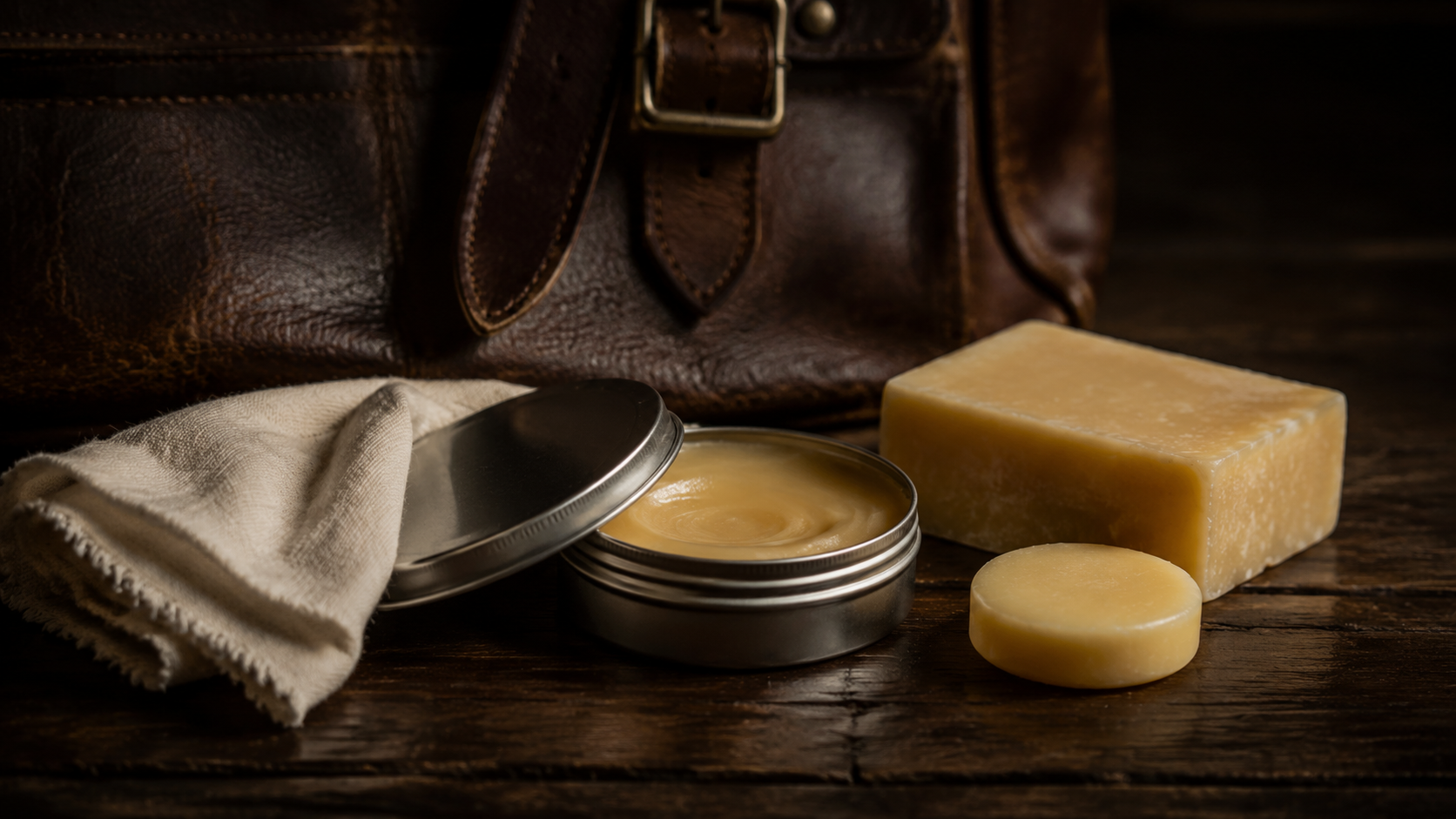
Saddle soap — The traditional leather cleaner. Applied with a damp cloth, worked into a light lather, then wiped clean. Saddle soap lifts oils and surface grime without stripping the leather's natural tannins. Don't soak the leather — damp cloth, light application.
Leather conditioner — Applied after cleaning to restore moisture. Leather conditioner (neatsfoot oil, mink oil, or dedicated leather conditioners like Leather Honey or Bickmore Bick 4) penetrates the grain and prevents the leather from drying out and cracking. Never skip this step after cleaning.
Never use:
Baby wipes or wet wipes — They contain alcohol and fragrance compounds that dry out leather and can strip the surface treatment on top-grain and genuine leather.
Household cleaners, dish soap, or vinegar — All too aggressive. These will strip the leather's finish and dry it out. Vinegar, despite being widely recommended online, will dull the grain over repeated use.
Too much water — Leather can absorb water and then stiffen or warp as it dries. A damp cloth is fine. Submerging or soaking is not. If your wallet gets soaked in rain, let it dry naturally at room temperature — never force-dry with a hair dryer or on a heat source.
The Step-by-Step Cleaning Process
Step 1: Empty it. Remove all cards, cash, and IDs. Set them aside.
Step 2: Dry brush. Use a soft brush or dry microfiber cloth to remove surface lint and dust from the exterior panels, edges, and stitching channels. Work gently — you're just lifting loose material, not scrubbing.
Step 3: Saddle soap. Dampen a clean cloth — not wet, damp. Apply a small amount of saddle soap and work it into a light lather on the cloth, then apply to the leather in circular motions. Cover the entire exterior, paying extra attention to the fold line and edges where oils accumulate. Wipe clean with a second damp cloth. Let dry for 10–15 minutes.
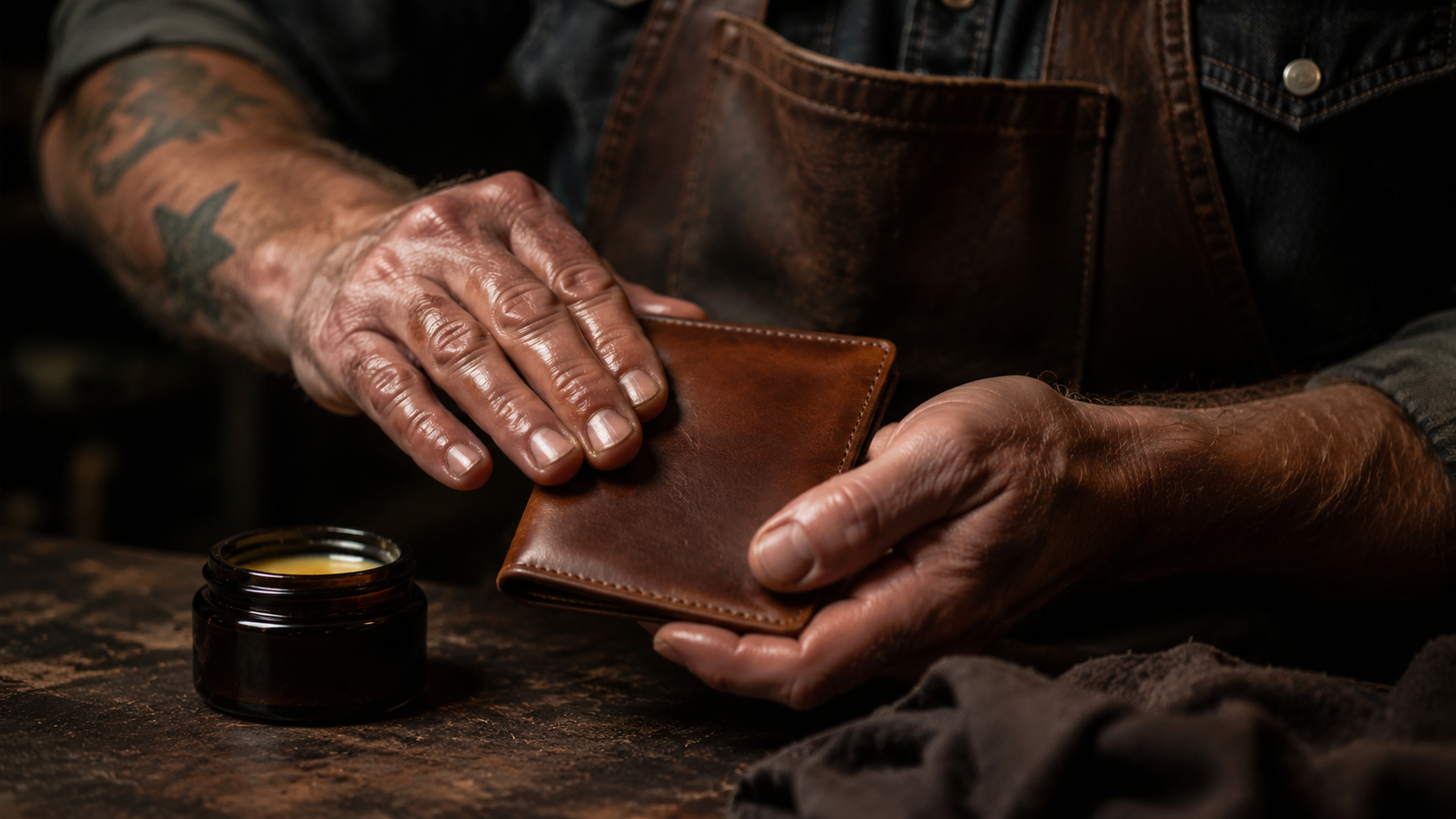
Step 4: Condition. Apply a small amount of leather conditioner to a clean cloth and work it into the leather in circular motions. Use less than you think you need — a light coat applied evenly is better than a heavy coat that sits on the surface. Let it absorb for 20–30 minutes, then buff lightly with a dry cloth.
Step 5: Reload. Once the wallet is dry and the conditioner has absorbed, reload your cards. The leather will feel slightly more supple than before — that's normal and correct.
BSL wallets are full-grain Horween leather — the grade that actually responds to cleaning and conditioning by getting better, not just cleaner. Built in Mansfield, Texas.
Shop BSL Wallets →Final Thoughts
Cleaning a leather wallet is a 30-minute process you should do twice a year. The products cost less than $20 and last for years. The payoff is a wallet that develops a deep, honest patina instead of accumulating grime — and leather that stays supple instead of drying out and cracking at the fold. Two cleanings a year is the difference between a wallet that looks better at year five and one that looks worn out at year two.


