


Three questions determine the right leather wallet: how many cards you carry, where you carry it, and whether it's a gift. Full-grain leather on everything. Done.
Most guys spend more time researching headphones than the thing they handle 15 times a day. The result is a wallet bought on autopilot — whatever was near the register, whatever showed up first in the search results, whatever someone gave them three years ago that they keep meaning to replace.
The actual decision is simple. There are three questions that determine the right wallet for you, and none of them require more than a minute to answer. Here's the whole framework.

Question 1: How Many Cards Are You Actually Carrying?
Count them. Pull your wallet out right now and count the cards you use in a given week. Most people guess high and are surprised by the actual number. The average guy's "necessary" carry comes to 4–6 cards — driver's license, one or two credit cards, a debit card, maybe a health insurance card.
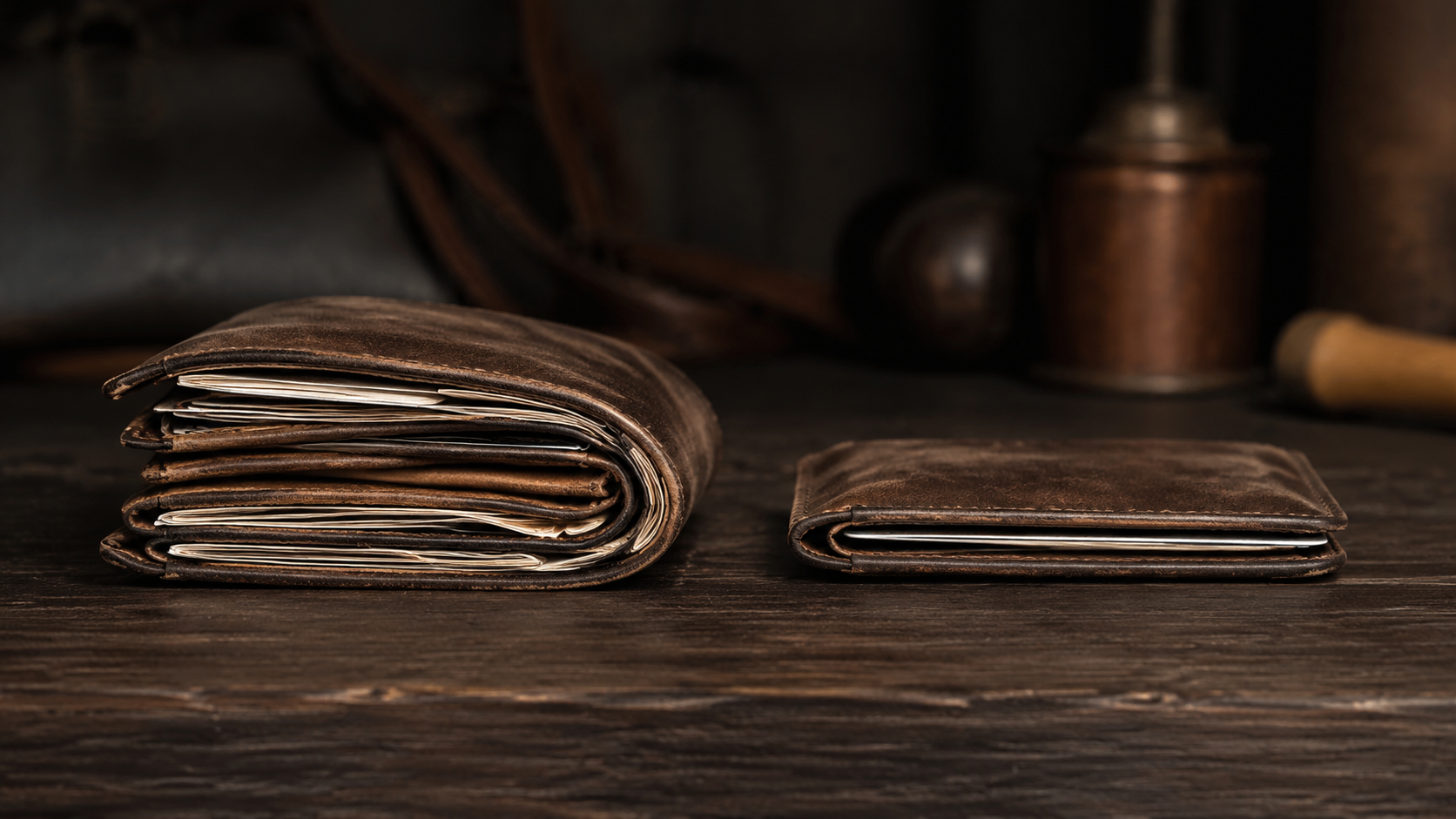
4–6 cards: You can carry a slim wallet. Front pocket or back pocket, a well-made slim wallet in full-grain leather handles this load without bulk. If you're sick of sitting on a fat bifold, this is your exit.
6–10 cards: A bifold. Standard card capacity, comfortable pocket carry if the wallet is good leather (not a stuffed-plastic accordion disaster). Most guys in this range are carrying a bifold already and the question is whether they have the right one.
10+ cards: You need a trifold, or you need to edit. Ten cards is a lot to carry daily. The ones you use once a month can live in a drawer. Your wallet isn't a filing cabinet.
The right wallet size is determined by your actual carry, not your imagined carry. Most guys are carrying half the cards they think they need.
Question 2: Where Do You Carry It?
Back pocket: A standard bifold works. The only rule is that it shouldn't be so thick that it causes posture problems when you're driving or sitting for long stretches. If you feel your wallet when you sit down, it's too thick for back pocket carry.
Front pocket: Profile matters. A wallet that works in a front pocket has a closed thickness under 0.5" when loaded. That's achievable with 4–5 cards in a purpose-built slim wallet. Most regular bifolds don't clear this threshold once loaded — they're designed for back pockets.
Jacket or shirt pocket: This is common for law enforcement (badge wallets) and guys who wear sport coats regularly. A flat closed profile is the requirement — nothing that creates visible bulk through fabric.
If you're carrying in a front pocket right now and your current wallet fits badly, the wallet is wrong for the position. The answer is a purpose-built slim, not squishing the bifold harder.
Question 3: Is It for You or for Someone Else?
For you: Buy the right size for your carry and your pocket. Full-grain leather. Burnished edges. That's the whole spec.
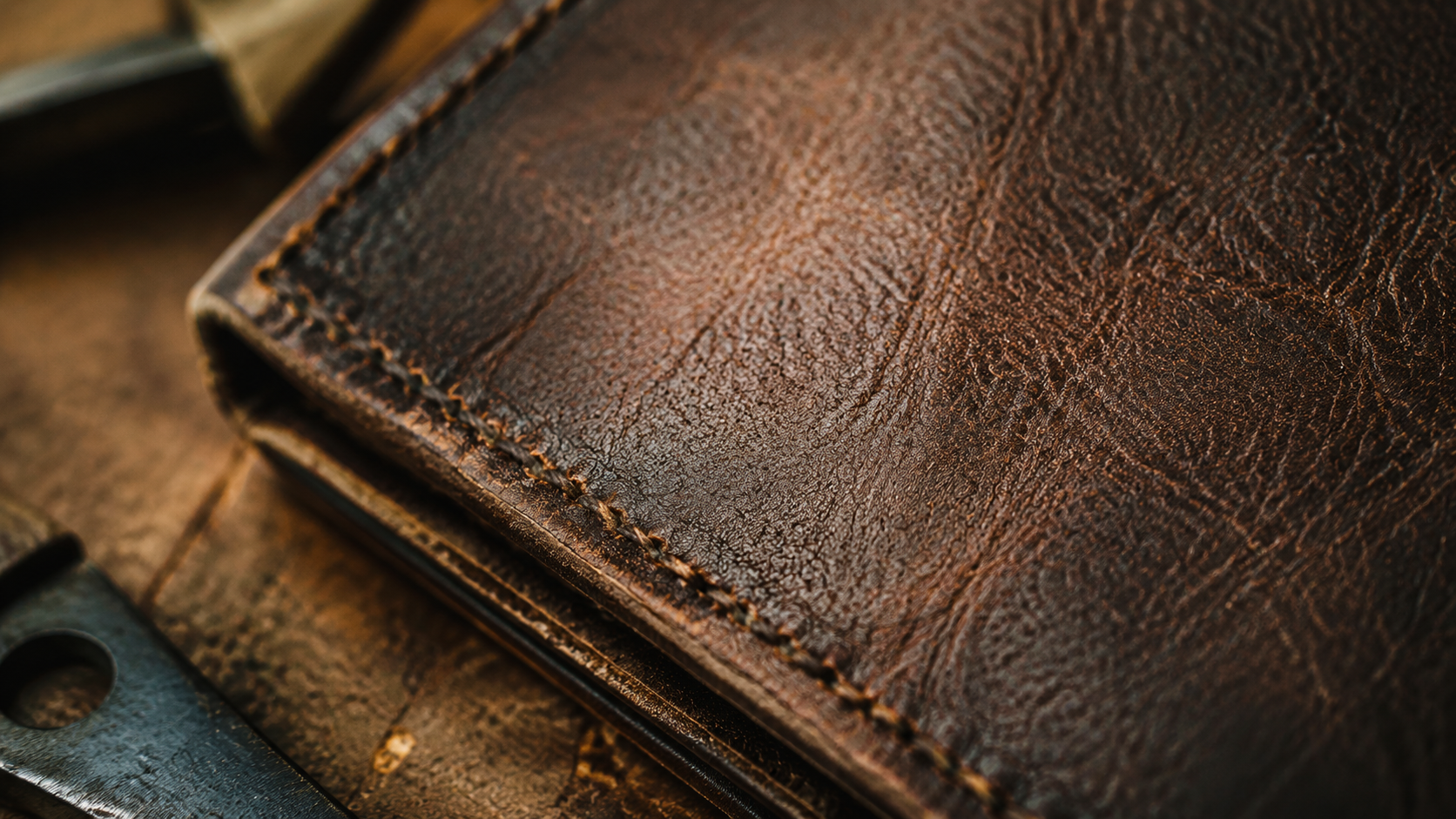
As a gift: Add engraving. A personalized leather wallet is the rare gift that becomes more meaningful with time — the engraving doesn't fade, and the leather develops a patina around it over years of daily carry. Initials, a date, a badge number, a name. It takes a standard gift and makes it specifically theirs.
The personalization doesn't cost much and it's the difference between a good wallet and a wallet someone pulls out in ten years and says "this was a gift from [you]." That's a different category of gift entirely.
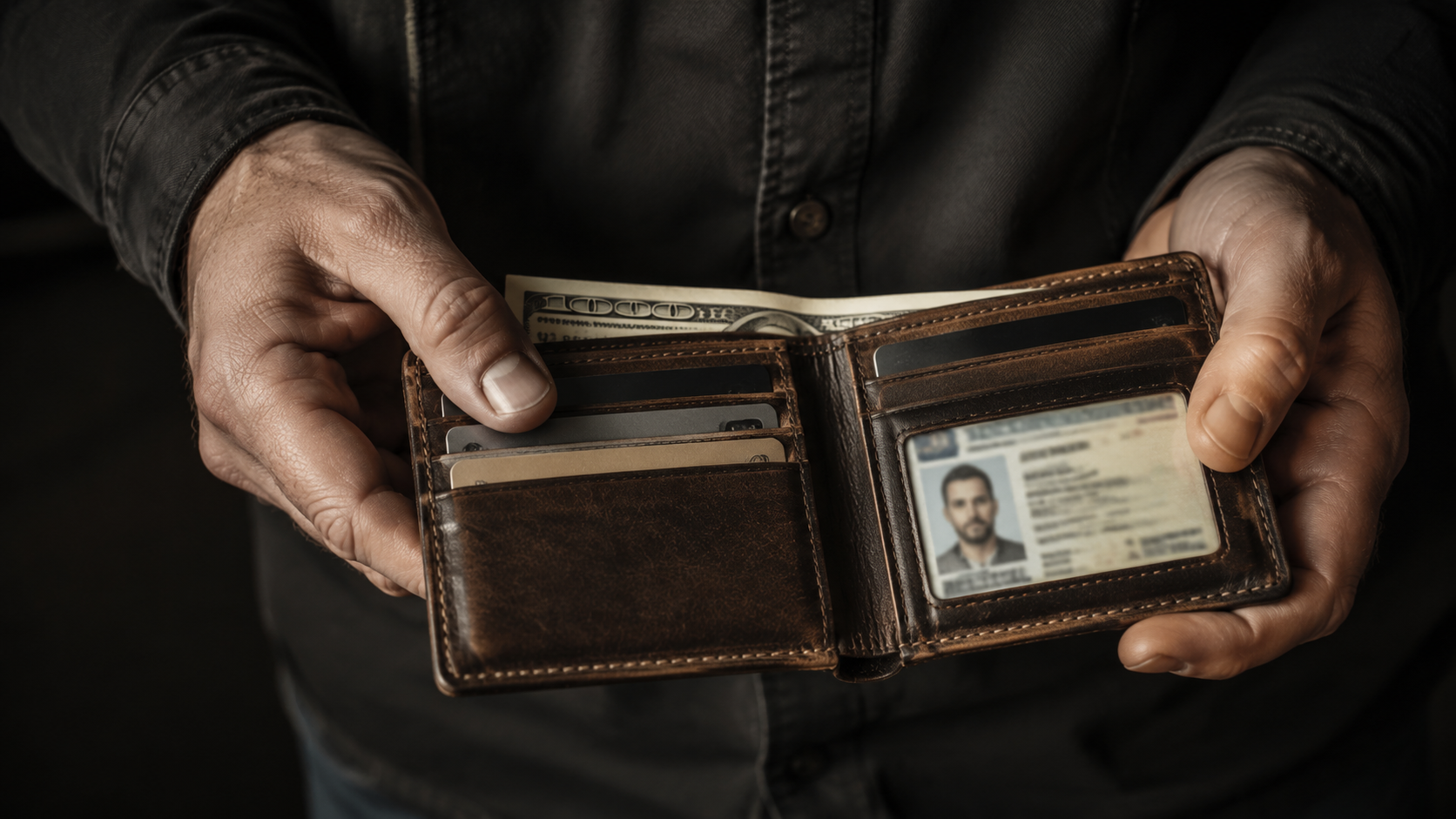
BSL wallets are full-grain Horween leather, hand-sewn on a leather sewing machine with hand-burnished edges, in Mansfield, Texas. Bifolds, slims, badge wallets, and accessories — all available with laser engraving. Free shipping on every order, and 60-day free returns.
Shop BSL Wallets →The Summary
Count your cards → pick the right size. Identify your carry position → pick the right profile. Decide if it's a gift → add engraving if it is. Full-grain leather on every option. That's the entire decision tree. Five minutes, max. The only thing left is picking the one that looks right to you — and for that, you just need to see the options.
Browse by style: leather wallets for men · minimalist leather wallets · badge holder wallets. All handmade in Texas, backed by the No Bull Guarantee and 60-day free returns.


