


Cheap wallets fail in 1-2 years. Quality full-grain leather can last 20+ years. Here's what actually determines wallet lifespan — and how to maximize yours.
Your wallet gets handled multiple times a day, every single day. It gets sat on, crammed into pockets, exposed to sweat, humidity, heat, and cold. It holds the things you can't afford to lose. And most people replace it every few years without ever asking whether they have to.
The honest answer to how long a leather wallet lasts: it depends almost entirely on what it's made from and how it's built. The range runs from under two years to well over twenty — and whether you're carrying a minimalist leather wallet or a full badge wallet matters too. Understanding what puts a wallet in which category will save you money and frustration.

Wallet Lifespan by Leather Type
| Leather Grade | Expected Lifespan | Price Range | How It Ages |
|---|---|---|---|
| Bonded / Genuine leather | 1–3 years | $20–$50 | Peels, cracks, delaminates at fold and corners |
| Top-grain leather | 3–7 years | $60–$150 | Holds up but looks worn, no patina development |
| Full-grain (machine stitched) | 5–12 years | $80–$200 | Leather outlasts thread — seams fail first |
| Full-grain, machine-sewn, hand-burnished (BSL) | 10–25+ years | $85–$175 | Develops patina, gets better with every year of carry |
Cheap Wallets: 1–3 Years
Most wallets sold at department stores and fast-fashion retailers in the $20–$50 range are made from genuine leather (the lowest grade of real leather), bonded leather (shredded scraps glued with polyurethane), or split leather. They look fine out of the box. Within a year or two of daily use, they start peeling, cracking, and delaminating — especially at the corners and fold line where stress concentrates. The stitching goes before the leather does. By year three, you're replacing it.
Mid-Range Wallets: 3–7 Years
Top-grain leather wallets perform meaningfully better. Top-grain is the second-highest grade, sanded to remove imperfections and coated for a uniform surface. The limitation: the sanding and coating that make it look uniform also prevent the natural aging process. A top-grain wallet at seven years looks worn. A full-grain wallet at seven years looks broken in — which is different.
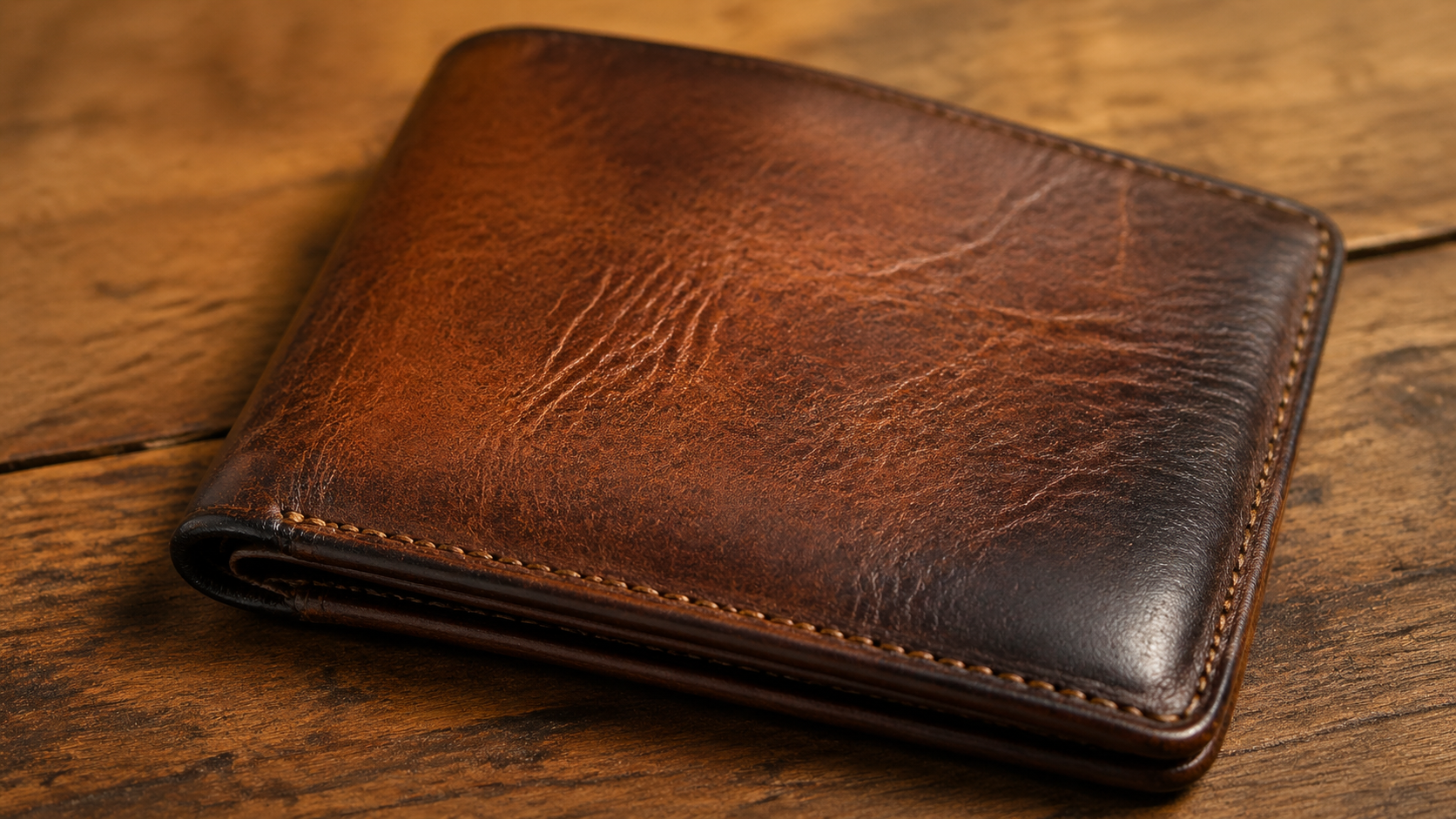
Quality Full-Grain Leather Wallets: 10–25+ Years
Full-grain leather is the outermost layer of the hide with the natural grain intact — the densest, most durable part of the skin. It hasn't been sanded, buffed, or corrected. Every mark in the grain is real. A well-made full-grain leather wallet doesn't just survive daily use — it improves under it. The oils from your hands, the heat of your body, the friction of daily carry all work into the leather and create a patina unique to your wallet and your life. At fifteen years, a quality full-grain wallet is often at its best.
The caveat is construction. Full-grain leather in a poorly stitched wallet still fails at the seams. That's why hand-sewn wallets — where two threads lock independently so a break in one doesn't unravel the whole seam — last significantly longer than machine-stitched wallets regardless of leather quality.
A $40 wallet replaced every 3 years costs $160 over 12 years. A $120 full-grain wallet that lasts 20 years costs $120. The quality wallet wins financially — and it looks better the whole time.
What Actually Kills Wallets Early
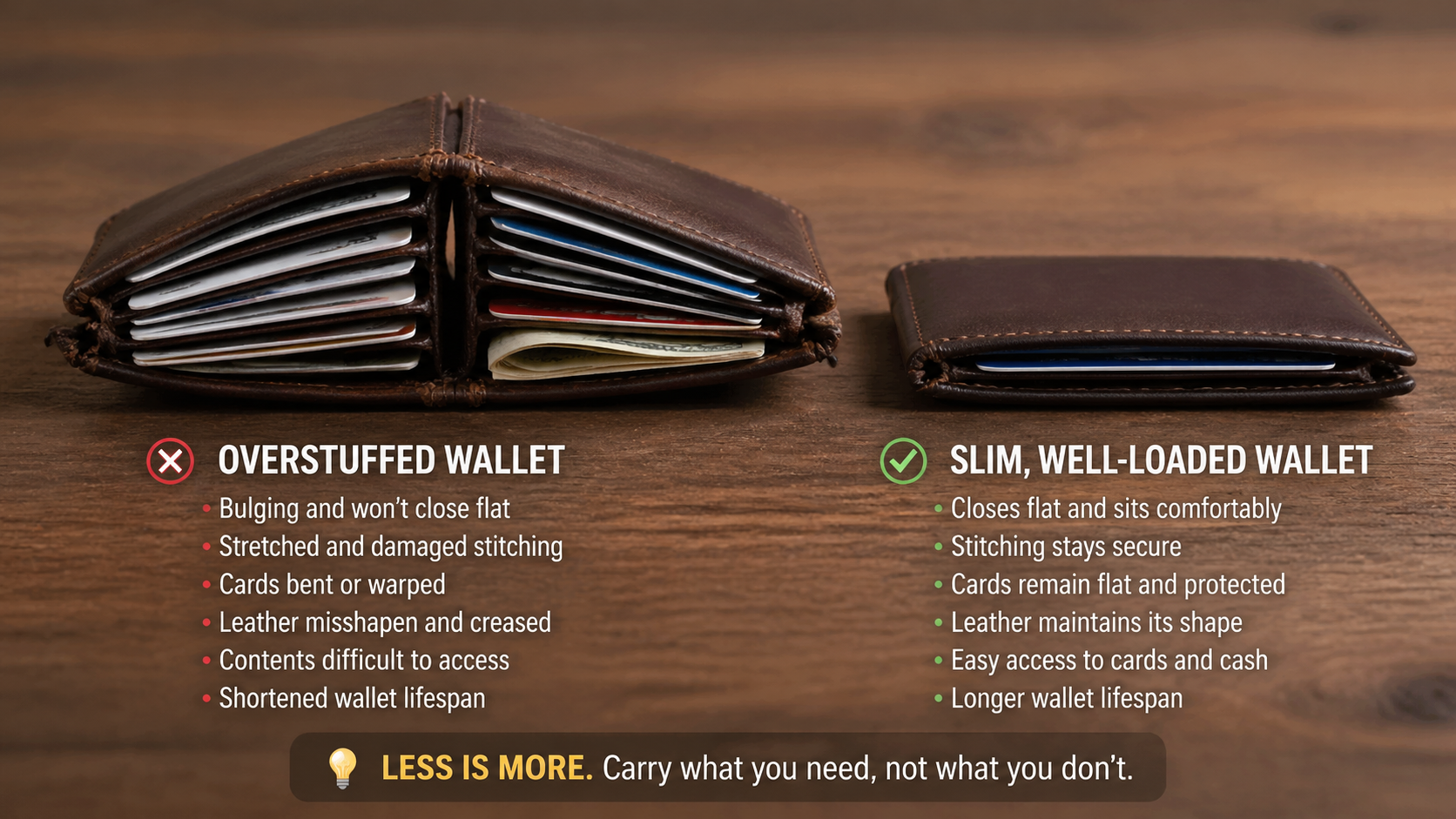
The single biggest killer. Card slots are designed for 1–2 cards each. Jamming three cards into a single slot creates constant outward pressure on the stitching and leather. The slot stretches, the stitching pulls, and the wallet loses its shape. Every card beyond the designed capacity shortens its life proportionally.
Sitting on your wallet compresses it asymmetrically, stresses the fold line, and works moisture from your body into the leather without giving it time to dry out. Front pocket carry extends wallet life significantly — and it's better for your back.
Leather handles occasional moisture fine. What it doesn't handle is getting soaked and then drying out without conditioning. Water pulls natural oils out of leather as it evaporates, leaving it stiff and prone to cracking. If your wallet gets thoroughly wet, let it dry slowly away from heat and condition it afterward.
On wallets with snaps, zippers, or closures, the hardware often fails before the leather. Plated metal corrodes, cheap zippers jam. When the hardware goes, the wallet gets tossed even if the leather is fine. Solid brass or stainless hardware is worth the premium specifically because it outlasts everything else.
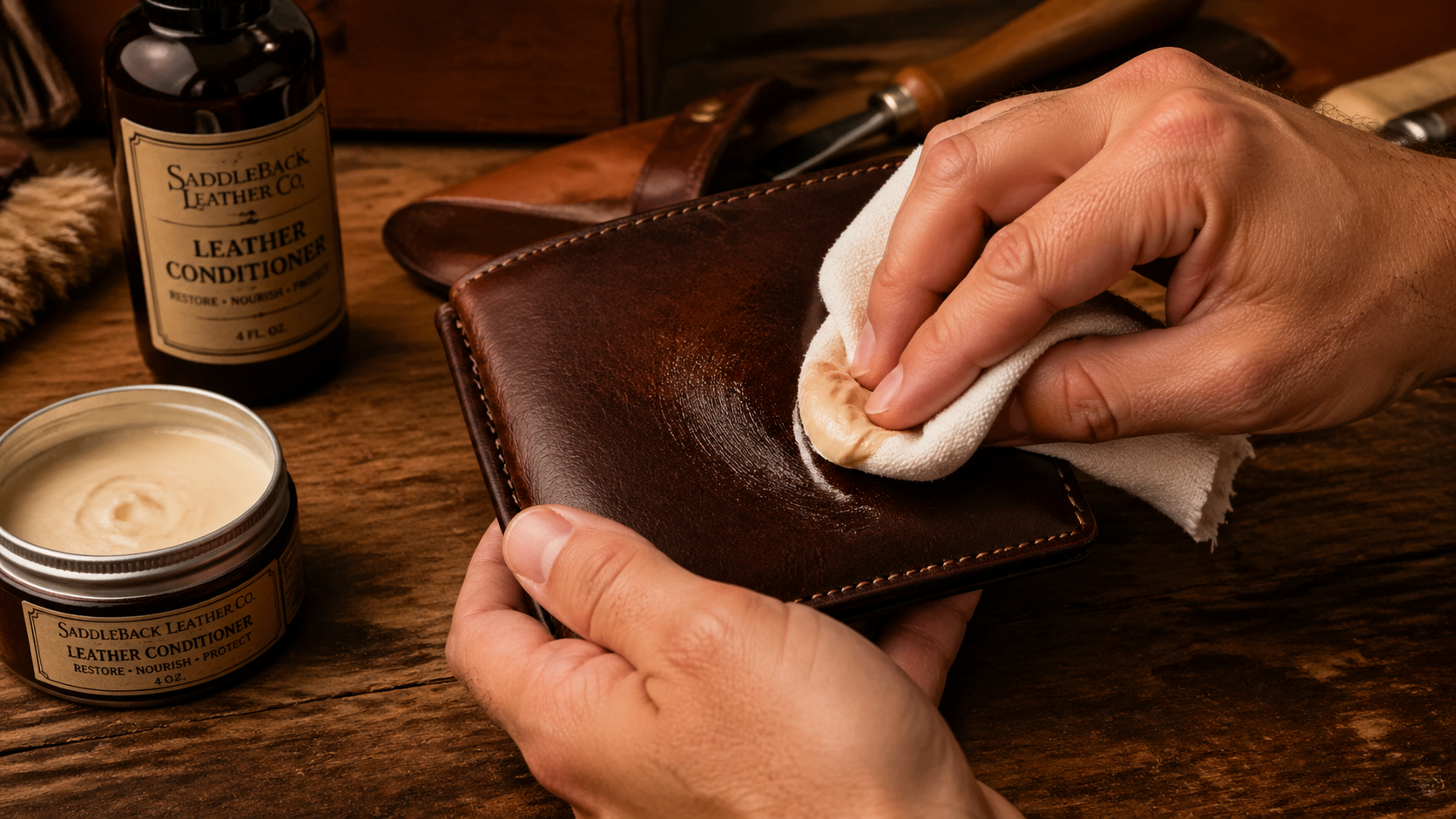
Dish soap, hand sanitizer, alcohol wipes, and household cleaners strip the oils and finish from leather. Use a damp cloth for surface dirt and a leather-specific conditioner for anything more serious. Nothing else.
How to Make Your Leather Wallet Last as Long as Possible
Carry only what you use. Audit your wallet. If a card hasn't left it in three months, it doesn't need to be there. Lighter carry means less stress on every stitch and seam.
Switch to front pocket. Even if you've carried in the back pocket for years, switching to front pocket immediately reduces the most damaging form of daily stress on your wallet.
Let it dry naturally if it gets wet. Don't put a wet wallet on a radiator or in direct sun. Air dry at room temperature, then condition once it's fully dry.
Buy quality once. The most practical advice: buy a well-made full-grain leather wallet from the start and never think about wallets again.
The Real Answer
A cheap wallet lasts until it doesn't — usually two to four years if you're lucky. A quality full-grain leather wallet, made with real stitching and solid hardware, carried reasonably and conditioned occasionally, can easily last fifteen to twenty-five years. We've heard from BSL customers still carrying wallets they bought a decade ago — and the leather looks better now than the day it arrived. That's not marketing. That's what happens when good materials meet good construction and reasonable care.
Every BSL wallet is cut from full-grain American vegetable-tanned leather, hand-sewn on a leather sewing machine with hand-burnished edges, in Texas. It improves with every year of carry. When you're done replacing wallets, this is what you buy.
Final Thoughts
Wallet lifespan comes down to materials, construction, and care — in that order. Full-grain leather that's hand-sewn and maintained occasionally will outlast anything in the $20–$80 category by a decade or more. If you want to stop replacing wallets, browse the BSL lineup — including badge wallets for law enforcement and leather knife sheaths built to the same standard. Questions before you order: reach out directly.


