


The complete process for making a full-grain leather knife sheath — pattern, wet-casing, stitching, edge finishing. What separates a good sheath from a liability.
A knife sheath isn't an accessory. It's the other half of the tool. A poorly made sheath is more than an inconvenience — it's a liability. Loose retention, failing stitching, or leather that collapses after six months of carry turns a solid knife into a frustrating one. Understanding how a leather sheath is actually made helps you evaluate quality before you buy, and tells you what to look for when one starts to fail.
This is the full process — from raw hide to finished sheath — as it's done at BSL. No shortcuts, no synthetic backing, no machine seams that unravel at the worst time. The same full-grain American leather we use in our leather wallets for men goes into every sheath we build.

Why Leather vs. Synthetic Sheaths
Kydex is the main alternative. It's rigid, waterproof, and inexpensive to produce. For certain knives and carry styles, it's genuinely good. But it has a fixed geometry — the sheath is molded once and stays that way. Leather is different: it's formable when wet, rigid when dry, and it conforms to the exact blade it's built around. Vegetable-tanned leather can be wet-cased — shaped around the actual knife — a process that's unique to traditional leather tanning and impossible with synthetics.
| Factor | Full-Grain Leather | Kydex / Synthetic |
|---|---|---|
| Blade fit | Wet-cased to exact blade shape | Fixed mold — generic fit |
| Rigidity | Firm when dry, flexible enough to draw | Rigid — can crack in cold |
| Aging | Develops patina, gets better | Fades, scratches, stays same |
| Repairability | Re-stitchable, re-conditionable | Replace when damaged |
| Feel on belt | Quiet, conforms to body | Rigid, can be noisy |
The sheath is the other half of the tool. A knife that can't be drawn cleanly, carried safely, and re-sheathed without looking is a half-finished system.
Materials
Every BSL sheath starts with 6–8oz full-grain American vegetable-tanned leather — dense enough to hold its shape under pressure, thick enough to protect the blade edge, and responsive to wet-casing in a way that thinner or chrome-tanned leather isn't. The seam is sewn with waxed linen thread: natural, strong, and compatible with leather's expansion and contraction through seasonal changes. Hardware — belt loops, Chicago screws, snaps — is solid brass or copper. No plated steel that corrodes or shows through when the plating wears off.
The 8-Step Process
Every sheath starts with a paper pattern built around the specific knife dimensions — blade length, blade width at the widest point, spine thickness, and handle-to-blade transition. The pattern accounts for the seam line, welt (the strip between the two leather panels that creates the channel), and belt loop or attachment hardware.
The pattern is traced onto the hide and cut with a sharp leather knife. Two panels — front and back — plus the welt strip are cut simultaneously from the same hide section so the thickness and temper match. Cuts are made in one pass. Second cuts leave ridges that weaken the leather at the edge.
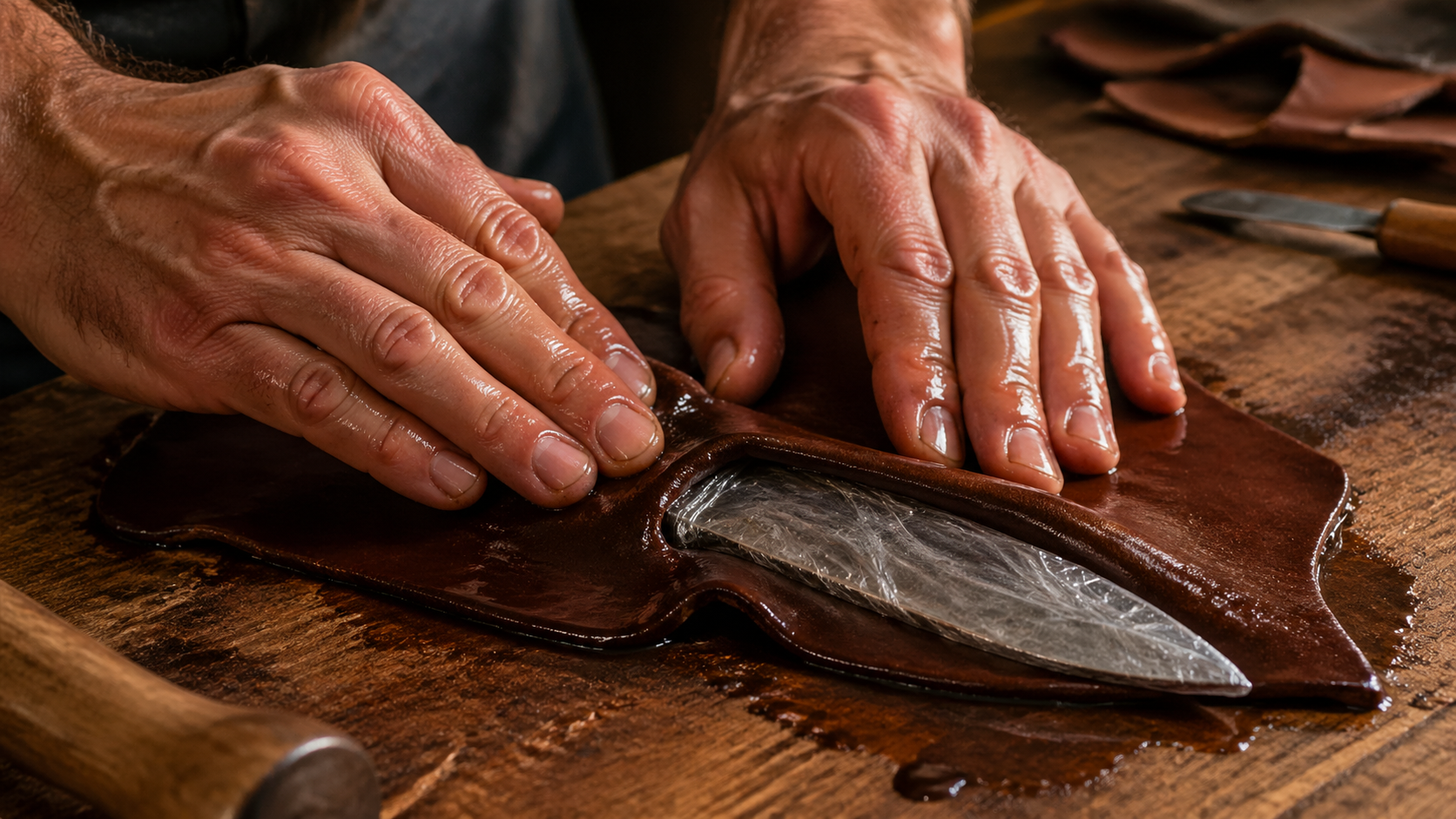
The cut leather panels are submerged in water for 15–30 minutes until fully saturated. Cased leather becomes pliable and formable — this is the defining property of vegetable-tanned leather that makes it suitable for knife sheaths. The leather is pulled when it reaches the right temper: darkened, pliable, but not dripping.
The knife is wrapped in plastic and pressed into the wet leather panels. The leather is worked by hand around the blade geometry — the edge channel, the spine, the tip. When the leather dries, it holds the exact shape it was formed in.
The formed sheath dries at room temperature for 24–48 hours. No heat. Heat dries leather unevenly and causes warping.
The welt is positioned between the two panels and the assembly is clamped. The seam is hand-sewn on a leather sewing machine, one pass at a time. A full sheath takes 45–90 minutes to sew by hand.
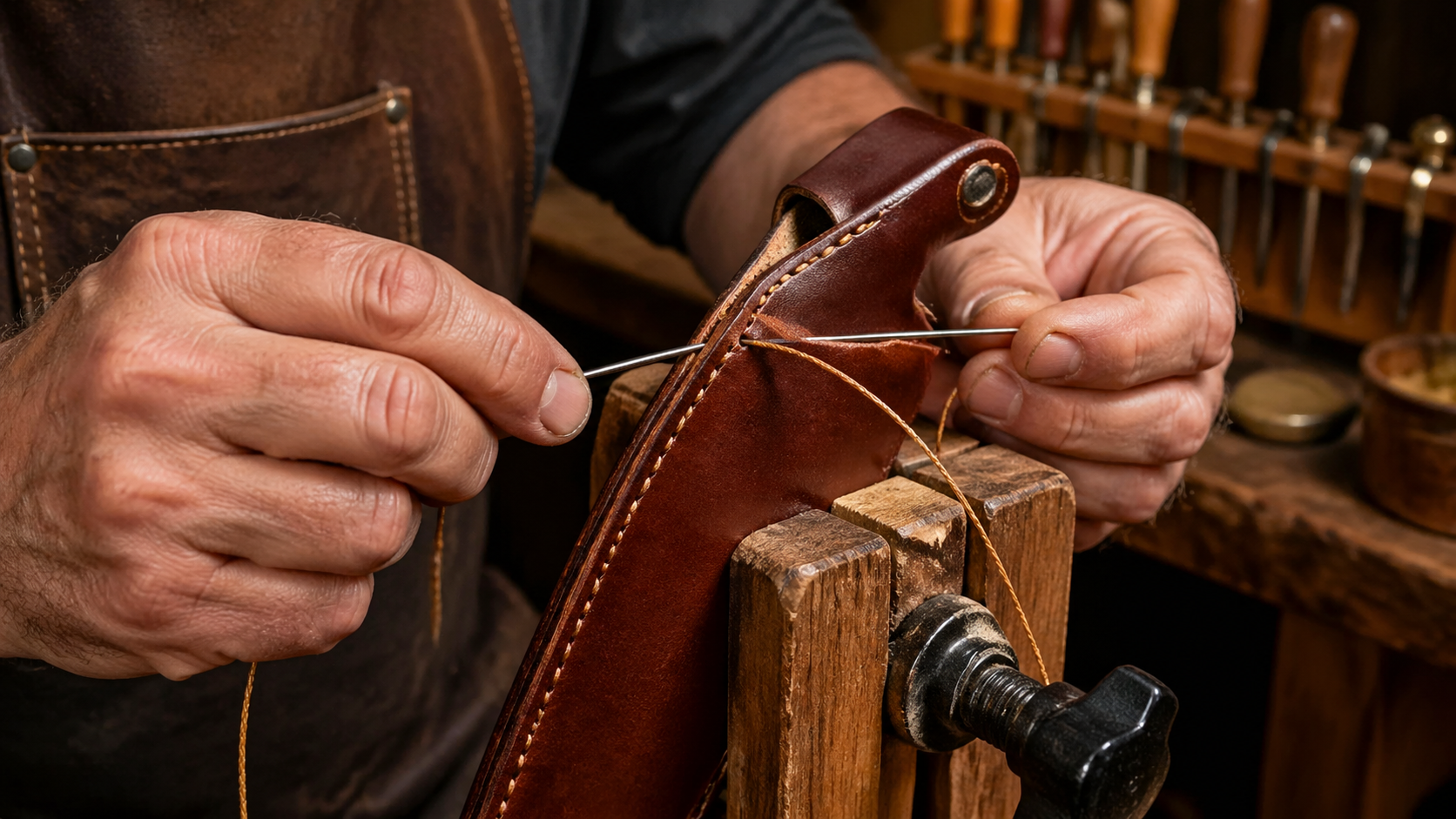
Raw leather edges are beveled, sanded through progressively finer grits, and burnished with a wood slicker until smooth and slightly rounded. Finished edges don't fray, don't catch on clothing, and look intentional rather than cut-and-forgotten.
A light coat of neatsfoot oil or beeswax conditioner is applied to the exterior. The sheath is inspected for seam consistency, edge finish quality, hardware alignment, and retention. The knife is test-drawn and re-sheathed 10–15 times to verify the fit.
Custom Sheath Orders
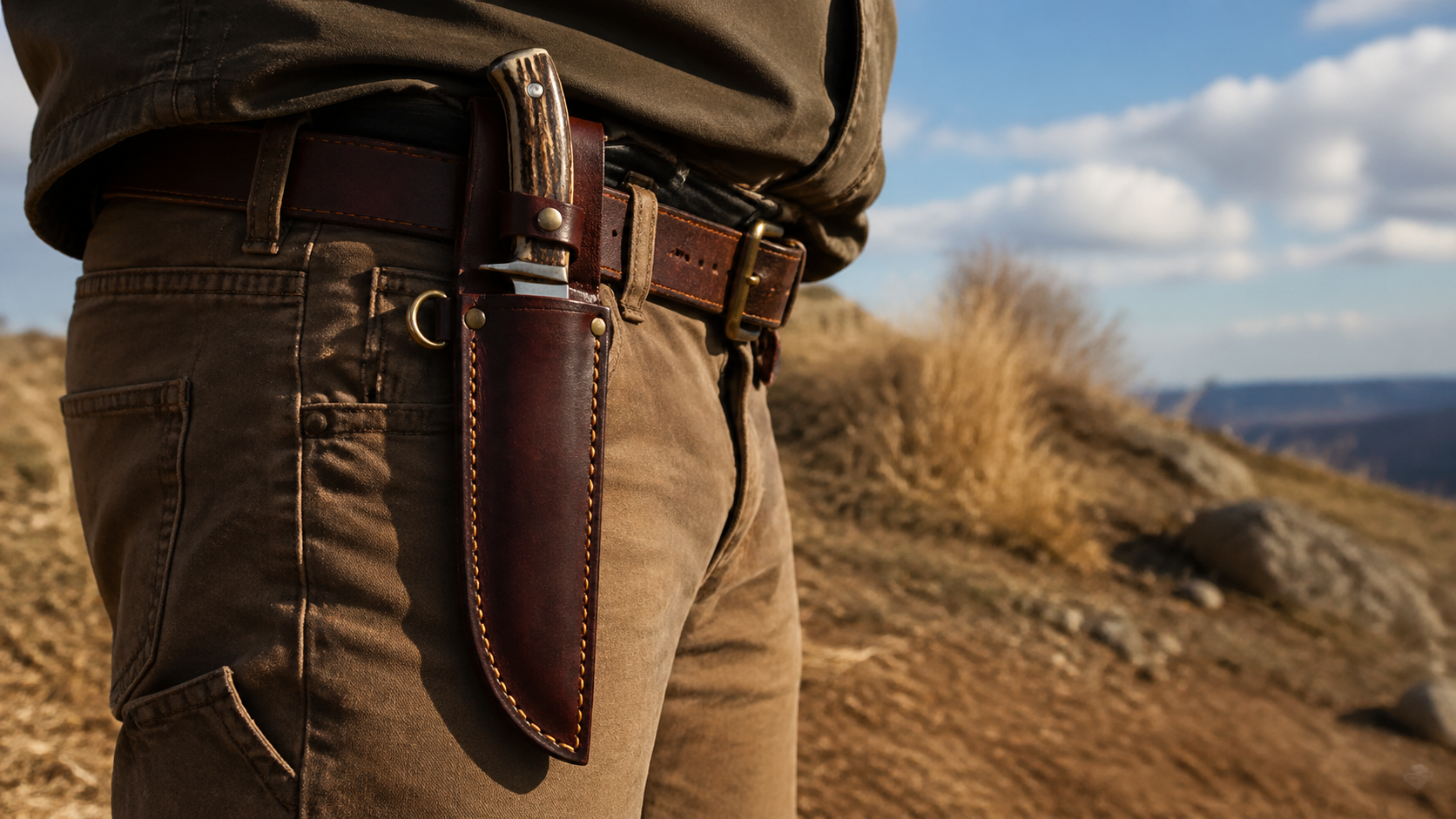
BSL builds custom sheaths to specific knife dimensions — for production knives, custom blades, and hunting knives that don't fit any standard pattern. To order a custom sheath, contact us directly with the blade length, blade width at the widest point, spine thickness, and any hardware or carry preferences. Lead time is 7–14 business days depending on current queue.
If you're also looking for a quality everyday carry wallet to complement your EDC setup, explore our minimalist leather wallets — same full-grain American leather, hand-sewn on a leather sewing machine with hand-burnished edges.
Every BSL sheath is wet-cased to the blade, hand-sewn on a leather sewing machine, and edge-finished before it ships. Full-grain American vegetable-tanned leather. Built in Texas.
Final Thoughts
A leather knife sheath made correctly takes 3–4 hours of skilled hand labor from raw leather to finished piece. The wet-casing, the hand-sewing, the edge finishing — none of these steps can be meaningfully rushed without compromising the result. The sheath you end up with is one that fits your knife exactly, holds its shape through years of carry, and improves rather than degrades with use. Browse the BSL sheath lineup or reach out directly for a custom order.


