


Mass-produced and handmade leather wallets look similar on day one. By year one, only one is still going. Here's exactly what's different under the surface.
Walk into any department store and the shelf is full of leather wallets. They look fine. The price is reasonable. But six months later, the stitching is fraying, the card slots have stretched out, and the leather is peeling at the fold. You've been through this before. The problem isn't wallets — it's the kind of wallet you bought.
Mass-produced and handmade wallets can look nearly identical on day one. What separates them shows up at month three, year one, and year five. Here's exactly what's different under the surface — and why it matters before you spend another $40 on something you'll replace in six months.
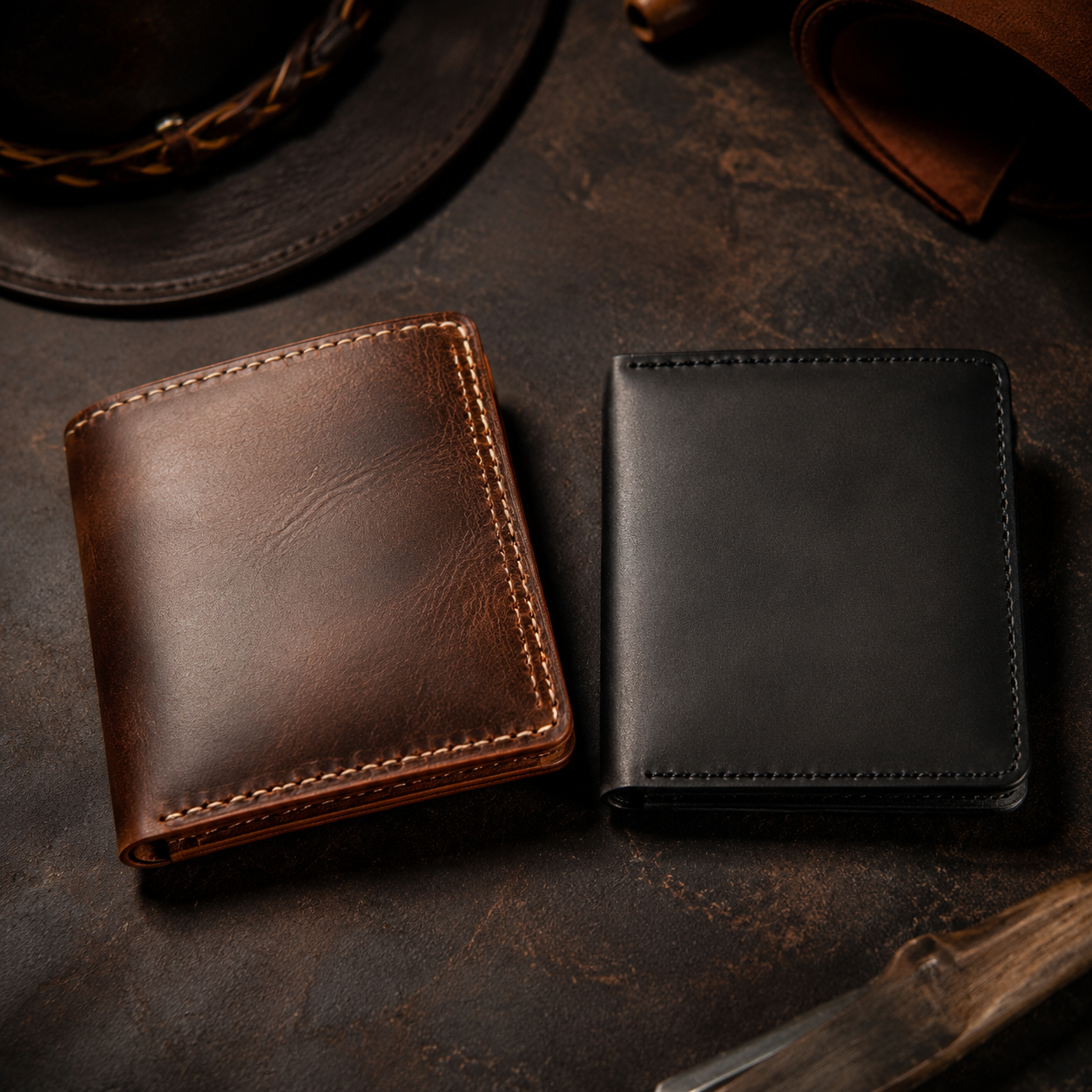
The Production Gap: What Actually Changes When a Wallet Is Made by Hand
Mass production optimizes for speed and margin. A factory-made wallet typically involves split leather or corrected grain (the lower layers of the hide), a die-cut process that punches hundreds of identical pieces per hour, machine stitching at high speed, and edge finishing with paint or glue instead of burnishing. None of these are inherently wrong — but each is a compromise.
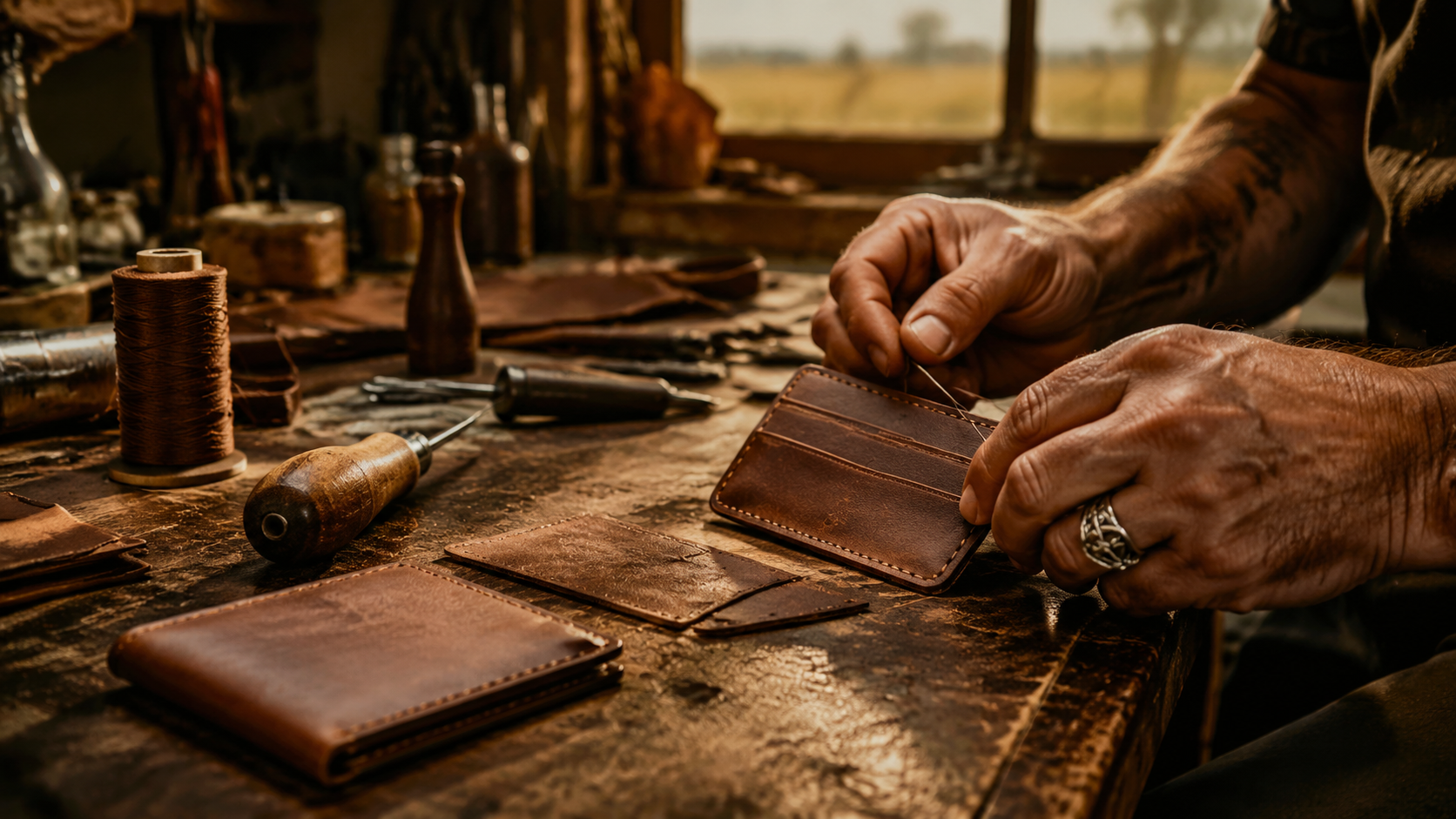
A handmade wallet built properly starts with a full-grain leather side laid flat on a cutting table. The craftsman reads the hide — avoids loose grain near the belly, cuts panels from the tighter back and shoulder sections. Each piece is skived by hand to the correct thickness for its function. Edges are burnished, not painted. Stitching is done on a leather sewing machine, one piece at a time, guided by hand — and edges are hand-burnished afterward.
That distinction matters more than anything else. A high-speed factory lock-stitch is optimized for throughput, not durability — when a single stitch breaks, the seam can run and unravel from that point. A hand-guided seam, sewn one piece at a time and checked as it goes, doesn't have that failure mode.
A mass-produced wallet usually starts failing at the seam. A hand-sewn, full-grain wallet wears through the leather first — and full-grain leather takes decades to get there.
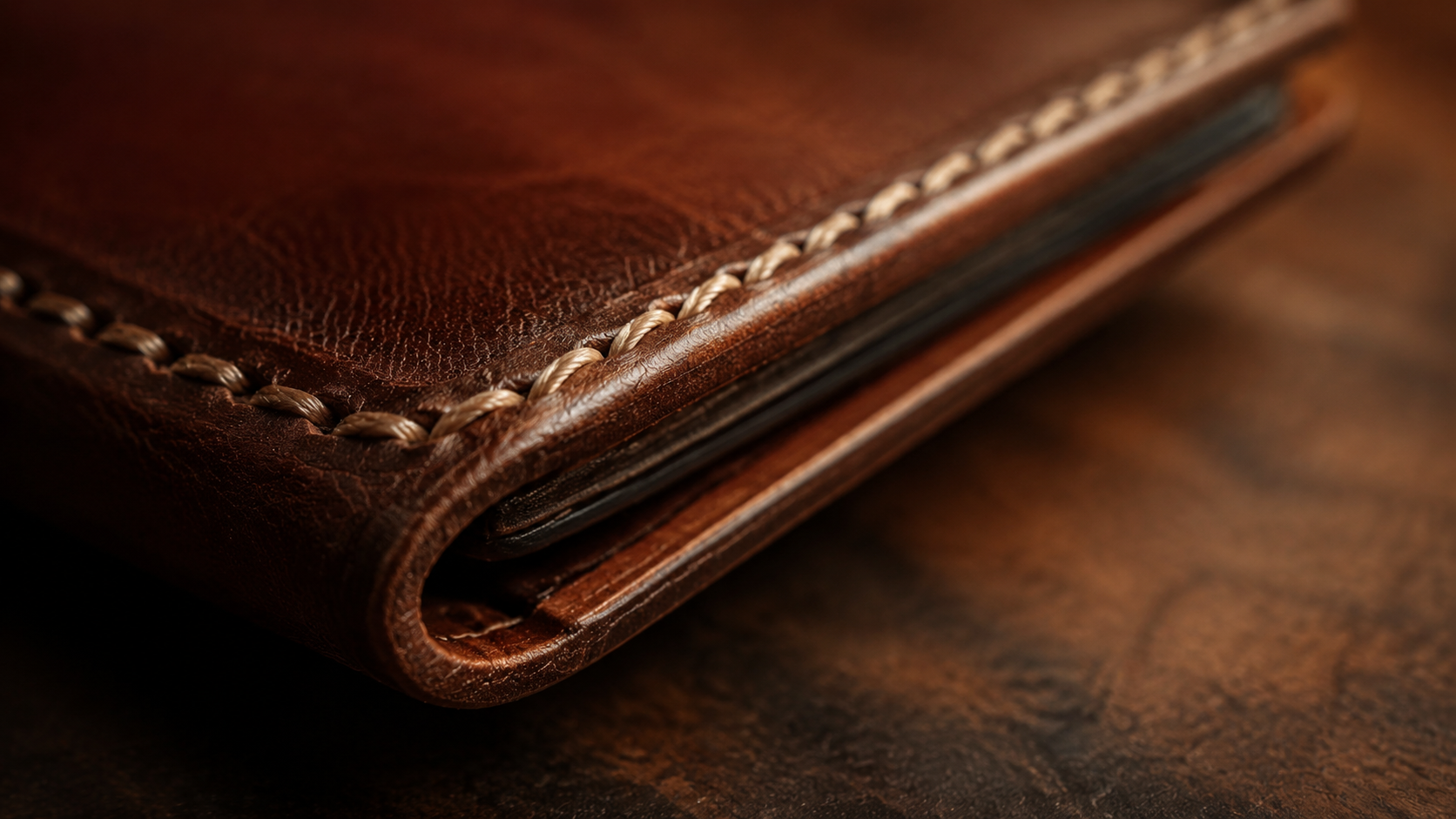
The Leather Difference: Why Grade Is the Whole Game
Most mass-produced wallets use genuine leather or top-grain leather. Those terms sound good. They're not.
Genuine leather is the industry's minimum standard. It means the product contains some real leather — usually the lower splits of the hide that are coated with polyurethane to look presentable. The structural fiber is gone. The surface coating peels within 18-24 months of daily carry. You've seen it happen.
Top-grain leather is better — it's a surface layer of the hide — but it's been sanded to remove the natural grain and embossed with a uniform pattern. The sanding removes the toughest fiber. It still looks good for a while, but it doesn't develop a patina, and the edges tend to dry and crack where they're exposed to friction.
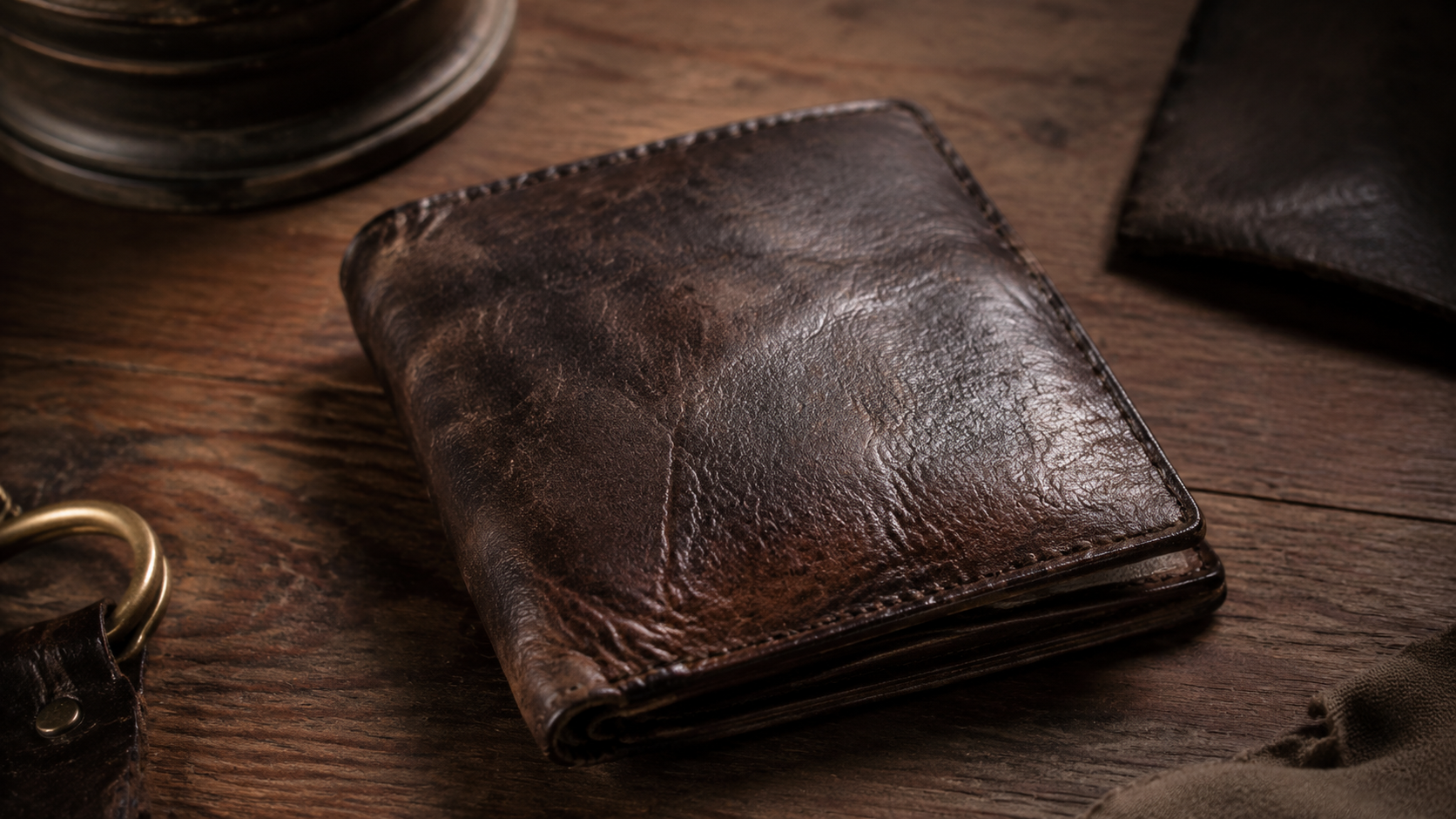
Full-grain leather is the untouched top layer of the hide. Natural pores, natural markings, intact structural fiber. It's harder to work — it requires skill to cut cleanly, burnish properly, and stitch consistently. But a full-grain wallet gets better with age. The oils from your hands work into the grain. The leather darkens and develops character. At year five it looks more alive than it did at year one. At year ten it's still going.
If the wallet tag just says "genuine leather," you already know what you're buying.
Side-by-Side: What You're Paying For
| Factor | Mass-Produced | Handmade (BSL) |
|---|---|---|
| Leather grade | Genuine or top-grain | Full-grain, American-tanned |
| Stitching method | Machine lock-stitch | Leather sewing machine, hand-burnished edges |
| Edge finishing | Paint or glue | Hand-burnished |
| Aging | Deteriorates, peels, cracks | Develops patina, improves |
| Expected lifespan | 1–3 years | 10–20 years |
| Made in | Overseas factory | Mansfield, Texas |
The Cost Math: What You Actually Pay Over Time
A mass-produced wallet at $35-50 looks like a better deal than a handmade wallet at $95-140. But run the math over ten years: three cheap wallets at $40 each is $120 plus the frustration of replacing them. One BSL wallet at $120 is $120 — and it still looks good at year ten while you're having this conversation again at the department store.
The handmade wallet isn't more expensive. It's the last wallet you buy for a decade. That's the real comparison.
The Rio Grande Bifold is full-grain Horween leather, hand-sewn on a leather sewing machine with hand-burnished edges in Mansfield, Texas. No painted edges, no compromises on the hide. Buy it once.
Shop the Rio Grande Bifold →Final Thoughts
Mass-produced wallets aren't dishonest — they just optimize for price, not longevity. If you've been replacing wallets every couple of years, that's not bad luck. That's the leather grade doing exactly what it was made to do. Full-grain, hand-sewn on a leather sewing machine with hand-burnished edges, handmade in Texas is a different category entirely — and once you've used one, you'll understand why people stop shopping for wallets.
See the difference for yourself: handmade leather wallets for men and slim minimalist wallets — built in Mansfield, Texas from full-grain American leather.


