


Back pocket works if the wallet is thin. Front pocket is better for drivers, travelers, and anyone tired of sitting on something uncomfortable. Here's the full breakdown.
Front Pocket Wallet vs. Back Pocket Wallet: Which Carry Actually Works
Most guys carry a wallet the same way they learned to carry one — in the back pocket, without thinking about it. Then somewhere around age 30 the back pain starts and someone tells them front-pocket carry is better for your spine. Or they lose a wallet to a pickpocket in a city and start rethinking. Or they just get tired of sitting on something uncomfortable for eight hours a day.
The front pocket vs. back pocket debate comes down to your carry volume, your daily environment, and how much you actually care about the ergonomics. Here's the honest breakdown.

Back Pocket Carry: Why It's Still the Default
Back pocket carry has dominated for decades because it works reasonably well for the average bifold with moderate card load. The back pocket is sized for it, it's out of the way, and muscle memory handles the retrieval.
Where back pocket carry works:
Guys who carry a traditional bifold with 4–6 cards and some cash. Environments where you're sitting at a desk most of the day and the wallet isn't under constant compression. Situations where you need to access your wallet less than 10 times a day and don't care about the retrieval speed.
Where back pocket carry fails:
Driving. A wallet in your back right pocket puts asymmetric pressure on your lower back and hip for every hour behind the wheel. Long-haul drivers, commuters, and anyone in a vehicle more than 90 minutes a day will feel this. The medical literature on "wallet sciatica" — piriformis syndrome from a bulging back-pocket wallet — is real and documented.
Any situation where your wallet can be removed without your knowledge. Back pockets in crowded spaces — transit, concerts, markets — are the easiest pickpocket target there is. You won't feel it. The wallet is behind you and you're distracted.
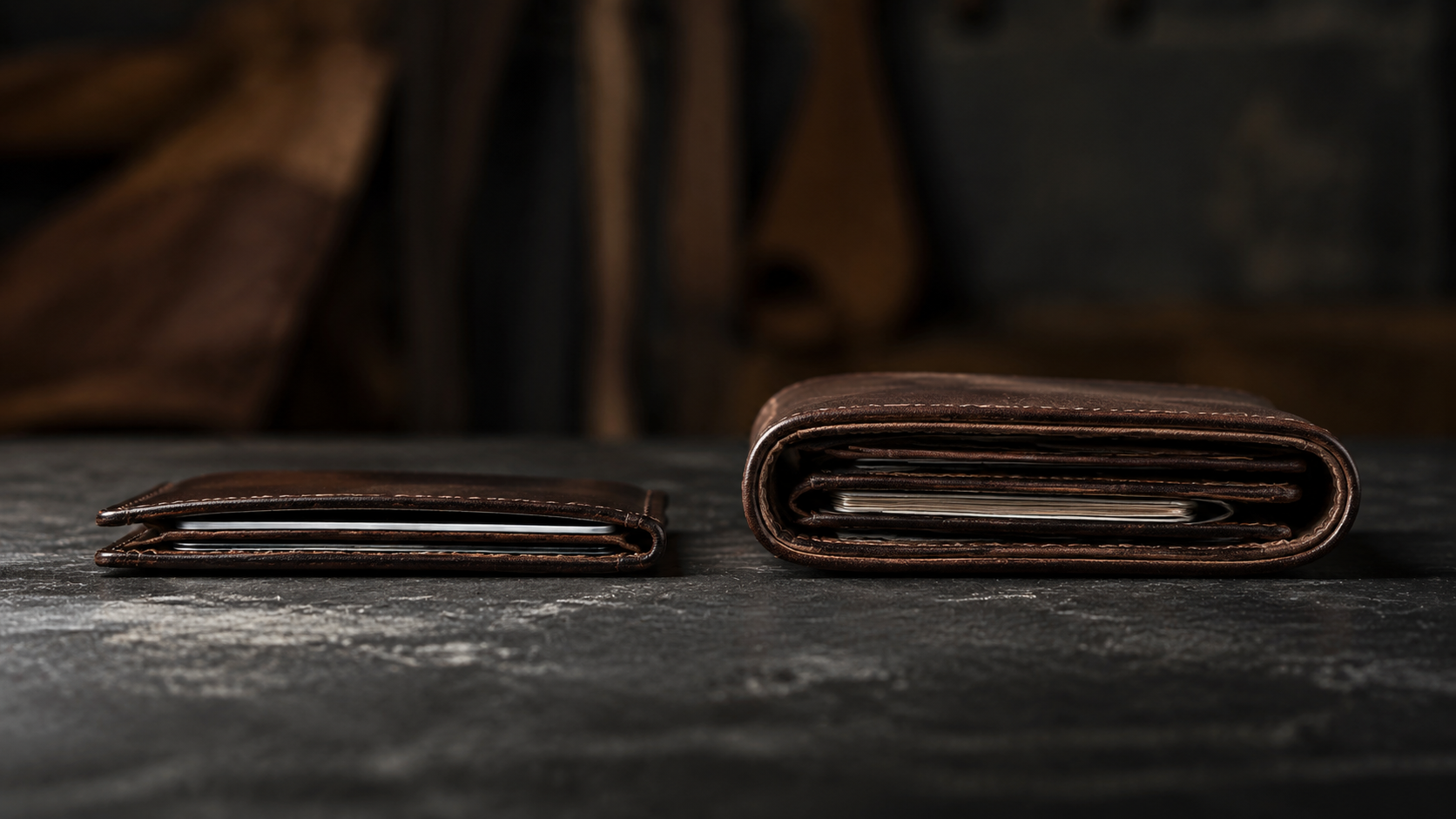
Big wallets. A fully loaded bifold or trifold in a back pocket creates a visible bulge that shifts your posture and looks uncomfortable because it is uncomfortable.
If your wallet is thick enough that you notice it when you sit down, it's too thick for the back pocket. That's not an opinion — it's a posture problem.
Front Pocket Carry: What Changes When You Switch
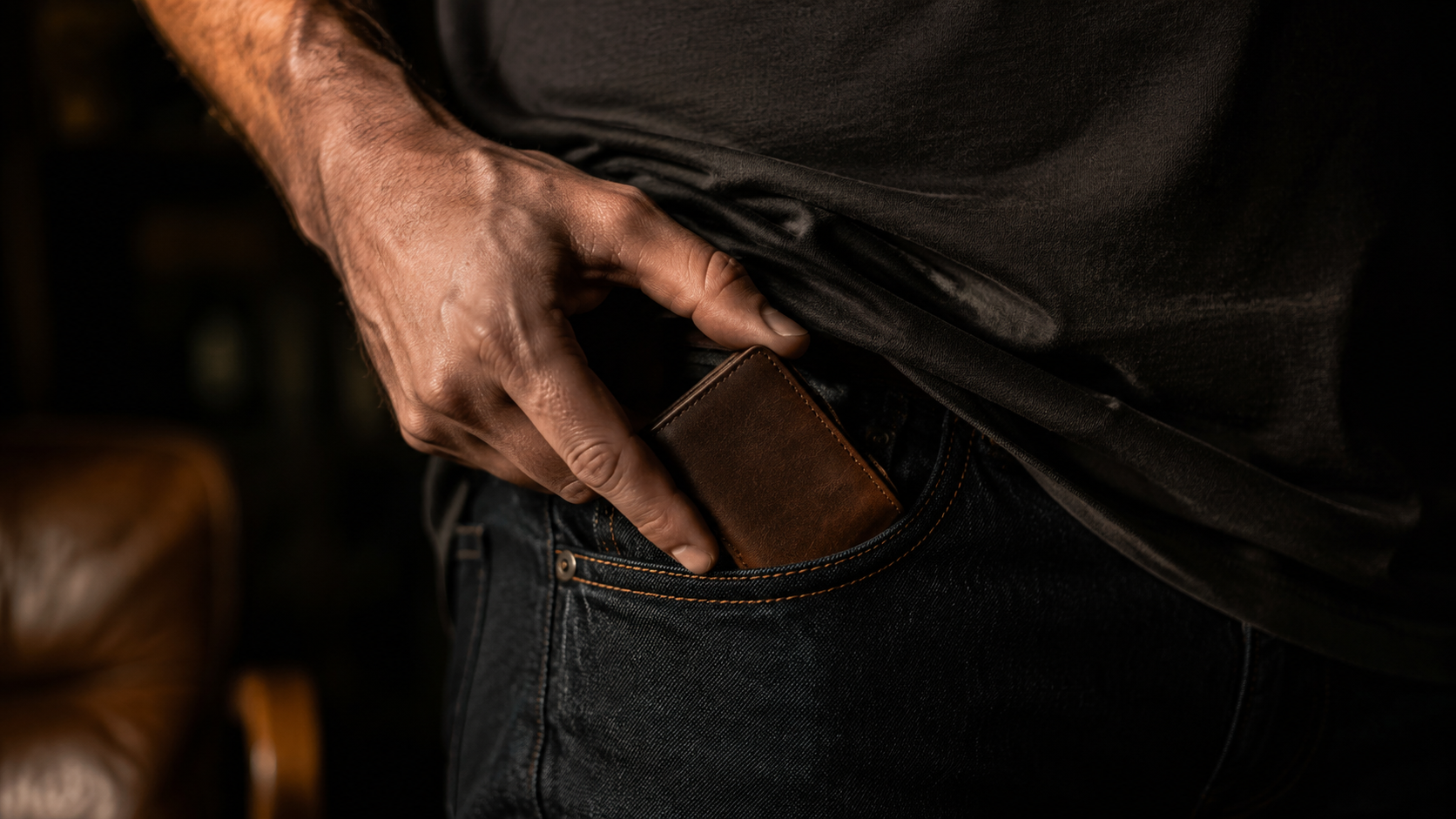
Front pocket carry requires a smaller wallet. That's the only real constraint, and for most people it's actually a forcing function that improves their carry habits — you trim the wallet down to what you actually need and discover that 12 cards aren't necessary.
What front pocket carry solves:
The posture problem disappears immediately. No asymmetric pressure, no wallet sciatica. You can drive, sit, and stand for hours without feeling your wallet at all if it's slim enough.
Security improves significantly. A wallet in your front pocket requires a pickpocket to reach into a space your hand is near at all times. That's categorically harder than the back pocket. In high-traffic environments this matters.
Retrieval is actually faster for many people. Front pocket is a shorter reach, and a slim wallet is easier to grip and pull than a fat bifold buried in a back pocket.
What front pocket carry requires:
A slim wallet. The front pocket of most jeans and trousers is shallower and more form-fitting than the back. A fat bifold in the front pocket creates an uncomfortable bulge and makes your pants fit wrong. A slim front-pocket wallet at 0.3" closed (empty) and under 0.5" loaded is the target.
Fewer cards. If you're carrying 10 cards, front pocket carry means ruthlessly editing down to 4–5 essentials. Most people find they don't miss the extras.
The Carry Position Comparison
| Factor | Back Pocket | Front Pocket |
|---|---|---|
| Comfort sitting/driving | Poor if wallet is thick | Excellent with slim wallet |
| Pickpocket resistance | Low — easily accessed | High — requires visible reach |
| Card capacity | High (6–12+) | Moderate (4–6 ideal) |
| Wallet size required | Standard bifold fits | Slim/minimalist needed |
| Learning curve | None — everyone does this | 1–2 weeks to build habit |
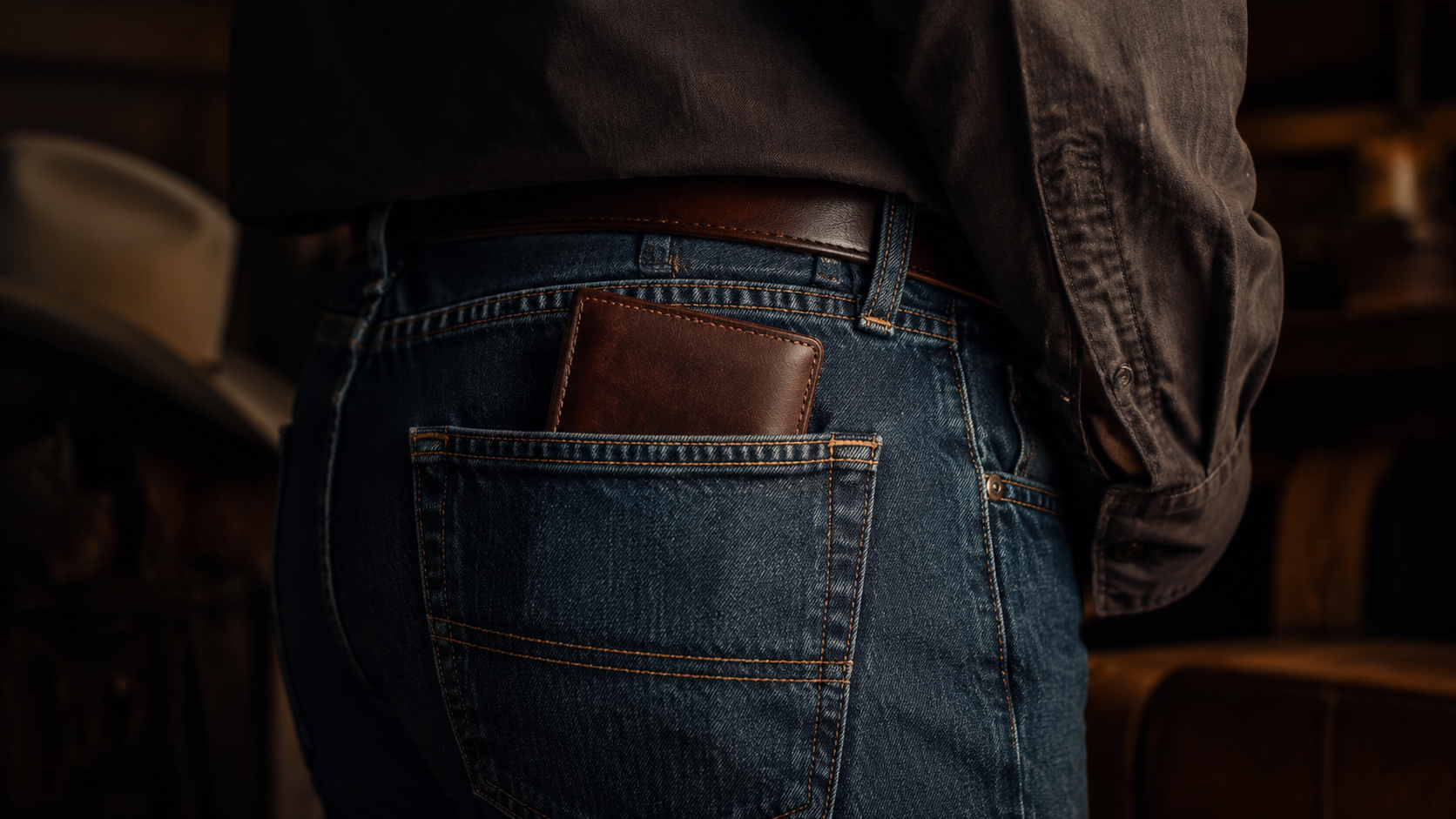
Full-grain leather, 4 card slots, under 0.4" loaded. Built specifically for front pocket carry — slim enough to forget it's there, tough enough to last a decade.
Shop the Front Pocket Slim →Final Thoughts
Back pocket carry works fine if your wallet is thin and your daily routine doesn't involve long stretches of sitting or crowded environments. Front pocket carry is the better option for drivers, travelers, and anyone whose current back-pocket wallet is causing discomfort. The switch takes a wallet change and a couple of weeks of habit adjustment — and most people who make it wonder why they waited.
Browse by carry style: leather wallets for men · slim minimalist wallets — all handmade in Mansfield, Texas with free shipping on orders $175+.


