


Bifold or trifold? Card capacity, pocket bulk, cash access, and durability compared so you can make the right call once and stop cycling through the wrong wallet.
Most people end up with a bifold or a trifold by default — it's what was in the store when their old one finally died. But if you've ever had the one and wished you had the other, you already know the choice matters. Carrying too little capacity means constantly digging for cards that don't fit. Carrying too much means hauling a brick in your pocket for years.
Here's a straight comparison so you can make the right call — and buy one wallet that works, instead of cycling through three wrong ones.
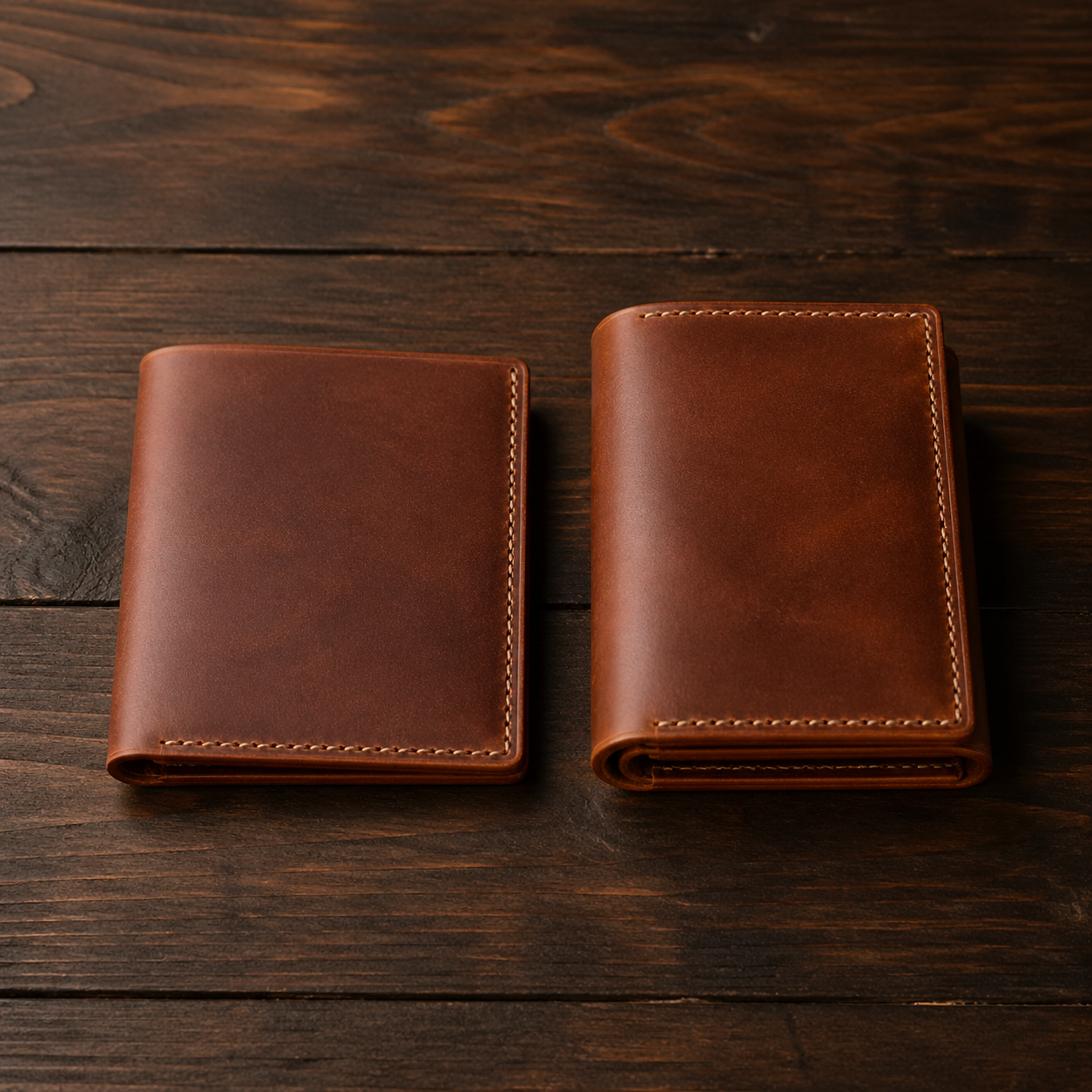
The Bifold: What It Is and Who It's For
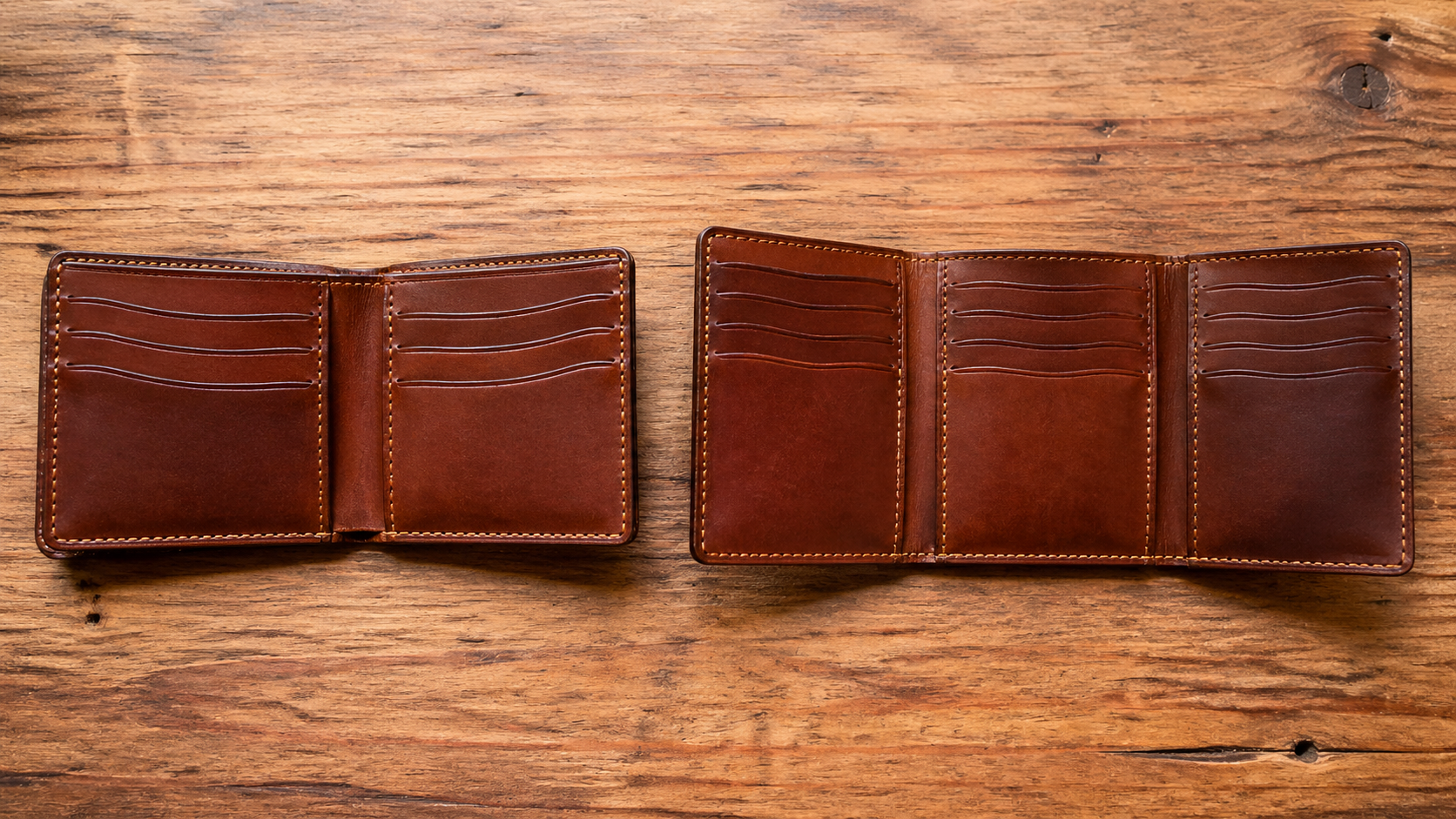
A bifold folds once down the middle, creating two panels. The interior typically features 2–4 card slots per side, a full-length bill compartment, and sometimes a clear ID window. Loaded comfortably, a bifold handles 4–8 cards and cash without becoming uncomfortable in a pocket.
The bifold is the most common wallet style in America for a reason: it balances capacity and compactness better than almost anything else. It handles the cards most people actually carry, keeps cash accessible, and sits reasonably flat in a back or front pocket. It's the default because it's genuinely the right choice for most carry situations.
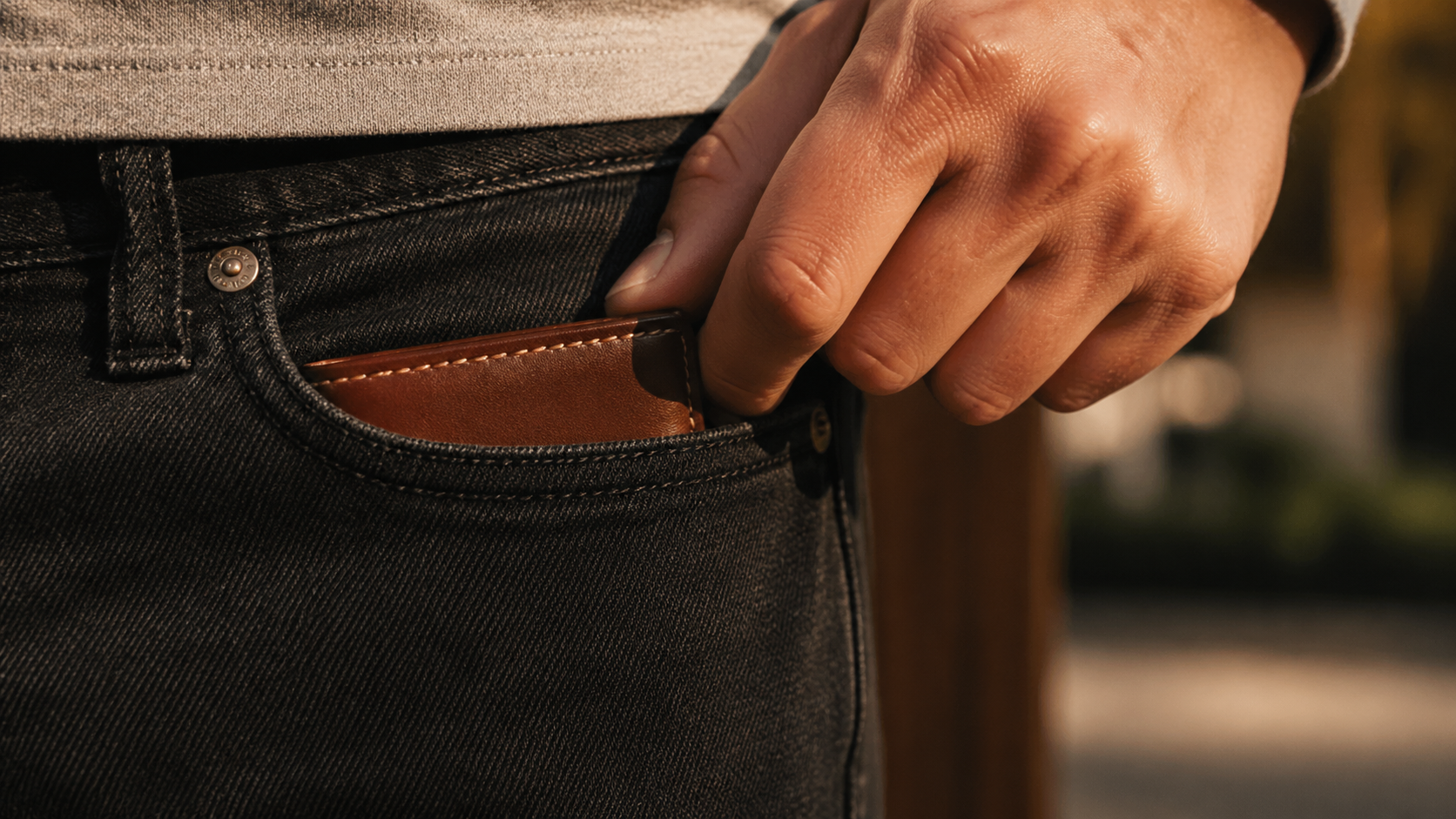
The Trifold: What It Is and Who It's For
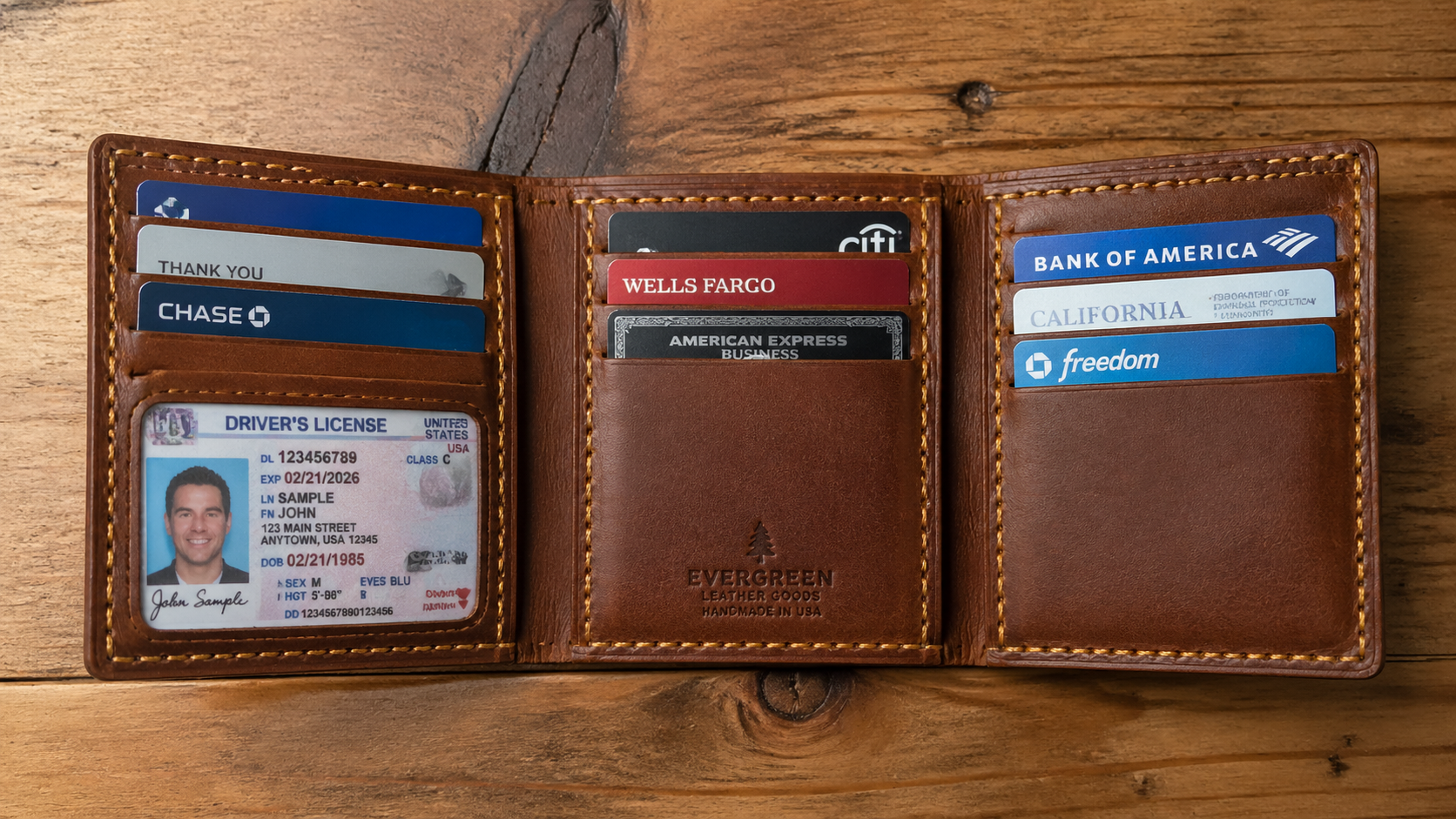
A trifold folds twice, creating three panels. The additional fold adds significant card capacity — typically 6–12 card slots, multiple ID windows, and sometimes a coin pocket. When fully loaded, a trifold can hold more than twice the cards of a bifold.
The tradeoff is thickness. A loaded trifold is substantially bulkier than a bifold carrying the same number of cards, because the triple-fold construction adds material even before you fill it. In a back pocket, a full trifold creates noticeable bulk. In a front pocket, it can be uncomfortably thick depending on the pants.
The trifold works best for people who genuinely carry a lot of cards — multiple credit cards, loyalty cards, insurance cards, ID, work badge — and need them physically on their person every day.
Head-to-Head Comparison
| Factor | Bifold | Trifold | Winner |
|---|---|---|---|
| Card capacity | 4–8 cards comfortably | 8–12 cards comfortably | Trifold |
| Pocket bulk | 10–14mm with 6 cards | 14–20mm with same 6 cards | Bifold |
| Cash access | One fold, accessible with one hand | Two folds, needs both hands | Bifold |
| Coin storage | Rarely included | Often included (zip or snap) | Trifold |
| Durability | Fewer stress points, holds shape longer | More folds = more tension points | Bifold (marginally) |
| One-handed use | Clean one-handed cash pull | Typically requires two hands | Bifold |
| Front pocket carry | Works well | Marginal — depends on pants | Bifold |
The question isn't which wallet is better. It's how many cards do you actually use in a typical week — not how many you have, how many you use.
The Question That Actually Decides It
Most people, if they're honest, use 3–5 cards in a typical week: debit card, credit card, ID, maybe a work badge. Everything else sits in the wallet unused “just in case.” If that's you, a bifold handles your real life and the trifold is carrying weight you don't need.
If you genuinely rotate through 8+ cards — multiple credit cards across different categories, loyalty cards at places you visit weekly, insurance cards that come out regularly — then the trifold earns its bulk through real utility.
Choosing a bifold when you actually need trifold capacity means constantly failing to have the card you need. Choosing a trifold when a bifold covers your life means carrying unnecessary bulk every single day for years. The wrong call in either direction costs you.
Both, Built Right
At BSL, both formats are made from American full-grain vegetable-tanned leather, hand-sewn on a leather sewing machine with hand-burnished edges in Texas, with card slots that hold their shape and bill compartments built to last. The bifold stays slim because the construction is tight without being undersized. The trifold carries more without turning into a brick because the leather is cut and skived correctly — not compensating for bad design with extra padding.
Either way, you're buying a wallet you won't need to replace. The only question is which format matches the life you actually live.
Both the BSL bifold and trifold are cut from full-grain American vegetable-tanned leather and hand-sewn on a leather sewing machine, with hand-burnished edges, in Mansfield, Texas. Slim where it matters. Durable where it counts.
Final Thoughts
The bifold vs. trifold decision is about matching the wallet to your carry, not picking the objectively better design. Most people are better served by a bifold. Some genuinely need a trifold. Be honest about which one that is, and buy it once. If you carry light, also check our minimalist leather wallet collection. For law enforcement: badge wallets and leather knife sheaths built to the same standard. BSL's full wallet lineup covers both — questions before you order, reach out directly.


