


The honest breakdown on handmade vs. mass-produced leather wallets for men — materials, construction, lifespan, and what actually matters before you buy.
Most men replace their wallet every couple of years. Not because they want to — because the wallet falls apart. The stitching goes first, then the card slots stretch out, then the whole thing starts flaking or cracking, and you're back online looking at the same $30–$60 options that got you here in the first place.
The problem isn't price. It's what you're actually buying. A $50 mass-produced wallet and a $150 handmade wallet can look nearly identical in a product photo. The difference shows up in year two — one is still going strong, the other is already in the trash. This guide cuts through the marketing so you can tell them apart before you buy.
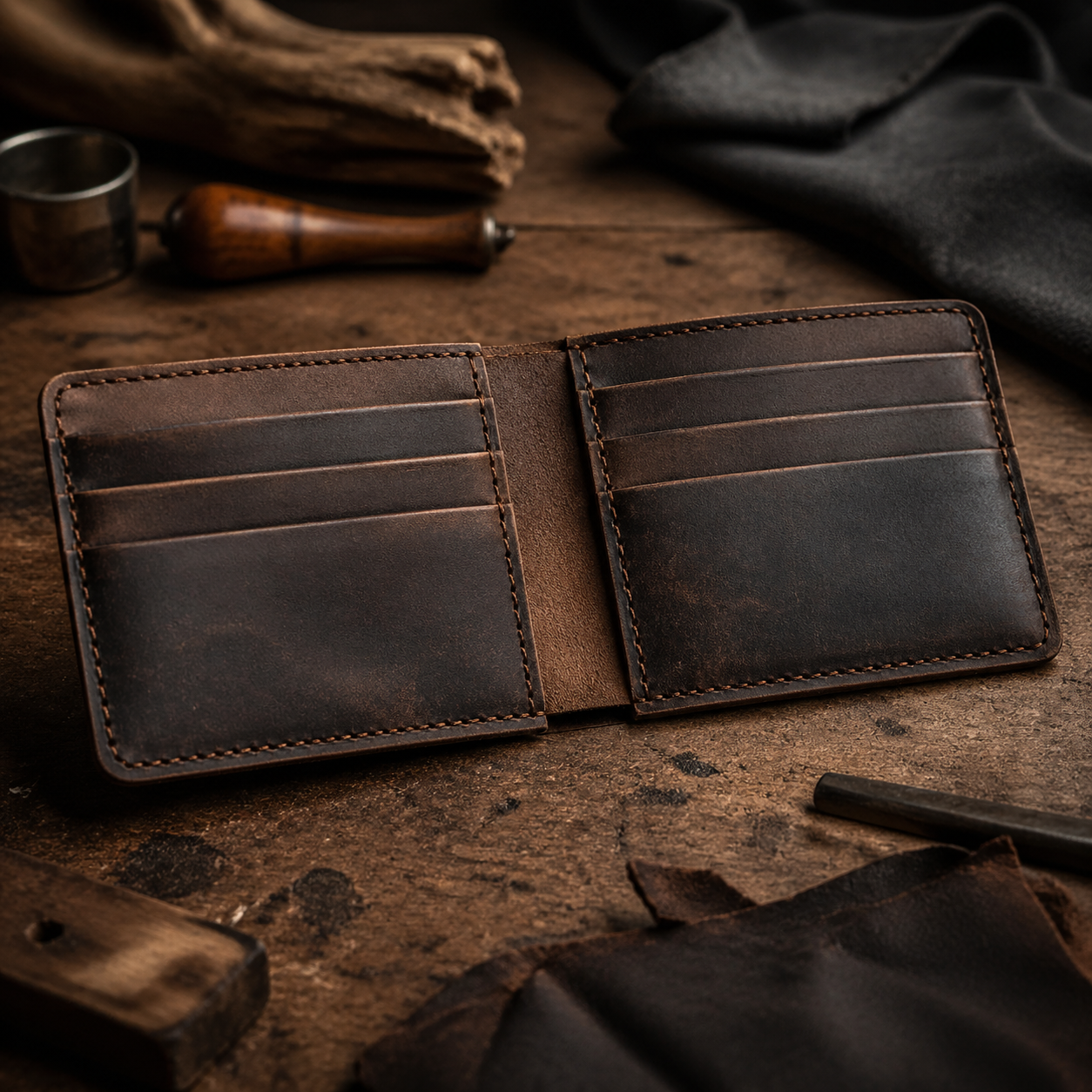
The Short Version: Three Things That Determine Wallet Quality
If you only read one section, make it this one. Every meaningful quality difference between wallets comes down to three factors:
1. Leather grade. Full-grain leather — the hide with the complete outer surface intact — is the only leather that gets stronger and better-looking over years of use. Everything below it (top-grain, genuine, bonded, PU) degrades rather than improves. Full-grain is harder to source and more expensive to work with, which is why most manufacturers avoid it.
2. Construction method. A hand-guided, two-needle interlocked seam holds even if one stitch breaks. Machine lockstitch unravels from a single break point. Glued construction fails when the adhesive dries out. A wallet's construction method tells you exactly how long it will last under daily stress.
3. Who made it and where. A wallet cut and stitched by a craftsman who stands behind the piece is a fundamentally different product than one stamped out by a machine in a factory that's optimizing for margin. That difference shows in the consistency of the cuts, the tension of the stitching, and what happens when something goes wrong.
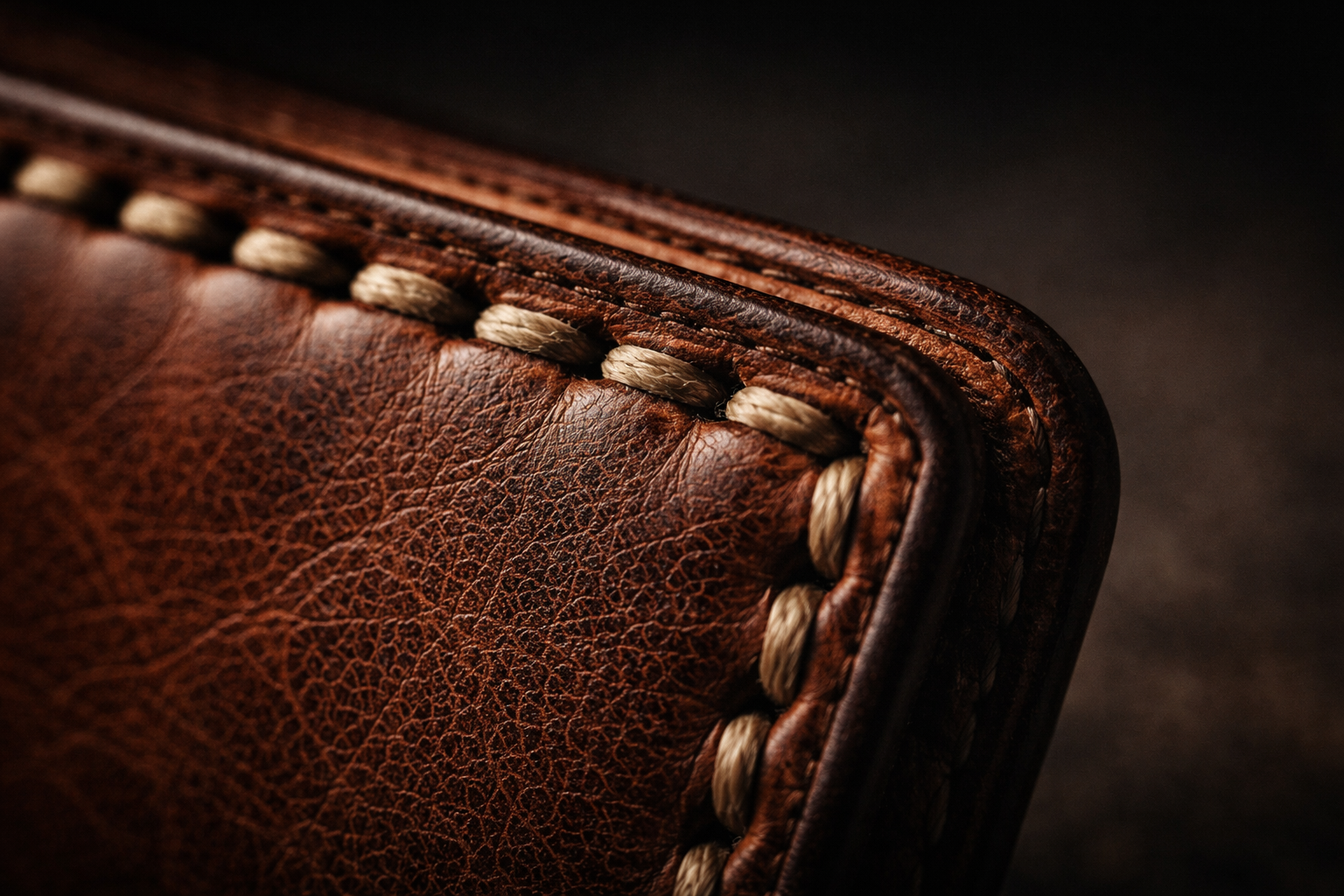
Mass-Produced Wallets: What You're Actually Getting
Mass-produced doesn't automatically mean bad — but it does mean the manufacturer made tradeoffs at every step to hit a price point. Here's what those tradeoffs look like in practice:
"Genuine leather" is the most common deception in the wallet market. "Genuine leather" is an actual leather industry classification — it means the lowest usable grade. It's the scraps and fiber layers left after full-grain and top-grain have been cut away, compressed and bonded with adhesive. It looks like leather. It doesn't last like leather. Most wallets in the $20–$60 range use it.
"Bonded leather" and "PU leather" are even further down the scale — leather scraps ground up and rebonded, or synthetic materials with a leather-like surface. These are often labeled as "vegan leather" or "premium leather." They peel, crack, and delaminate within 12–24 months of regular use.
Top-grain leather is a step up. The surface has been sanded to remove natural imperfections, then embossed with a uniform grain pattern. It looks cleaner than full-grain, but the sanding removes the tightest, most durable part of the hide. It wears faster and doesn't develop a patina — it just looks worn.
Machine stitching is fast and cheap. The problem is the chain-stitch structure: one broken thread unravels the whole seam. On a wallet opened and closed 10+ times a day, those seams take constant stress. Most mass-produced wallets start showing stitch failure at the fold within 12–18 months.
"Genuine leather" on a label doesn't mean what most people think it means. It's a grade — and it's the lowest one. If a brand doesn't tell you exactly what leather they use, assume it's the cheapest option available.
Handmade vs. Mass-Produced: Side by Side
| Factor | Mass-Produced | Handmade (BSL) |
|---|---|---|
| Leather grade | Genuine, bonded, or top-grain | Full-grain American vegetable-tanned |
| Construction | Machine-stitched or glued | Hand-sewn on a leather sewing machine, hand-burnished edges |
| Expected lifespan | 1–3 years | 10–20 years with basic care |
| Ages over time | Degrades — cracks, peels, stretches | Improves — develops unique patina |
| Origin | Overseas factory, anonymous | Made in Texas, by name |
| Personalization | Rarely available | Laser engraving, stamps, initials |
| Price | $20–$80 | $85–$175 |
| Cost per year | $20–$40 (replaced every 1–2 yrs) | $8–$15 (lasts 10–20 years) |
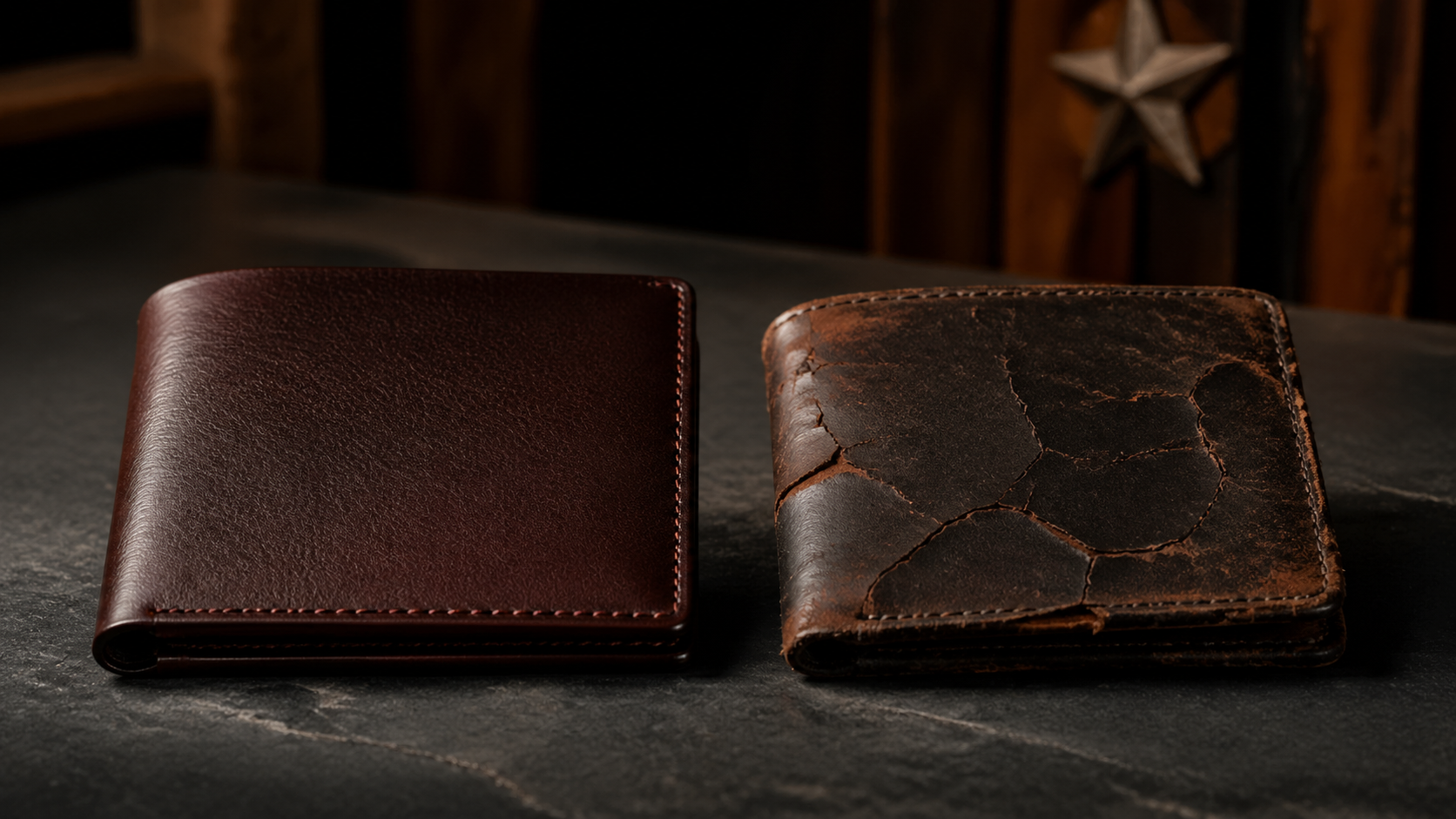
Leather Wallet Styles: Which One Is Right for You
Once you've decided on quality, you need to pick a style. Here's what actually matters for each carry type:
Bifold wallets are the standard. Two panels, horizontal fold, cards on one or both sides, cash slot in the middle. Works in front or back pocket. BSL's bifold lineup — the Rio Grande and the Big Bend — are cut from single pieces of full-grain leather, no seams where you don't want them.
Minimalist leather wallets carry 3–6 cards and slim cash. Designed for front-pocket carry where bulk is the enemy. If you've ditched the loyalty cards and keep it tight, this is the right call. BSL's front-pocket slim fits the pocket instead of fighting it.
Trifold wallets hold more — more cards, more ID windows, more cash — at the cost of thickness. Good for anyone who needs to carry multiple forms of ID or extra cards regularly.
Badge wallets are built for law enforcement, security, and first responders — badge window, card slots, and ID pocket in one piece. If you carry a badge every day, this is the only wallet worth considering.
Money clip wallets combine a clip for bills with card slots. Low profile, works for people who prefer to feel the cash they're carrying.
Long/clutch wallets hold full-length bills without folding, more card slots, sometimes a checkbook section. Larger profile — front or jacket pocket carry.
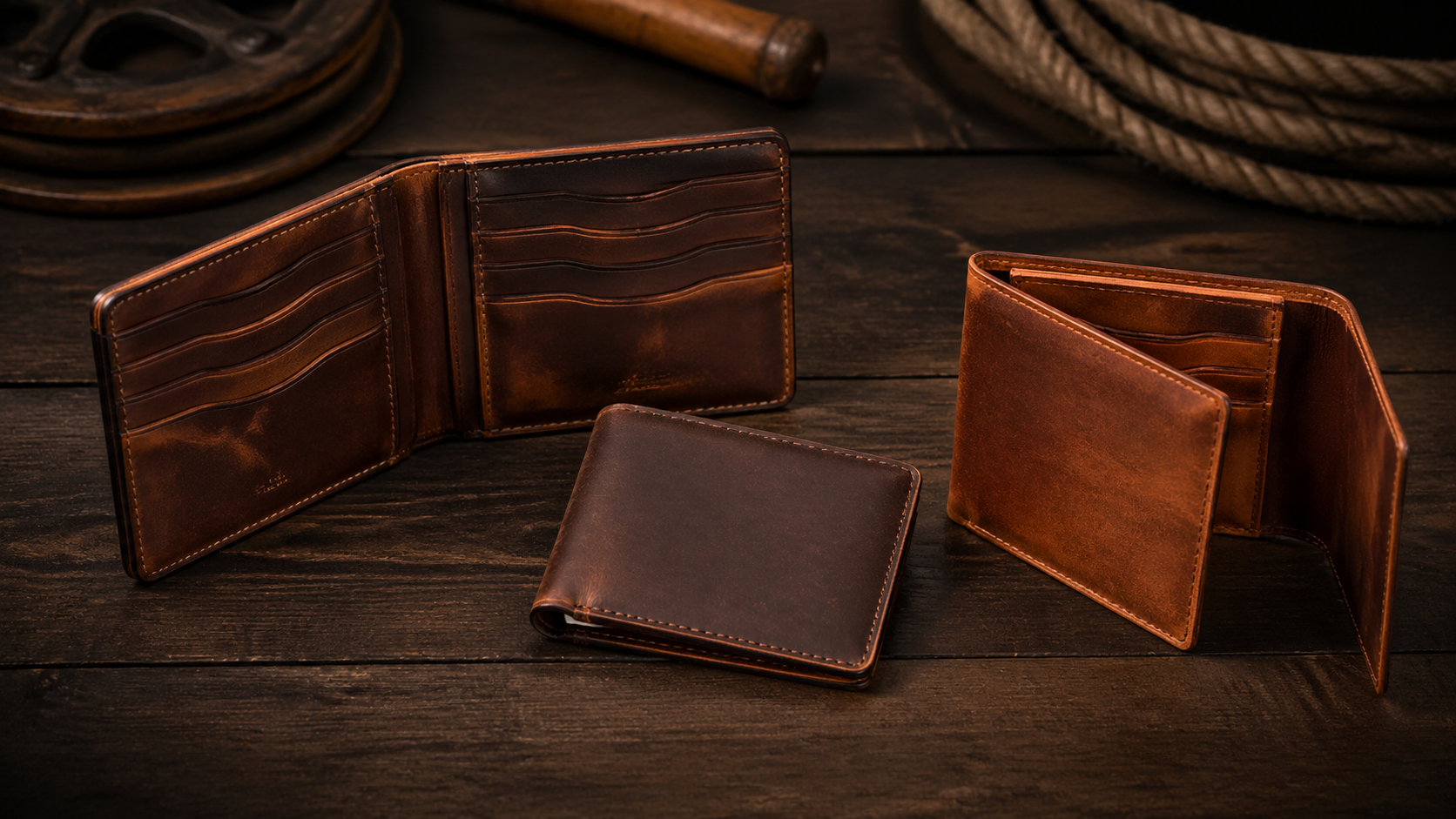
What to Actually Look For Before You Buy
Use this checklist when evaluating any leather wallet:
Check the leather spec. Does the brand name the specific leather? "Full-grain vegetable-tanned" is specific and meaningful. "Premium leather" or "genuine leather" is a red flag. If they can't tell you what it is, they're hiding what it is.
Look at the stitching. A hand-guided, two-needle interlocked seam uses two holes, one on each side, alternating needles. You can see this on quality pieces — the stitching is visible and even on both faces. A machine lockstitch is one-sided, often hidden under a binding.
Check where it's made. "Handmade in [specific place]" is a claim a real craftsman can back up. "Crafted with care" or "artisan-inspired" means a machine made it and a copywriter dressed it up.
Read the return policy. A manufacturer confident in their product stands behind it. BSL ships with 60-day free returns, both directions, and no restocking fee — and if something's wrong with the workmanship, the No Bull Guarantee covers it.
Look at the hardware and edges. Quality wallets have finished edges — burnished, waxed, or painted — not raw cuts. Snaps and rivets should be solid brass or nickel, not plated steel that corrodes.
Every BSL wallet is cut and hand-sewn on a leather sewing machine in Mansfield, Texas, with hand-burnished edges from full-grain American vegetable-tanned leather. It breaks in over years of carry and gets better looking the more you use it. Ships within 3 business days.
Shop All Wallets →Final Thoughts
The handmade vs. mass-produced question comes down to one thing: do you want to keep buying wallets, or do you want to buy one wallet? Full-grain leather, hand-sewn construction with hand-burnished edges, and made-in-Texas accountability isn't marketing — it's the difference between a wallet that's still going strong in ten years and one that's in a drawer somewhere after eighteen months. BSL's full collection of leather wallets for men covers every carry style. Questions before you order: reach out directly.


