


Full-grain, vegetable-tanned leather from Hermann Oak or Wickett & Craig is the craftsman's answer. Here's what the grades, tanning methods, and thickness specs actually mean for a wallet built to last.
What's the Best Leather for Making a Wallet? A Craftsman's Breakdown
You've decided to make a wallet. Or maybe you're researching what goes into a great one before you buy. Either way, the leather decision is where it all starts — and where most people get it wrong. Walk into a craft store and you'll find a dozen options. But only a handful of those will actually hold up to daily carry, develop a proper patina, and last longer than a couple of years.
This guide covers exactly what separates wallet-worthy leather from the stuff that cracks, peels, and ends up in the trash. We'll break down grades, tanning methods, thickness, and the specific leathers that professional craftsmen — including us here in Mansfield, Texas — reach for every time.
Start Here: The Four Leather Grades You Need to Know
The single biggest factor in leather quality isn't brand or price — it's the grade. Leather is cut from different layers of the hide, and each layer performs very differently in a finished product.
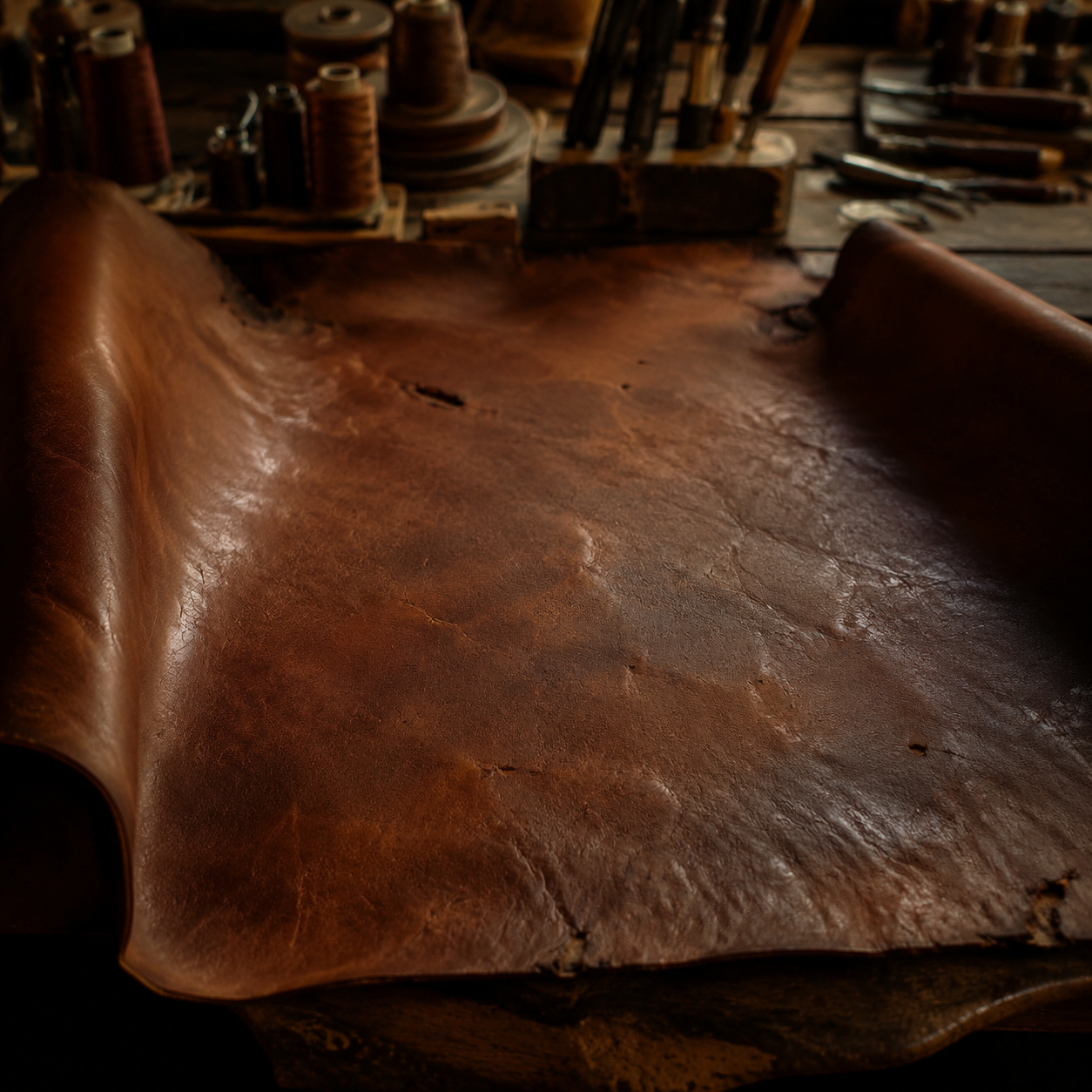
Full-Grain Leather is the top layer of the hide, untouched. The natural grain surface is intact, with all its markings, pores, and character. This is the strongest, most durable leather available. It develops a deep patina over years of use — getting more beautiful, not less. A full-grain wallet can realistically last 10 to 20 years with basic care.
Top-Grain Leather is full-grain that's been sanded to remove surface imperfections, then embossed with a uniform grain pattern. It looks cleaner out of the box but loses most of the structural fiber that makes full-grain so tough. Patinas weaker. Wears out faster.
Genuine Leather is a marketing term that technically means any real leather product — but in practice, it refers to the lower layers of the hide that get split off during processing. These layers have little structural integrity. The surface is often coated or bonded. Most wallet-sized goods from mall retailers are genuine leather. They look fine on day one and deteriorate within 18 months.
Bonded Leather is scraps and fiber dust glued together with polyurethane binder. It peels. Always. Don't use it.
For a wallet you're building to last — or buying to last — the answer is always full-grain. Everything else is a compromise.
Veg-Tan vs. Chrome Tan: The Tanning Method Matters
Once you've decided on full-grain, your next decision is the tanning process. This affects how the leather feels, how it ages, and what you can do with it during construction.
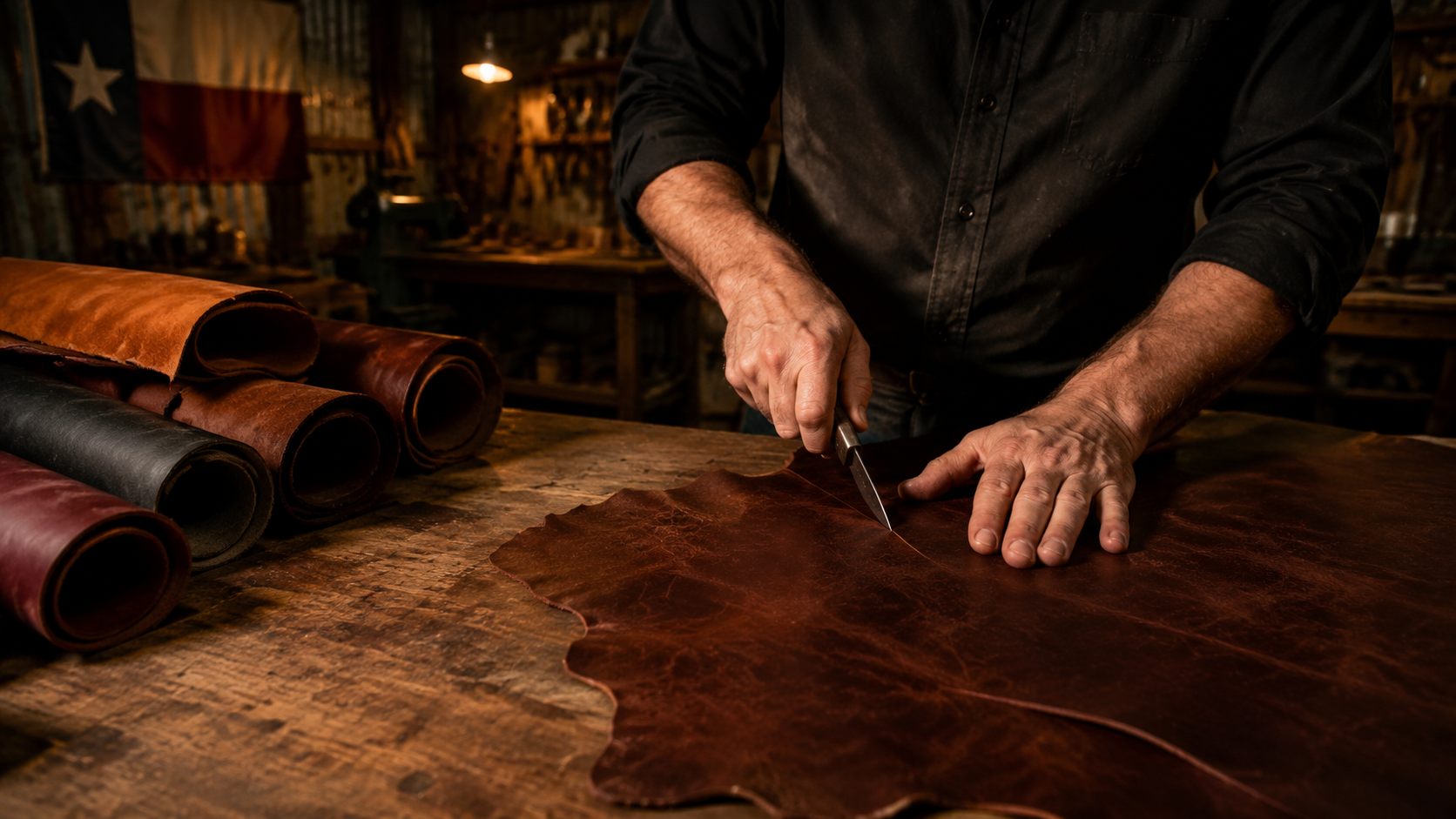
Vegetable Tanning uses natural plant tannins — historically from oak bark, sumac, and other plant sources. The process takes weeks to months. The result is a firmer, denser leather with a characteristic beige-tan color that darkens beautifully with use and conditioning. Veg-tan is the traditional choice for wallets, holsters, sheaths, and belt goods. It accepts tooling, embossing, and burnishing. It molds and sets. For a craftsman, it's the most workable leather available. For a buyer, it means a wallet that will look dramatically better at year five than it did at year one.
Chrome Tanning uses chromium sulfate salts in a process that takes 24 to 48 hours. The result is a softer, more supple leather with consistent color throughout. Chrome-tanned leather is water-resistant, easy to work in flat goods, and more uniform batch to batch. Many high-end European leather goods use chrome-tan. For wallets, it produces a very refined, smooth feel — but it won't develop the same patina as veg-tan, and it's harder to burnish edges cleanly.
Which Tanneries Actually Produce Wallet-Grade Leather?
Not all full-grain veg-tan is equal. The tannery matters — and for American-made leather, two names consistently top the list.
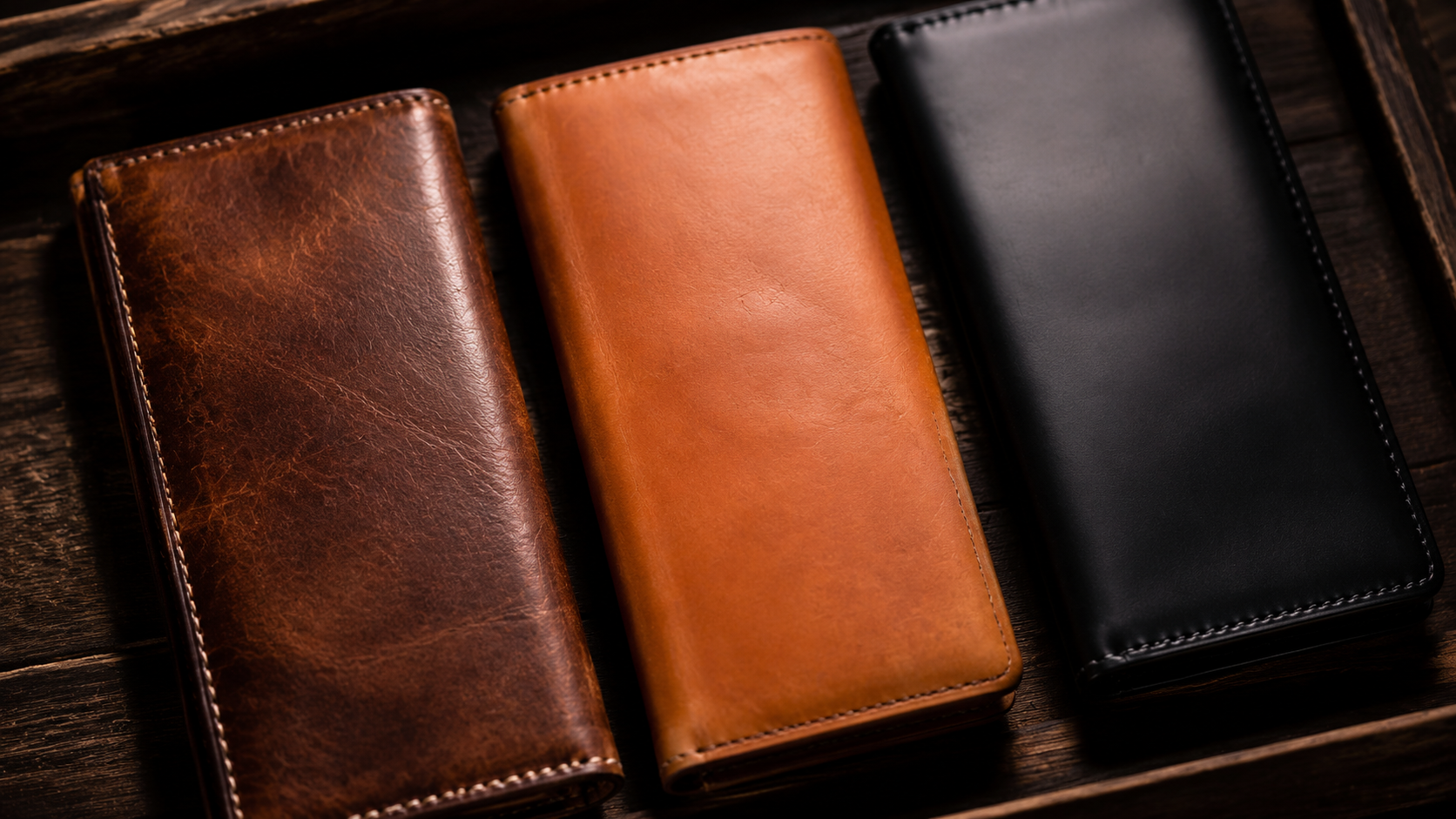
Hermann Oak Leather Company (St. Louis, Missouri) has been tanning leather since 1881. Their veg-tan sides are the gold standard for holster makers, saddlers, and wallet craftsmen across the country. Consistent thickness, excellent density, beautiful natural color. This is the leather we use at Bull Sheath Leather for our full-grain wallets. When you buy a BSL wallet, you're carrying Hermann Oak leather.
Wickett & Craig (Curwensville, Pennsylvania) is another American tannery with a long history and consistently excellent product. Slightly different temper than Hermann Oak — some craftsmen prefer their lighter sides for flat goods. Worth sourcing if you're building wallets regularly.
Horween Leather Company (Chicago, Illinois) is best known for shell cordovan and Chromexcel — a pull-up chrome-tan/veg-tan hybrid that ages beautifully. Not the cheapest, but if you want a wallet that develops a unique, deep shine with use, a Horween Chromexcel build is hard to beat.
For international options, Badalassi Carlo in Italy produces Pueblo and Minerva Box — vegetable-tanned leathers with exceptional character. These are harder to source in the US but worth knowing about for premium builds.
Thickness: Getting It Right for Wallets
Wallet construction requires thinner leather than belts or sheaths. Too thick and the finished wallet won't close properly. Too thin and it loses structure and wears through at stress points.
| Wallet Component | Recommended Thickness | Notes |
|---|---|---|
| Exterior shell (bifold) | 2–3 oz (0.8–1.2mm) | Needs to fold cleanly without cracking |
| Card pockets / dividers | 1.5–2 oz (0.6–0.8mm) | Thinner = cards slide easier |
| Bill compartment lining | 1–1.5 oz (0.4–0.6mm) | Can skive edges to reduce bulk at seams |
| Badge wallet body | 3–4 oz (1.2–1.6mm) | Needs to support badge weight without sagging |
What to Buy (If You Don't Want to Build It)
Here's the thing: the leatherworking community is small, and sourcing quality hides, buying the right tools, and learning the construction process takes real time. Most people who research "best leather for making wallets" end up buying a quality handmade wallet instead of making one — and that's completely reasonable.
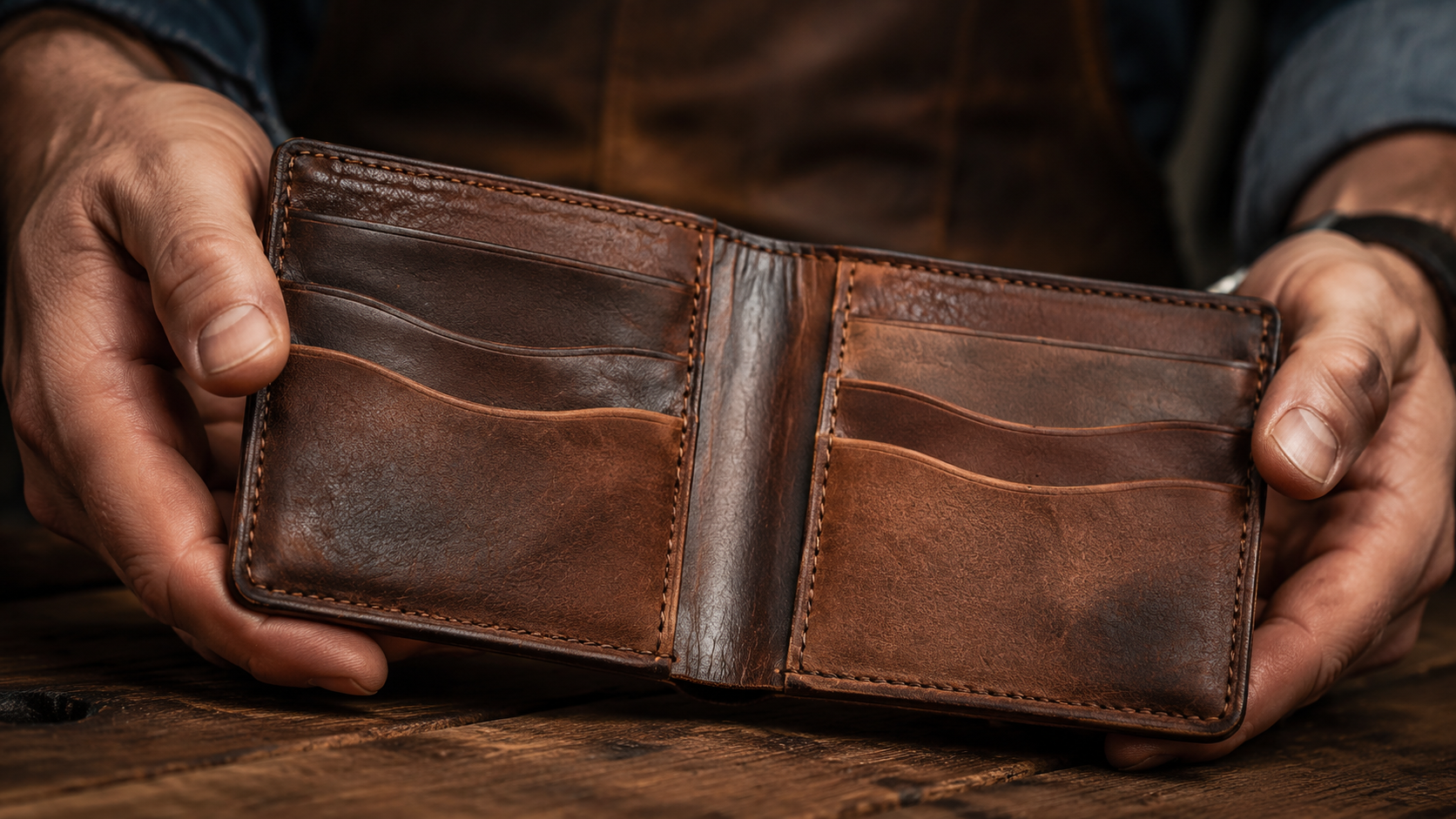
If you want full-grain American leather, Hermann Oak construction, and a wallet that develops the patina described above — without the learning curve — that's exactly what we build at Bull Sheath Leather. Every wallet is hand-cut and hand-stitched in our Mansfield, Texas shop, from the same full-grain sides that professional leather workers source for their own builds.
The Rio Grande Bifold is full-grain Hermann Oak leather, hand-stitched with waxed thread. No shortcuts on the hide, no shortcuts on the build. Ships from Texas.
Shop the Rio Grande Bifold →Final Thoughts
The best leather for making a wallet is full-grain, vegetable-tanned, sourced from a tannery with a track record — Hermann Oak, Wickett & Craig, or Horween if you want a hybrid. Get the thickness right for your components, and you'll have a wallet that outlasts anything off a department store shelf by a decade or more. The research pays off — whether you're building it yourself or buying from someone who already did it right.
See the finished products: handmade leather wallets for men, our minimalist leather wallet collection, badge wallets, and leather knife sheaths — crafted in Texas from the same full-grain American leather described above.

